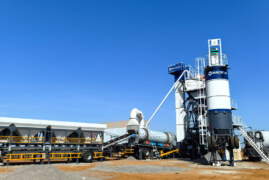
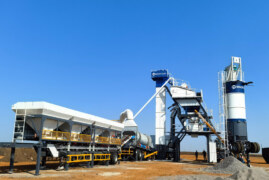
Evaluating an industrial asphalt mixing plant for sale for remote mining infrastructure requires structural engineering scrutiny that urban road construction procurement never demands at equivalent depth. A stationary asphalt batch mix plant installed at a mining site sits within a risk environment defined by lateral wind loads from open terrain exposure, seismic ground acceleration from proximity to geological fault zones, and dynamic equipment loads from screening vibration and mixer torque — all acting simultaneously on a mainframe that must hold tower alignment within production tolerance across decades of continuous operation. Structural compliance standards that govern this combined loading environment are not bureaucratic requirements; they are the engineering boundaries that separate a plant whose foundation performs through a mining site’s operational life from one that settles, tilts, and fails specification tolerance within the first operational year.
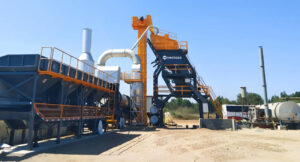
How Wind and Seismic Loads Reshape Asphalt Batch Mix Plant Mainframe Design
Standard asphalt mixing plant for sale configurations are designed against dynamic equipment loads and static tower weight — the load cases that urban road construction sites generate and that most manufacturer structural calculations address. Remote mining sites introduce two additional lateral load categories that fundamentally change mainframe design requirements: sustained wind pressure from open terrain with minimal obstruction, and seismic base shear from ground acceleration events whose return period and peak ground acceleration the local hazard map defines.
Wind load design for a tall asphalt batch mix plant tower at a remote mining site requires calculating the projected area of each tower module against the design wind speed for the site’s terrain exposure category, then distributing the resulting lateral force through the mainframe to the foundation anchor points. Tower height amplifies this load — upper screening decks and elevator structures carry the highest wind-induced lateral force per unit weight, and the mainframe connections at these elevations must be designed against this force rather than against equipment weight alone.
Seismic design introduces base shear loading whose magnitude depends on the site’s mapped spectral acceleration values, the plant’s total seismic weight, and the fundamental period of the tower structure. An asphalt batch mix plant mainframe in a seismic zone requires moment-resistant connections at primary frame joints — connections that transfer rotational forces without joint separation — rather than the shear connections adequate for non-seismic loading conditions. Asphalt mixing plant for sale suppliers operating in seismic markets should produce seismic design calculations referencing the applicable regional standard for the mining site jurisdiction.
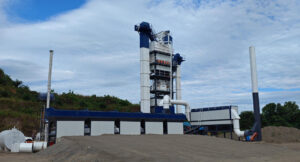
Foundation Blueprint Requirements for Integrated Cold Feed Blending Assembly
The cold feed blending assembly of a stationary asphalt batch mix plant presents a foundation engineering challenge distinct from the tower structure — multiple aggregate bins carrying variable live loads sit on a shared structural frame whose individual support point reactions change as bins fill and discharge through production cycles. A foundation blueprint that treats the cold feed assembly as a uniform static load misrepresents the actual bearing pressure variation that bin filling sequence generates at individual footing locations.
Holistic foundation blueprints for the integrated cold feed assembly require dynamic load envelopes — maximum and minimum bearing pressure at each support point across all realistic bin loading combinations — rather than single-value static load calculations. On remote mining sites where subgrade conditions may include fill material, weathered rock, or expansive clay, these envelopes must be evaluated against geotechnical investigation data that characterizes bearing capacity variability across the full cold feed footprint rather than at a single representative test location.
Anchor bolt design for wind and seismic uplift at cold feed bin support columns requires tension capacity calculations that standard gravity-only foundation design omits entirely. Mining site wind events and seismic ground motion can generate uplift forces at windward column bases that exceed the column’s tributary weight — a load reversal condition that anchor bolt embedment depth and concrete breakout capacity must be designed to resist.
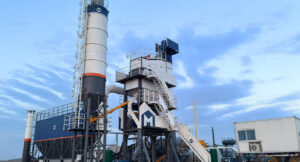
Structural Steel Grade and Connection Specification for Mining Environment Durability
Remote mining infrastructure imposes environmental durability requirements on asphalt batch mix plant structural steel that urban installation conditions never generate at equivalent severity. Dust, moisture, and chemical exposure from mining process emissions accelerate corrosion on inadequately protected structural members — and section loss from corrosion reduces structural capacity against wind and seismic loads over time, progressively narrowing the safety margin the original design provided.
High-strength structural steel grades with verified yield strength and toughness at minimum site temperature provide the material foundation for wind and seismic resistant mainframe design. Connection specifications at moment-resistant joints require high-tensile bolt grades with documented proof load and controlled installation torque — not standard commercial bolts whose actual preload after installation is unknown.
Conclusion
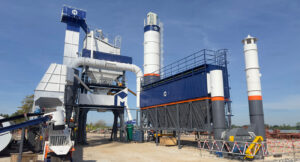
An asphalt batch mix plant for remote mining infrastructure demands structural compliance documentation covering wind load calculations against site terrain exposure, seismic base shear design referencing regional hazard maps, dynamic cold feed foundation load envelopes from geotechnical investigation data, and high-strength steel connection specifications — because an asphalt mixing plant for sale whose mainframe was designed for urban road construction loads will not maintain production alignment through the combined structural demands that remote mining site environments impose across a full operational service life.