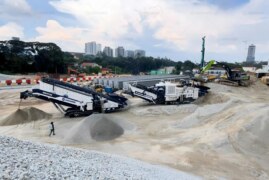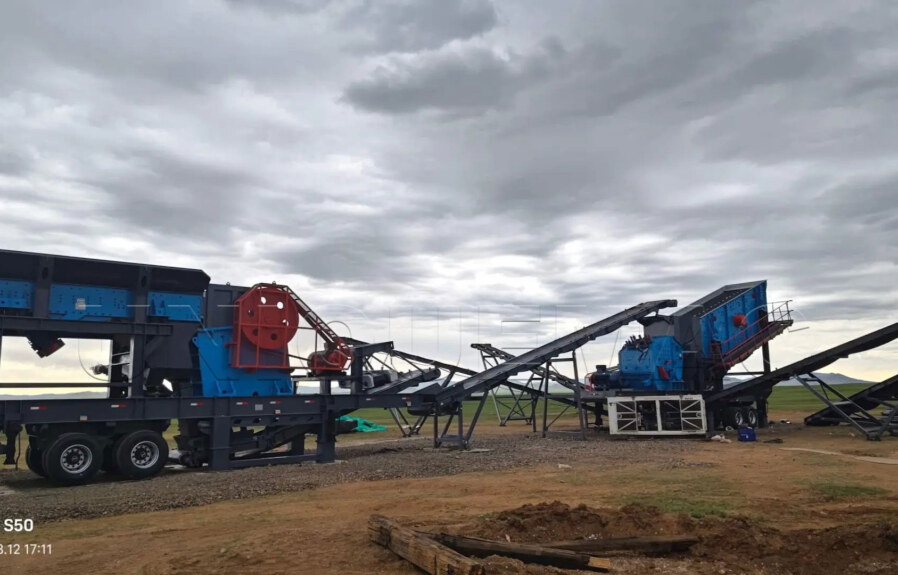
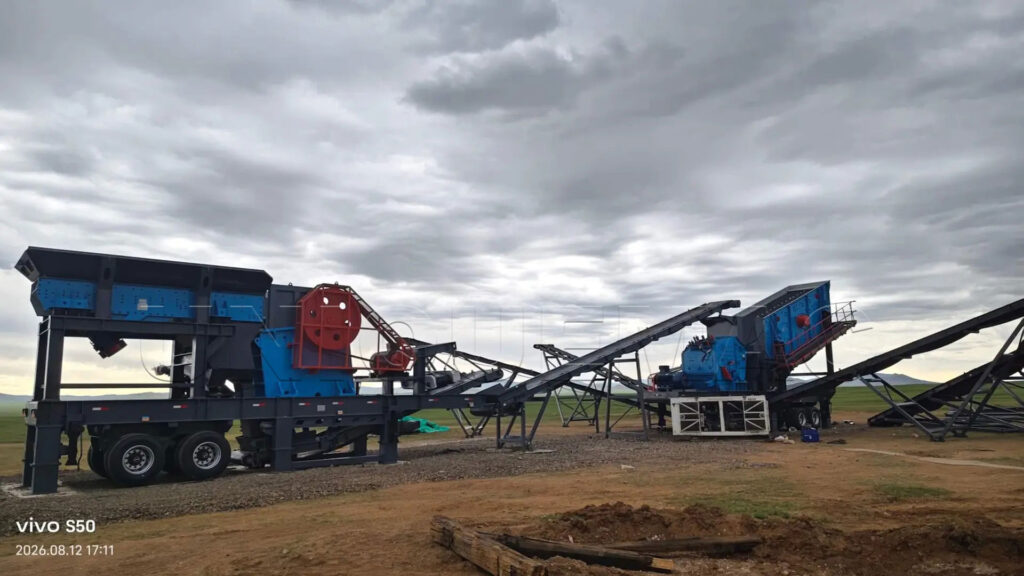
What Materials Can Stone Crushers Process? Stone crushers can process most natural and recycled materials—including granite, basalt, river gravel, limestone, sandstone, quartzite, as well as concrete, brick, asphalt, steel slag, and coal gangue. Materials should generally stay below 300 MPa compressive strength to remain economical to crush.
Next, we’ll break down how different crusher types match with specific materials—and how to choose the right setup for your application.

The materials stone crushers process: four main groups
| Material | Mohs hardness | Compressive strength | Typical crusher pairing | Common end use |
|---|---|---|---|---|
| Granite | 6–7 | 160–230 MPa | Jaw + cone | Concrete aggregate, asphalt |
| Basalt | 5–7 | 250–300 MPa | Jaw + multi cylinder cone | Railway ballast, road surfacing |
| River pebble | 6–7 | 120–180 MPa | Jaw + cone + VSI | Manufactured sand |
| Quartzite | 7+ | 150–300 MPa | Jaw + cone with carbide liners | High wear aggregate |
| Limestone | 3–4 | 60–140 MPa | Jaw or heavy hammer + impact | Cement, road base |
| Sandstone | 2–7 | 20–170 MPa | Varies with cementing mineral | Fill, building stone |
| Demolition concrete | — | 30–80 MPa | Mobile jaw + impact | Recycled road base |
| Slag, coal gangue | 3–6 | Varies | Jaw or toothed roll | Cement additive, brick raw material |

Hard igneous & metamorphic rock
Granite and basalt dominate hard rock crushing. Granite is highly abrasive (65–75% SiO₂), so wear parts are the limiting factor. Basalt is denser and tougher; it tends to produce flaky, elongated particles under impact, so cone crushers are preferred for controlled shape. River pebble is hard but rounded, usually requiring a cone stage before sand making.
Sedimentary rock
Limestone is the main global feedstock for aggregate and cement. Low hardness (Mohs 3–4) allows simple crushing circuits, often hammer or impact in fewer stages. Sandstone varies widely; quartz rich types behave like hard rock, calcite rich types behave like limestone.
Recycled materials
Demolition concrete (30–80 MPa) is suitable for jaw based mobile plants. After crushing and screening, it is reused in road base and sub base, typically replacing 30–50% of natural aggregate. Brick and asphalt millings follow the same route.
Industrial by products
Blast furnace slag, steel slag, and coal gangue are generally easy to crush. Common uses are cement feed, road base, and brick production.
Which crusher type handles which material
A jaw crusher opens the line for nearly every feed listed above. It accepts blasted rock up to 1,000–1,200 mm and cuts it to 100–200 mm at a reduction ratio of 4–6. Breaking by compression rather than impact, it puts far less energy through its wear surfaces, which is why it stays economical on high silica rock that destroys impact style machines.

Downstream of the primary, the path splits by material:
- Hard, abrasive feed (granite, basalt, river pebble, quartzite): a cone crusher takes the second and third stages. Its layered compression action breaks rock against rock inside the chamber, so less of the work lands on the liners.
- Medium and soft, low silica feed (limestone, shale, weathered rock): an impact crusher gives a cubical product for concrete and asphalt spec. Where shape matters less, a heavy hammer crusher does the whole job in one stage at lower capital cost.
- Sand production: a vertical shaft impactor finishes the line. Running stone on stone, its wear cost is roughly half that of a hammer mill on the same feed, with 70% or more of output landing inside a 0–5 mm sand spec.
- Demolition waste: a track mounted jaw and impact pair with a suspended magnet over the discharge belt handles 100–180 t/h on site and pulls rebar out as it runs.
Feed UCS, Silica, and Moisture Control the Crusher Decision

Compressive Strength Sets the Machine Family
Below 100 MPa UCS, crusher choice is mostly about product shape and capital cost. Between 100 and 160 MPa, options narrow: toothed rolls top out around 160 MPa, and hammer wear climbs fast. Above 160 MPa, compression crushers are the only economic choice. A hammer mill will break granite, but operators report hammer heads scrap within days — wear parts quickly erase any upfront machine price saving.
Silica Content Drives the Cost Per Ton
Free silica sets wear cost. Limestone typically runs under 5% free silica; granite runs 65–75%. On the same machine, liner life differs by a factor of three to five. That’s why abrasive feeds go to jaw and cone crushers with high‑manganese steel liners — they break rock by compression, not by high‑speed metal‑on‑rock impact. Push high‑silica feed through an impactor and blow bar replacement dominates opex, cancelling the shape benefit.
Moisture and Clay Decide Material Flow
Moisture and clay govern material flow. Below about 15% moisture, most crushers pass feed cleanly. Above 20% with clay fines, material packs onto chamber walls and blinds the discharge. Crushers with screen or grate bottoms — hammer mills, vertical‑shaft impactors — clog first. Moist limestone carrying overburden clay is the textbook case. The practical fixes: scalp fines on a grizzly ahead of the primary, pick a crusher with an open discharge path, or wash the feed.
Which crusher type handles which material
A jaw crusher opens the line for nearly every feed listed above. It accepts blasted rock up to 1,000–1,200 mm and cuts it to 100–200 mm at a reduction ratio of 4–6. Breaking by compression rather than impact, it puts far less energy through its wear surfaces, which is why it stays economical on high silica rock that destroys impact style machines.
Downstream of the primary, the path splits by material:
- Hard, abrasive feed (granite, basalt, river pebble, quartzite): a cone crusher takes the second and third stages. Its layered compression action breaks rock against rock inside the chamber, so less of the work lands on the liners.
- Medium and soft, low silica feed (limestone, shale, weathered rock): an impact crusher gives a cubical product for concrete and asphalt spec. Where shape matters less, a heavy hammer crusher does the whole job in one stage at lower capital cost.
- Sand production: a vertical shaft impactor finishes the line. Running stone on stone, its wear cost is roughly half that of a hammer mill on the same feed, with 70% or more of output landing inside a 0–5 mm sand spec.
- Demolition waste: a track mounted jaw and impact pair with a suspended magnet over the discharge belt handles 100–180 t/h on site and pulls rebar out as it runs.
Hardness is only the first of three properties that decide
When selecting a crusher, hardness is only a starting point. In actual working conditions, material behavior is governed by multiple physical properties. Focusing solely on hardness can easily lead to selection errors, ultimately increasing operating costs.
Compressive Strength Determines the Main Machine Grade
Compressive strength is the primary parameter for classifying crusher grades. Below 100 MPa, most models can handle most materials normally; selection at this level mainly depends on product particle size and cost structure. Entering the 100-160 MPa range, the range of suitable models narrows, with roller crushers approaching their maximum applicability under continuous heavy loads. Above 160 MPa, jaw crushers and cone crushers become standard. While impact crushers and hammer crushers can also handle hard rock, in granite and basalt conditions, the wear on the hammer plates and hammerheads increases dramatically, resulting in frequent replacements and a decline in operating rates.
Silica Content Directly Affects Wear Costs
The silica content in the feed directly affects the lifespan of liners and vulnerable parts. Limestone, a low-silica material, exhibits a relatively gentle wear curve; however, high-silica rocks such as granite and quartzite show a sharp increase in abrasiveness, often resulting in a drastically shortened lifespan for wear parts under the same operating conditions. Therefore, high-silica operations typically employ a jaw crusher + cone crusher compression route, using high-manganese steel wear-resistant parts, replacing high-speed impact with layered crushing. Forcing an impact crushing system would turn wear parts into a bottomless pit of continuously consuming operating costs.
Moisture Content and Clay Content Dominate Logistics and Blockage Risks
Moisture and clay content primarily interfere with the material flowability within the crushing chamber. At low moisture content, most crushers can maintain a stable throughput. However, once moisture and clay content increase, material easily adheres within the chamber, inducing bridging or discharge port blockage. Models with tighter discharge ports are particularly sensitive. On-site solutions typically involve adding a pre-screening or bar feeder before the primary crushing stage. For high clay content, a washing system is introduced to ensure continuous feeding and reduce unplanned downtime.
Feeds that stall a plant, and the workarounds
A few feeds defeat a standard configuration, and a plant that anticipates them avoids most unplanned downtime.
- Clay-bound pit-run. Excavated rock with sticky overburden plugs the primary within hours. A vibrating grizzly feeder set to bypass anything under 50–80 mm pulls the clay fraction out before it reaches the crushing chamber.
- Reinforced concrete. Rebar tangles a cone crusher but passes through a jaw or impact chamber. The standard recycling setup crushes first, then lifts the freed steel off the belt with a magnetic separator; the recovered rebar sells as scrap.
- Oversize blasted rock. A lump larger than about 80% of the feed opening bridges the inlet. The cure is blast-pattern control at the quarry face, or a hydraulic breaker stationed at the primary.
- Mixed demolition waste. Timber, plastic, and fabric in the feed degrade the recycled product. Lines built for it add an air separator and a picking station ahead of the crusher.
If your feed includes any of these materials, the next step is choosing a setup that matches your required output and capacity. Zhongyi supplies jaw, cone, and impact crushers, as well as complete crushing lines for both quarry and recycling work. You can check their stone crusher machines page for model details and capacity ranges.
If you’re not sure what you need, just send them your material type, feed size, and target output. Their engineers will suggest a suitable setup based on real operating data.
FAQ
Can stone crushers process wet or sticky material?
Up to about 15% moisture, yes, with no special measures. Past 20%, clay-bearing feed cakes inside machines with screen bottoms; pre-screening the fines or washing the feed restores normal operation.
Can a stone crusher crush reinforced concrete?
Yes. Jaw and impact crushers pass rebar through the chamber, and a magnetic separator over the discharge belt pulls the steel out. Cone crushers should not see rebar-laced feed.
What is the hardest rock a stone crusher can handle?
Basalt and quartzite at 250–300 MPa compressive strength sit at the practical ceiling. A heavy jaw primary with a multi-cylinder hydraulic cone behind it processes both economically.
Can stone crushers produce sand?
Yes, with a vertical shaft impactor as the final stage. Crushing stone against stone, it turns 0–40 mm feed into manufactured sand with 70% or more inside the 0–5 mm specification.
Which crusher works best for limestone?
A heavy hammer crusher takes quarry-run limestone to product size in one stage at the lowest cost per ton. Where concrete or asphalt spec calls for cubical aggregate, a jaw plus impact pairing wins.
Why does crushing granite cost more per ton than limestone?
Silica. Granite’s 65–75% silica content wears liners three to five times faster than limestone, and its higher strength draws more power per ton. Compression crushers narrow the gap but never close it.