Mobile crusher plants often operate under changing feed conditions rather than a perfectly uniform material supply. Quarry faces, demolition sites, and aggregate projects may experience fluctuations in feed rate because of excavator performance, blasting schedules, haulage delays, or changes in material availability. Maintaining stable output therefore requires more than selecting a crusher with sufficient rated capacity. The feeding system, crusher settings, material buffer, and downstream screening process must work together to absorb short-term fluctuations without causing excessive idle time, overloads, or inconsistent product sizes.
Why Variable Feed Rates Affect Mobile Crusher Plant Performance
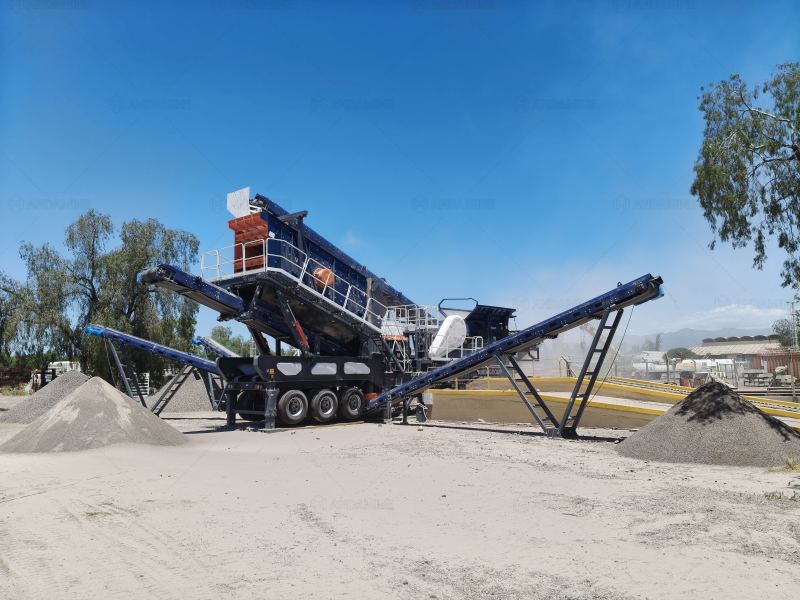
A mobile crusher plant performs most consistently when material enters the crushing chamber at a relatively stable rate. If the feed rate suddenly falls, the crusher may operate below its efficient load range, reducing hourly production even though the equipment itself remains available. If the feed increases sharply, the crusher can approach its capacity limit, while conveyors and screens may also become bottlenecks.
Feed variation can also affect product quality. A crusher running with an inconsistent chamber load may produce different particle-size distributions over time, particularly when the feed gradation or material hardness changes at the same time. For projects requiring consistent aggregate specifications, controlling the variation in feed is therefore part of maintaining final product quality rather than simply maximizing tonnage.
Match the Feeding System to the Material Supply
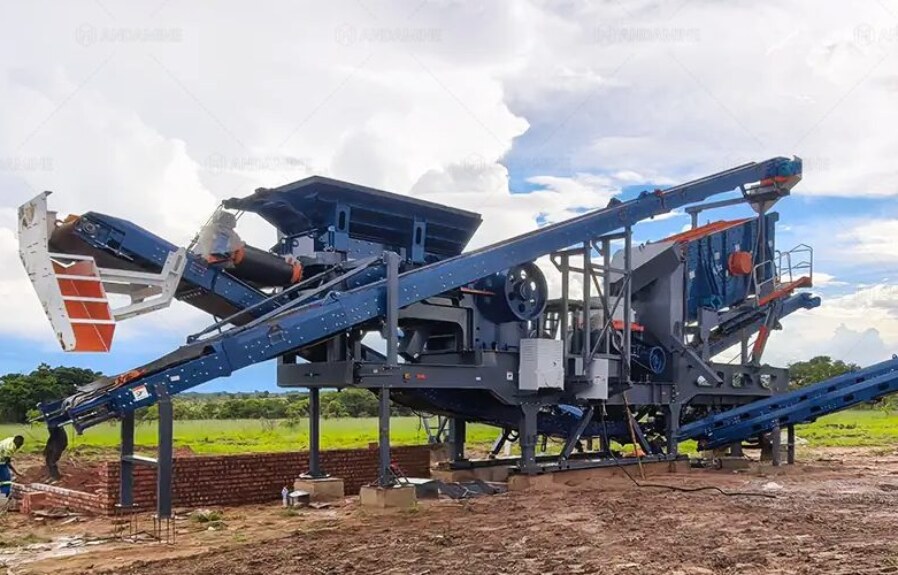
The feeder is the first component that can compensate for variations in material supply. A properly sized feeder can receive intermittent loading from an excavator or wheel loader and deliver material to the crusher at a more controlled rate. This creates a buffer between the loading operation and the crushing chamber, reducing the direct impact of short-term changes in upstream supply.
For a mobile crusher plant, the feeder should be evaluated together with the crusher rather than selected only according to the crusher’s maximum capacity. If the excavator supplies material irregularly, a larger hopper and appropriate feeder capacity can help maintain a more continuous flow. However, oversizing the feeder does not automatically improve production if the crusher or screening equipment cannot process the additional material.
Use a Tracked Mobile Crusher When the Material Source Keeps Moving
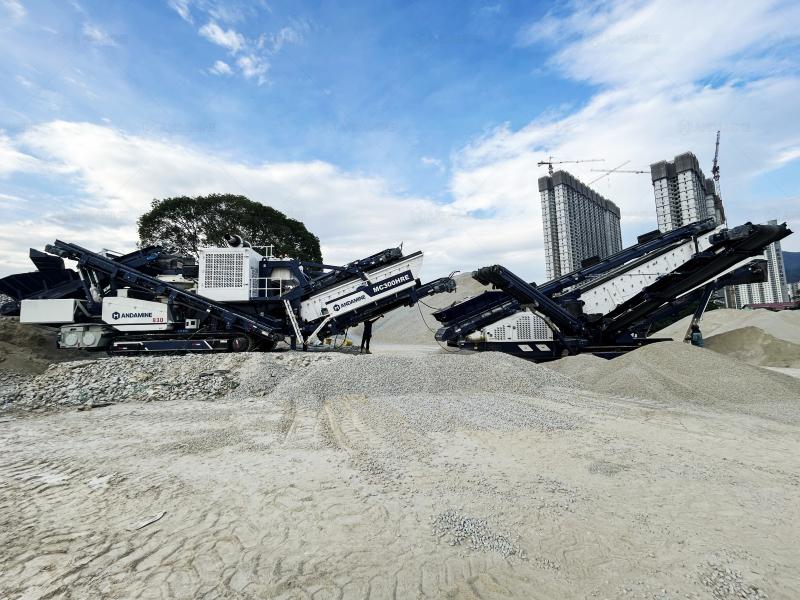
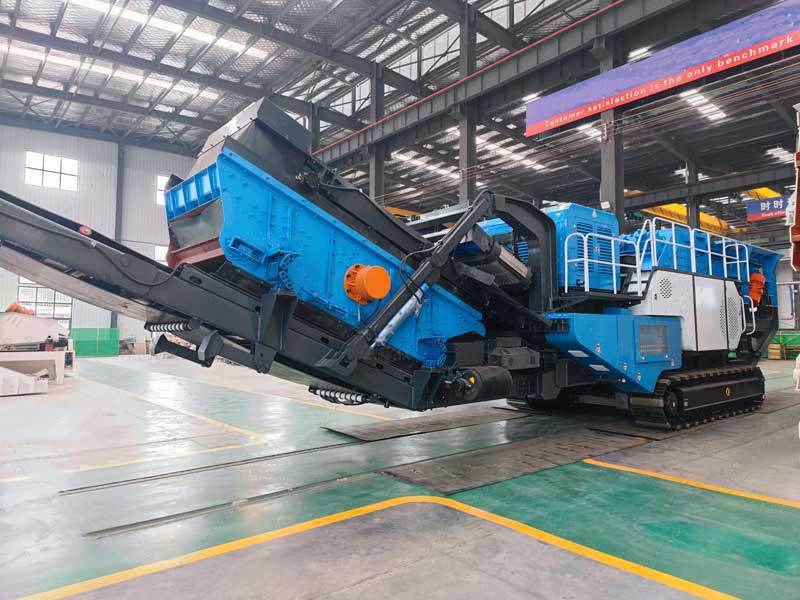
A tracked mobile crusher can be particularly useful when the feed source changes progressively across a quarry, construction site, or demolition area. Instead of transporting raw material over a long distance to a fixed crushing point, the tracked unit can move closer to the active material source. Shorter haulage distances can make feed delivery more consistent and reduce delays caused by truck or loader movements.
Tracked equipment is also suitable for projects where working areas change as excavation progresses. Moving the crusher closer to the current extraction face can reduce the amount of material that must be transported before processing. This does not eliminate feed-rate fluctuations, but it can remove one common cause of irregular feeding: inconsistent upstream haulage.
Control Feed Rate Instead of Chasing Maximum Capacity
When material availability changes, operators should not necessarily try to keep the crusher at its maximum rated capacity at all times. The practical objective is to maintain a stable operating range that matches the available feed and the capacity of the complete crushing circuit.
For example, increasing the feeder speed during a temporary surge may increase short-term throughput, but it can create downstream accumulation if the screen or conveyor cannot handle the additional flow. Conversely, running the plant at full capacity when the feed supply is intermittent may result in frequent stops and starts. A controlled feed rate generally provides more predictable production over an entire shift than repeatedly pushing the crusher between low-load and overload conditions.
Adjust Crusher Settings When Feed Conditions Change
Feed-rate variation sometimes occurs together with changes in material size, hardness, or moisture. These conditions should be considered before making major crusher-setting adjustments. A higher feed rate does not necessarily require a tighter or wider setting; the correct adjustment depends on the required product size, crusher type, feed characteristics, and downstream capacity.
Operators should monitor the relationship between feed rate and product size rather than adjusting settings based on instantaneous production alone. If a change in feed causes excessive oversize, recirculation, or screen loading, correcting the upstream feed condition may be more effective than continually changing the crusher setting.
Build Capacity Around the Plant’s Actual Bottleneck
Stable output depends on the capacity balance of the complete plant. A crusher may have a high nominal capacity, but actual production can be limited by the feeder, screen, conveyor, stockpiling system, or material supply. Increasing crusher capacity therefore provides little benefit if another component remains the limiting factor.
For variable-feed projects, operators should identify the component that causes production interruptions most frequently. If the crusher repeatedly waits for material, improving feed logistics may provide a greater production gain than replacing the crusher. If the crusher is consistently full but the screen becomes overloaded, additional screening capacity or a better-balanced configuration may be more appropriate.
Reduce Feed Fluctuations Through Better Site Coordination
Equipment selection is only part of feed-rate control. Excavators, loaders, haul trucks, and crushing equipment need to operate as a coordinated production system. A crusher cannot maintain stable output if the upstream loading equipment repeatedly stops because of operator changes, truck shortages, blasting schedules, or material relocation.
A practical approach is to monitor feed availability over a full operating shift rather than judging performance from short production periods. Comparing crusher runtime, feeder utilization, material delivery intervals, and actual output can reveal whether low production is caused by insufficient material or by limitations inside the crushing circuit.
Conclusion
Mobile crusher plants can maintain stable output under variable feed rates when the entire production system is designed to absorb changes in material supply. A properly matched feeder, balanced crushing and screening capacity, controlled operating settings, and coordinated material handling are more important than simply choosing the highest-capacity crusher. Where the material source moves frequently, a tracked mobile crusher can further improve logistics by bringing the crushing process closer to the active working face. The key is to manage feed variation as a system-level production issue rather than treating every fluctuation as a crusher-capacity problem.