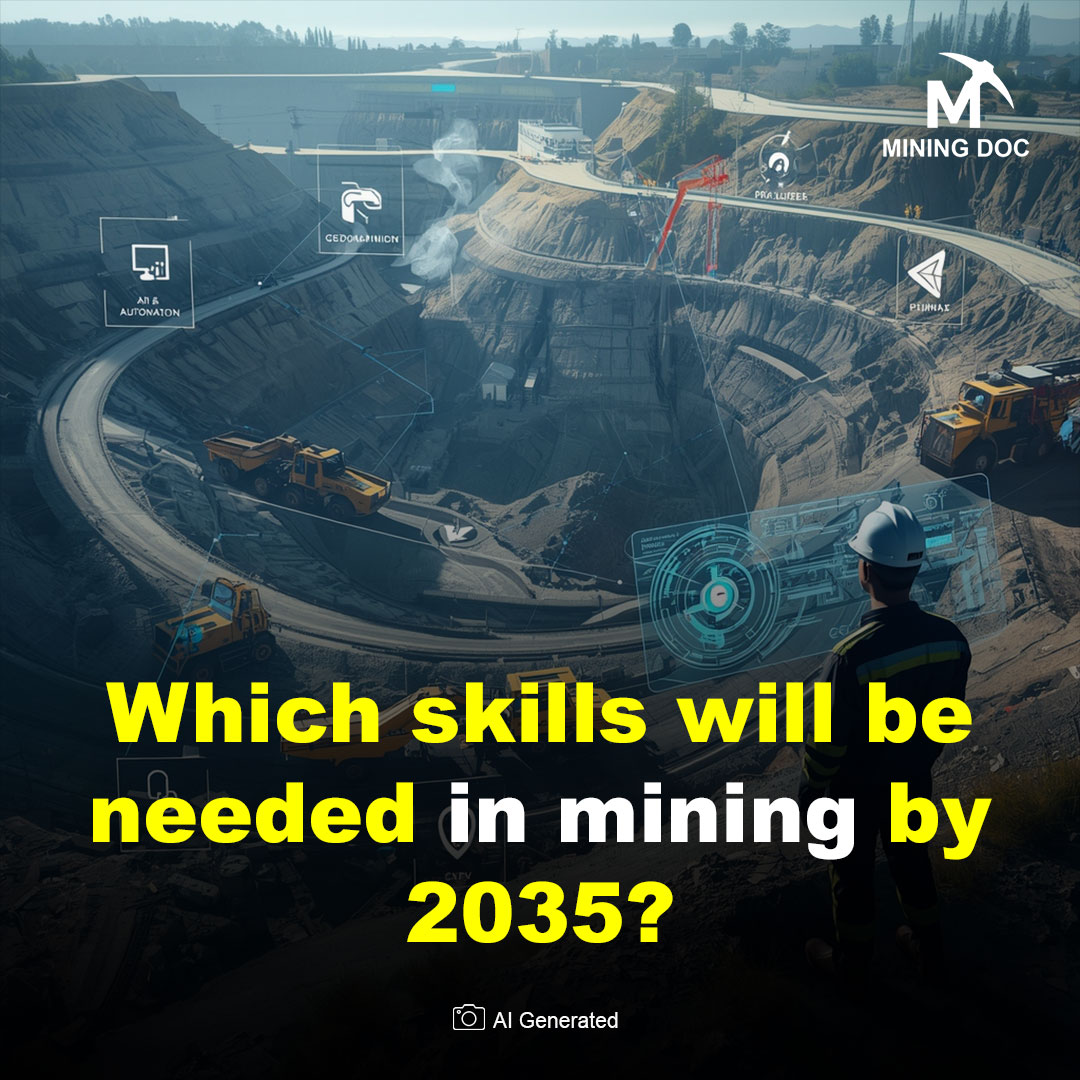
The mining industry is currently undergoing its most significant transformation since the Industrial Revolution. Driven by the global “green transition,” the demand for critical minerals—such as lithium, copper, and rare earth elements—is set to triple by 2030. However, the methods used to extract these resources in 2035 will look vastly different from those used today.
For mining engineers entering the workforce or mid-career professionals looking to stay relevant, the 2035 skill set will be defined by a fusion of high-tech digital literacy and deep environmental stewardship.
Data intelligence and digital twins
By 2035, the “Digital Mine” will be the industry standard. Mining engineers will spend less time in the pit and more time in “Mission Control” centers.
- Predictive analytics: engineers must be able to interpret massive datasets from IoT sensors to predict equipment failure or optimize ore recovery before a single drill touches the ground.
- Digital twin simulation: the ability to build and manipulate virtual replicas of a mine site will be essential. This allows engineers to simulate “what-if” scenarios, testing the impact of different extraction sequences on safety and cost without real-world risk.
Autonomous systems management
Manual operation of heavy machinery is rapidly becoming a relic of the past. It is estimated that up to 40% of mining equipment will be self-driving by the mid-2030s.
- Robotics oversight: future engineers won’t just design mine layouts; they will program and manage fleets of autonomous haul trucks, robotic drillers, and drone-based surveying systems.
- Human-machine collaboration: a critical skill will be “systems orchestration”—ensuring that automated machines and the remaining human specialists work together seamlessly in high-pressure environments.
ESG and “circular” engineering
Environmental, Social, and Governance (ESG) standards are no longer “optional extras”; they are now central to a mine’s license to operate.
- Net-zero planning: engineers will need expertise in electrification (replacing diesel fleets with battery or hydrogen power) and renewable energy integration.
- Biomining and water stewardship: skills in “nature-based solutions,” such as using microorganisms to extract metals (biomining) and advanced water recycling, will be vital as environmental regulations tighten.
- The circular economy: 2035 engineers must design for the entire life cycle of a mine, including “designing for closure” and rehabilitating land for its next use even before the first shaft is sunk.
Strategic “Soft” skills and social license
As mining moves into more remote and ecologically sensitive areas, the ability to engage with stakeholders will be a core technical competency.
- Social license to operate: engineers will need high emotional intelligence to negotiate with local communities and indigenous groups, ensuring that mining activities provide genuine value to the host region.
- Multidisciplinary communication: the future engineer is a bridge-builder, translating complex technical data into clear insights for investors, environmental scientists, and government regulators.