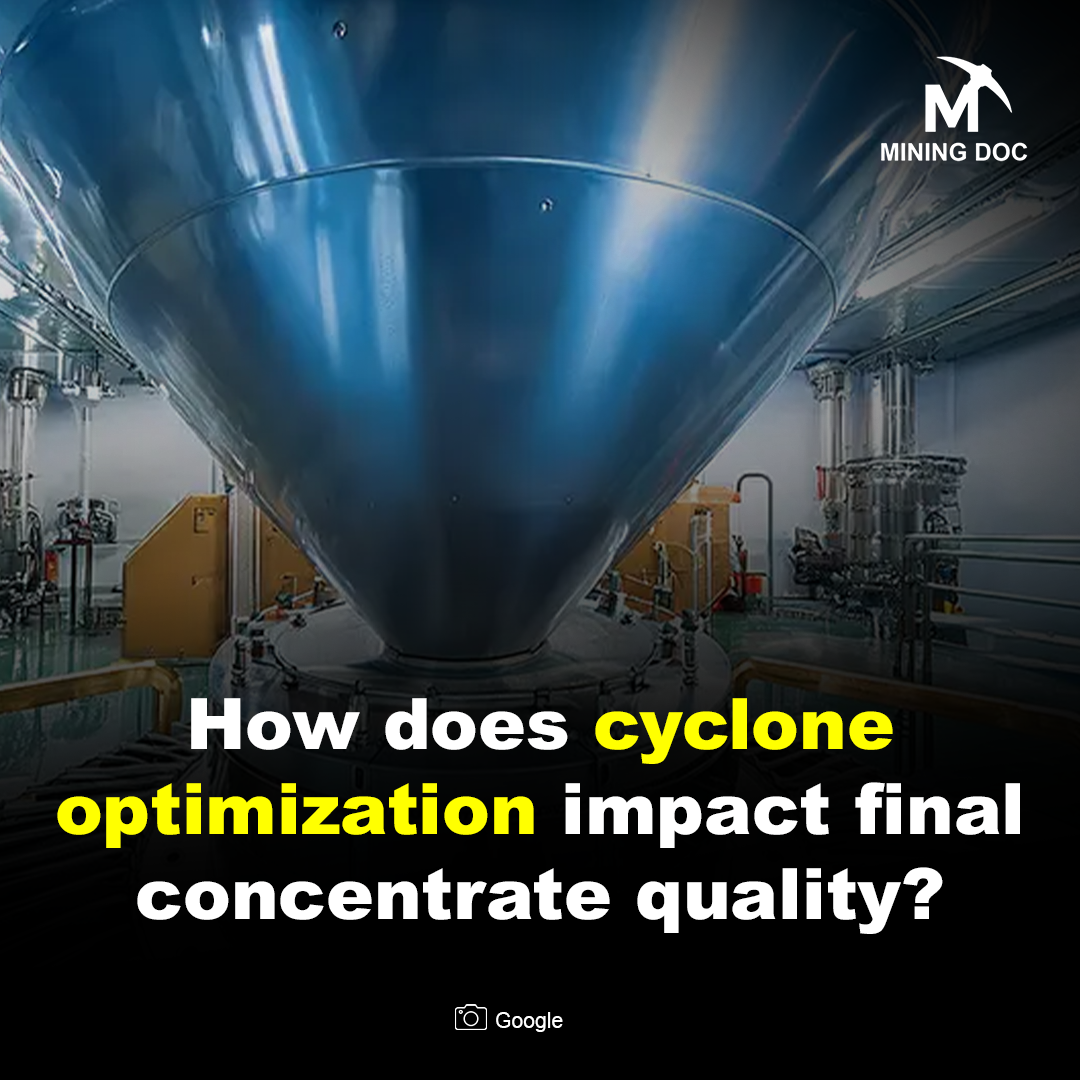
Optimizing hydro cyclone performance in mineral processing tightens classification efficiency by ensuring sharper cut points between particles. By adjusting feed pressure and apex size, operators reduce particle misplacement and minimize the “fish-hook” effect where valuable fines bypass to the underflow (Wills & Finch, 2015). This precision delivers a cleaner overflow to flotation circuits, directly boosting final concentrate grade and overall metal recovery.
Strategic classification significantly reduces the circulating load, preventing the inefficient over-grinding of already-liberated minerals in the mill. Improved P80 control enhances downstream selectivity and reduces reagent waste, which are critical ESG priorities for energy-intensive circuits (Heiskanen, 1993). Well-tuned cyclones commonly achieve 5–15% improvements in concentrate grade by stabilizing the feed for AI-driven flotation dosing.
The result is a more predictable grinding-classification circuit that maximizes mineral liberation while protecting the plant’s bottom line. Continuous monitoring of pressure and density ensures that tailings circuits consistently meet specifications while protecting against operational surges (Cilliers, 2000). Ultimately, precision at the cyclone level transforms the entire recovery process into a more sustainable and profitable venture.
References:
-
Wills, B. A., & Finch, J. A. (2015). Wills’ Mineral Processing Technology. Elsevier.
-
Heiskanen, K. (1993). Particle Classification. Chapman & Hall.
-
Cilliers, J. J. (2000). Hydrocyclones for Particle Size Separation. Encyclopedia of Separation Science.