Project economics refers to a holistic approach towards the financial analysis of potential investment proposals to ascertain their feasibility. Exchange rate fluctuation refers to the unforeseen changes in the value of currencies (Morina et al., 2020). Whenever projects require foreign investments, international financing or imported materials, then such fluctuation becomes an important financial risk. Therefore, subjecting the project economics to shock through stress testing is important to ensure that the project can weather financial shock without affecting its capacity to operate.
Stress testing is a complex risk management process designed to generate the worst but realistic economic scenario. The stability of the entire financial system plays a significant role in the transmission of economic shock in emerging economies. Such a shock triggers exchange rate fluctuation (Tiwary et al., 2022). In order to evaluate the transmission of such shocks to the cash flow of the project, systematic stress testing is important. Through stress testing, financial experts are able to prevent sudden depreciation of local currencies, which will increase the burden of foreign debt service costs.
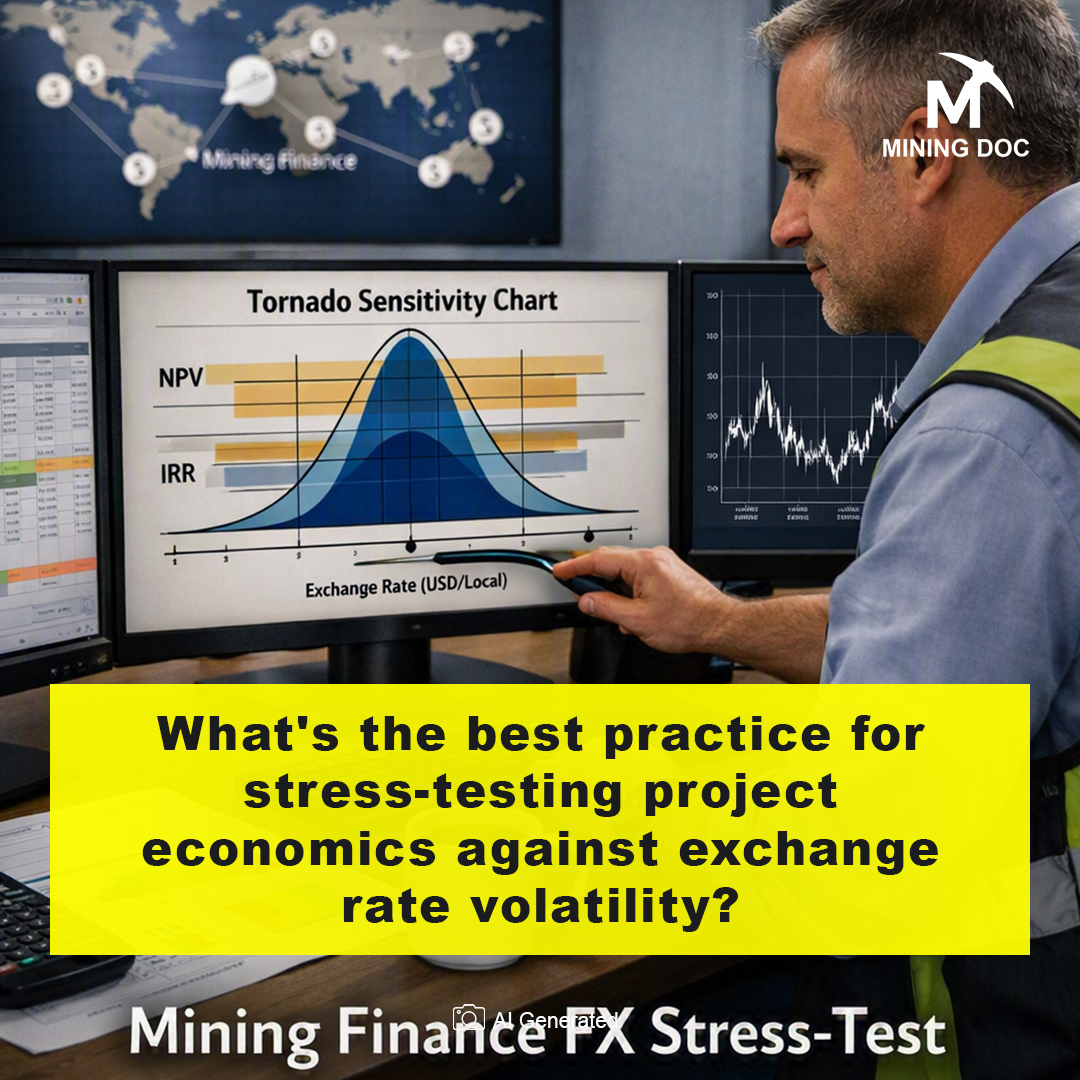
The other important part of stress testing entails a comprehensive sensitivity analysis. Sensitivity analysis is used by project managers to explain how financial models behave and predict possible outcomes based on data-driven projections (Gaytán Cortés, 2022). By focusing only on the exchange rate and altering its values, while holding all the rest variables constant, one will be able to see the impact of such an action directly on the liquidity of the project. In this way, the specific level of the currency depreciation will be found when the project becomes unviable from the economic point of view.
Proper conduct of the stress tests is initiated by creating dynamic and challenging scenarios. It means that the use of historical average is not enough for the financial models to predict future results; they should include adverse scenarios like depreciation of the local operating currency by 20%-30%. Then analysts need to see how the stress will affect the most important metrics, including the NPV, the IRR and DSCR. The good project is expected to withstand any stress, especially keeping the healthy DSCR.
It is vital that stress testing serve as a mechanism for obtaining feedback and not only as a routine diagnostic tool. Upon identification of the particular weaknesses of a project, the sponsor needs to employ efficient means of mitigating risks, such as creation of natural hedges, keeping liquidity buffers in the funding currency or altering the initial ratio of debt and equity. In view of the fact that proper handling of exchange rate risks involves resolving weaknesses in the financial system (Tiwary et al., 2022), the use of such buffers before making the final investment decision becomes necessary.
To conclude, stress testing of project economics in the context of exchange rate volatility is an important practice in modern project financing. With the help of the analysis of sensitivities at the early stages of planning, the investors will be able to protect their investments from possible macroeconomic shocks (Gaytán Cortés, 2022). It is crucial to acknowledge the negative impact of exchange rate volatility on general economic growth and project stability in order to engage in adequate planning (Morina et al., 2020).
References
Gaytán Cortés, J. (2022). Sensitivity Analysis and Financial Decisions. Mercados y Negocios, 107–118. https://doi.org/10.32870/myn.vi47.7683
Morina, F., Hysa, E., Ergün, U., Panait, M., & Voica, M. C. (2020). The Effect of Exchange Rate Volatility on Economic Growth: Case of the CEE Countries. Journal of Risk and Financial Management, 13(8), 177. https://doi.org/10.3390/jrfm13080177
Tiwary, D., Das, K. C., Shettigar, J., & Misra, P. (2022). Exchange Rate Volatility and Financial Stress: Evidence from Developing Asia. Journal of Emerging Market Finance, 21, 355–384. https://doi.org/10.1177/09726527221078634