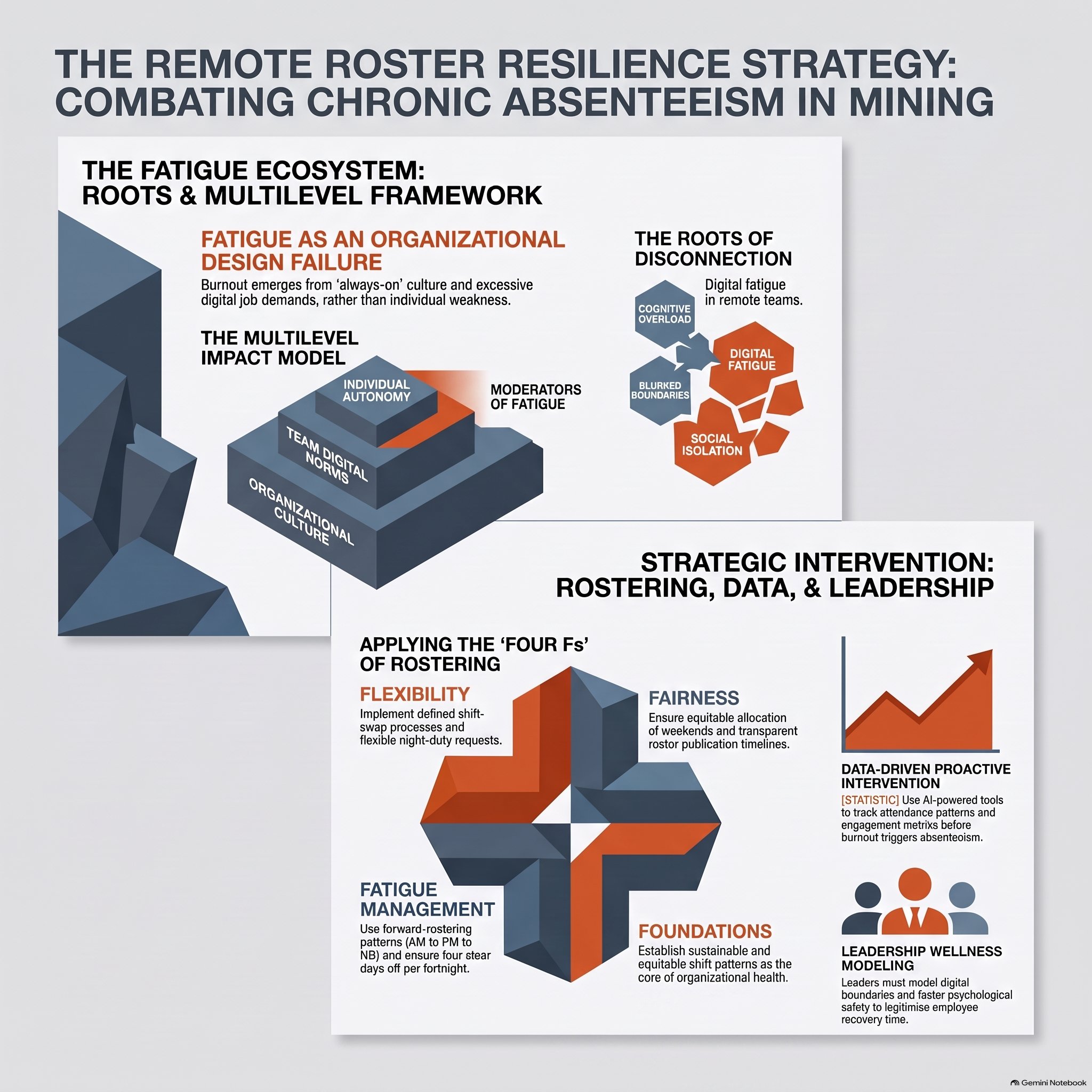
Safety and efficiency in the mining industry depend largely on the availability of personnel who are physically and mentally awake. Fatigue is considered a physical or mental state of tiredness which lowers vigilance and increases the chance of making mistakes and being involved in accidents and injuries. Work in the mines involves long working hours, shifts, considerable physical strain, sustained mental activity and exposure to stress factors in the form of noise, heat and vibrations from the machines. When all these factors come together, they gradually drain the cognitive and physical resources of the employees leading to absenteeism and poor participation. Thus, mining managers, safety officers and workforce planners need to adopt a systematic approach to managing the risk of fatigue and flexible rosters.
Employee fatigue arises because of work scheduling in mining settings. Long shifts, night shifts in succession, and unpredictable shift changeovers limit the ability to have continuous periods of sleep to facilitate proper physical and mental relaxation. Alertness of a human being follows a natural rhythm of circadian, with low points at around 3:00 – 5:00, and then at 15:00 – 17:00. Carrying out complex and risky operations, such as using mobile plant equipment, handling materials manually, and working in enclosed places, becomes dangerous during the time of circadian low functioning. Unfavorable environmental factors like excessive temperatures, vibration due to using tools, and the need to maintain mental vigilance speed up the onset of fatigue. Moreover, the long travel distances to mining sites exacerbate the problem.
Roster construction is a key managerial tool to control risks associated with fatigue in the workplace. Mine schedulers should limit night shift work to four nights in a row and schedule shift rosters that rotate from early to late shifts in line with circadian rhythms. Rest periods within the shift should be practical and facilitate physical relaxation and replenishment. The shift roster should allow for a minimum of two consecutive nights of proper sleep following a period of night shifts, so that the employee does not suffer from any sleep deprivation. Heavy tasks that are not urgent should be scheduled around circadian nadirs, while complicated and risky tasks should be scheduled for day shifts.
The absence behavior of the employee is influenced by various aspects including tiredness, workload, and schedule conflicts. The absence of employees that occurs spontaneously causes interruptions in production processes, places additional pressure on the workload of employees present at work and leads to higher operational expenses. Analysis of absence data, including lost-time ratios, distribution frequencies, and types of absence, gives valuable information about workforce regarding the identification of burnout tendencies. Roster flexibility, supported by guidelines of supervisors and shift exchange among peers, allows giving employees an opportunity to influence their schedules.
Sustainable mining processes require a forward-thinking approach to managing fatigue risks as well as maintaining health and safety at the workplace. The systematic planning of rosters, limitation on shift durations, provision of appropriate recovery time between assignments, and flexible scheduling help prevent accidents as well as reduce absenteeism. Management in operations promotes safety at the workplace by attending to physiological requirements of the job, working environment, and possibilities of getting proper sleep. The responsibility of observing signs of fatigue, practicing rest hygiene, and maintaining communication lines belongs to both the employer and site personnel.