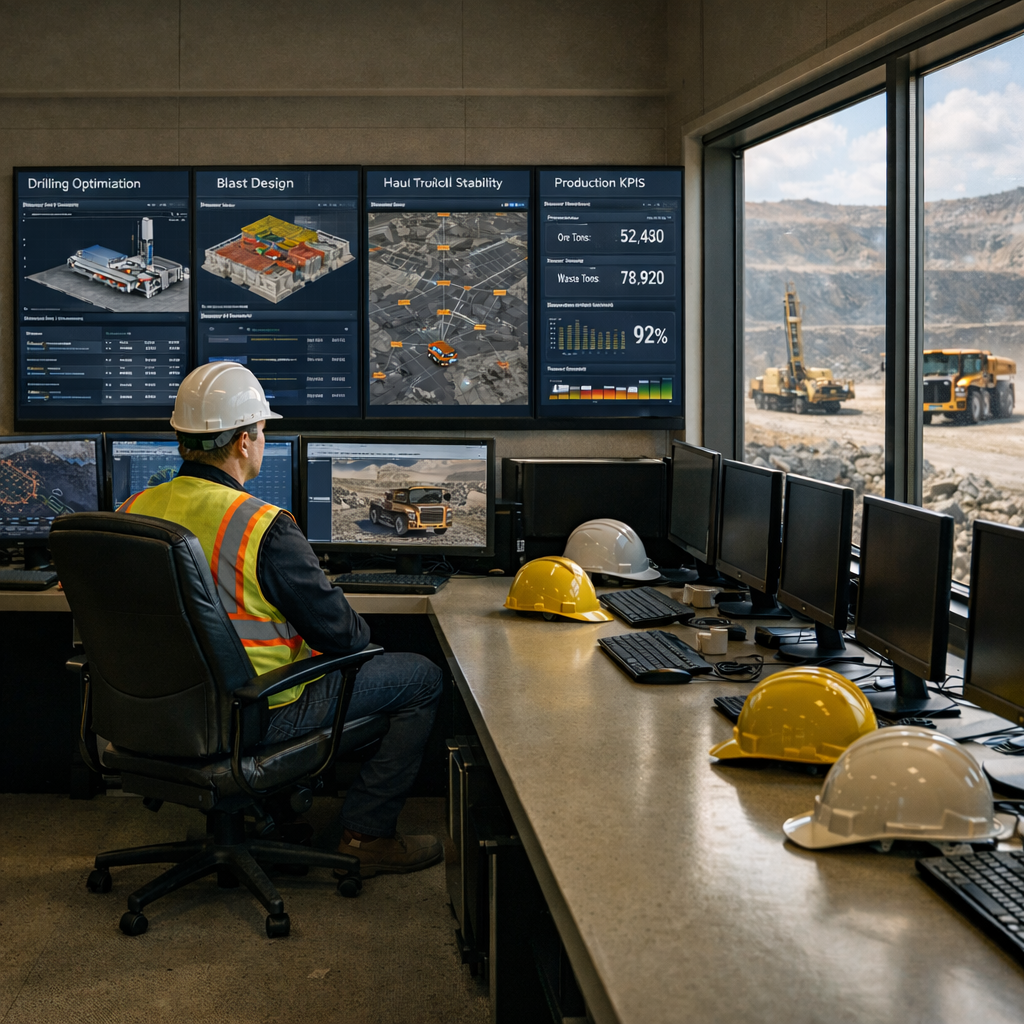
The global mining industry is undergoing a paradigm shift driven by the Fourth Industrial Revolution. As industries strive for greater efficiency, safety, and sustainability, Artificial Intelligence (AI) has emerged as a central catalyst for change. Recent assessments indicate that AI and automation could affect approximately 40% of jobs globally by 2030, with a particular impact on emerging markets and technical sectors such as mining (Joshi, 2025). While the narrative of “replacement” is common, scientific literature suggests a more nuanced evolution of the mining engineer’s role.
Automation and task displacement
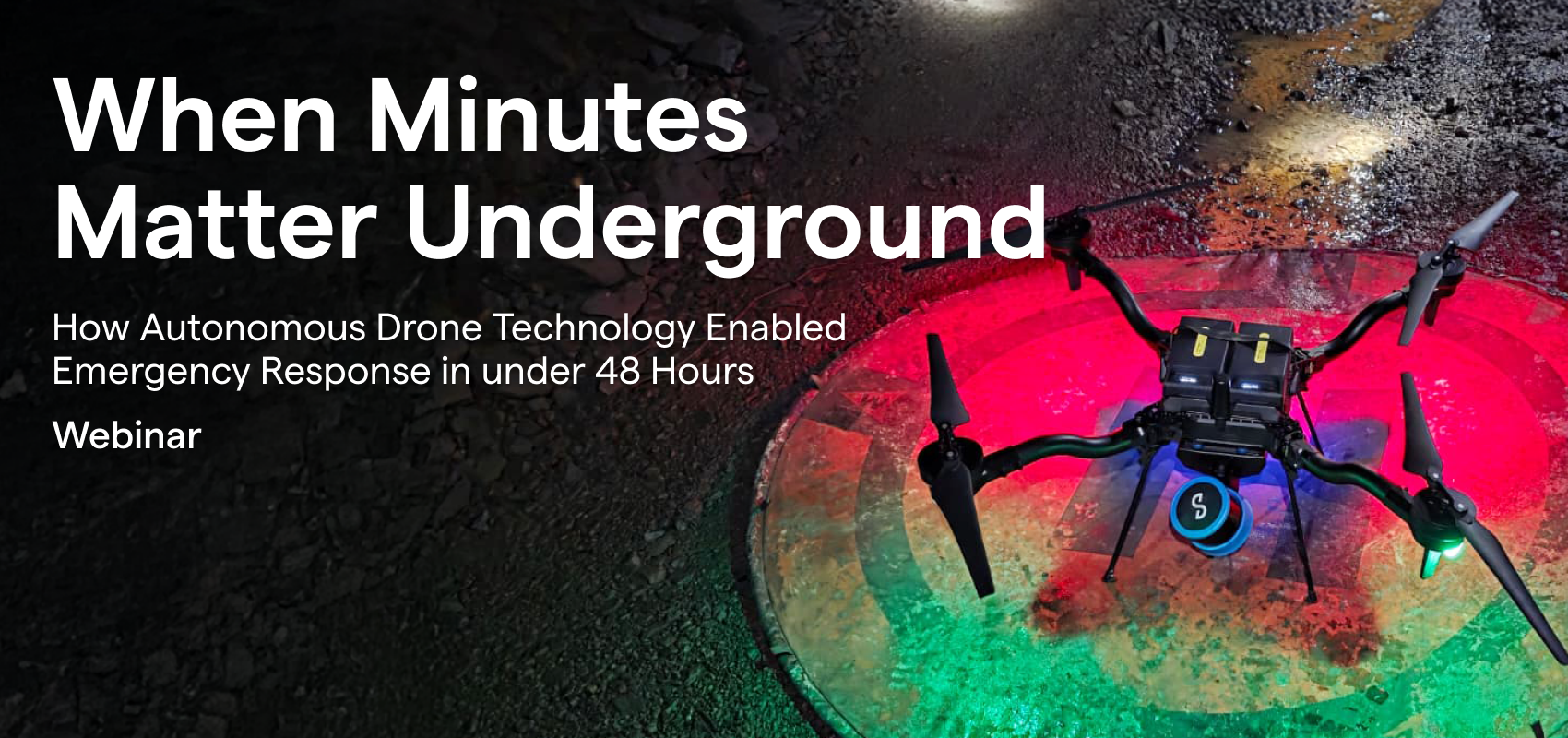
The traditional image of mining—defined by manual labor and hazardous on-site engineering—is being replaced by an intelligent mining paradigm. Autonomous equipment, including drones and remotely piloted aircraft, is increasingly performing tasks previously managed by human engineers (Osei et al., 2025). This shift is particularly acute in hazardous environments where AI-powered “robot miners” replace humans to enhance safety and health outcomes (Chen et al., 2024).
Research indicates that the susceptibility of engineering roles to computerisation depends on the nature of the tasks involved. Routine cognitive and physical tasks are highly exposed to automation (Frey & Osborne, 2017). In mining, this includes routine site monitoring, data collection for environmental impact assessments, and basic logistical coordination. AI-based approaches, such as AutoML and Bayesian modeling, are already being implemented to conduct environmental assessments with minimal human bias, streamlining functions that once required extensive manual oversight from mining engineers (Gerassis et al., 2021).
The skill-biased transformation
The integration of AI does not merely eliminate roles; it reshapes the required skill sets. There is a documented “skill-biased” effect where AI suppresses demand for low-skilled labor while markedly enhancing the demand for high-skilled, technically savvy personnel (Liang et al., 2025). For mining engineers, this means a transition from traditional field-based activities to remote operations and software-driven decision-making.
By 2030, the “human miner” will likely evolve into a “data engineer” or “AI supervisor” (Chen et al., 2024). These professionals will be tasked with developing software to decode site data, refining AI models, and overseeing human-machine collaboration (Osei et al., 2025). The World Bank notes that while generative AI automates cognitive tasks, it also creates a need for “prompt engineering” and advanced analytical capabilities to manage these complex systems.
Socio-economic implications and resilience
The projection that AI could impact up to 40% of the workforce carries significant socio-economic risks, including job insecurity and heightened psychosocial stress (Edith Cowan University, 2024). Furthermore, early-career engineers may face a more challenging entry into the market, as firms increasingly automate entry-level roles while retaining experienced staff who possess uncodified, tacit knowledge (“Canaries in the Coal Mine?,” n.d.).
To mitigate these risks, educational institutions must revamp curricula to focus on “socio-enviro-technical integration.” Engineering graduates must now possess not only technical proficiency but also sustainability skills and the ability to manage AI systems ethically (Cañavate et al., 2025).
Conclusion
While AI is set to disrupt approximately 40% of traditional mining engineering functions by 2030, the “replacement” is better characterized as a transformation. The industry is moving toward a future where human expertise complements robotic precision. By embracing AI for data-driven innovation and environmental stewardship, the mining sector can achieve unprecedented productivity and safety, provided that the workforce is proactively reskilled for this new digital frontier.
References
Canaries in the Coal Mine? Six Facts about the Recent Employment Effects of Artificial Intelligence. (n.d.). Stanford Digital Economy Lab. Retrieved February 6, 2026, from https://digitaleconomy.stanford.edu/publication/canaries-in-the-coal-mine-six-facts-about-the-recent-employment-effects-of-artificial-intelligence/
Cañavate, J., Martínez-Marroquín, E., & Colom, X. (2025). Engineering a Sustainable Future Through the Integration of Generative AI in Engineering Education. Sustainability, 17(7). https://doi.org/10.3390/su17073201
Chen, L., Xie, Y., Wang, Y., Ge, S., & Wang, F.-Y. (2024). Sustainable Mining in the Era of Artificial Intelligence. IEEE/CAA Journal of Automatica Sinica, 11(1), 1–4. https://doi.org/10.1109/JAS.2023.124182
Edith Cowan University, P. (2024, April 2). Integrating AI and Automation: Examining the Impact on Work Environments and Psychosocial Well-Being of Workers. Edith Cowan University, Perth, Western Australia. (Australia). ECU. https://www.ecu.edu.au/schools/business-and-law/research/research-disciplines/business-systems/integrating-ai-and-automation-examining-the-impact-on-work-environments-and-psychosocial-well-being-of-workers
Frey, C. B., & Osborne, M. A. (2017). The future of employment: How susceptible are jobs to computerisation? Technological Forecasting and Social Change, 114, 254–280. https://doi.org/10.1016/j.techfore.2016.08.019
Gerassis, S., Giráldez, E., Pazo-Rodríguez, M., Saavedra, Á., & Taboada, J. (2021). AI Approaches to Environmental Impact Assessments (EIAs) in the Mining and Metals Sector Using AutoML and Bayesian Modeling. Applied Sciences, 11(17). https://doi.org/10.3390/app11177914
Joshi, S. (2025). The Transformative Impact of Artificial Intelligence on US Labor Markets: Workforce Disruption, Skill Evolution, and the Emergence of Prompt Engineering. https://doi.org/10.2139/ssrn.5783444
Liang, H., Fan, J., & Wang, Y. (2025). Artificial Intelligence, Technological Innovation, and Employment Transformation for Sustainable Development: Evidence from China. Sustainability, 17(9). https://doi.org/10.3390/su17093842
Osei, R., Frimpong, S., & Venkat, A. (2025). Human-machine collaboration in mining: A critical review of emerging frontiers of intelligence systems in the mining industry. The Extractive Industries and Society, 24, 101746. https://doi.org/10.1016/j.exis.2025.101746