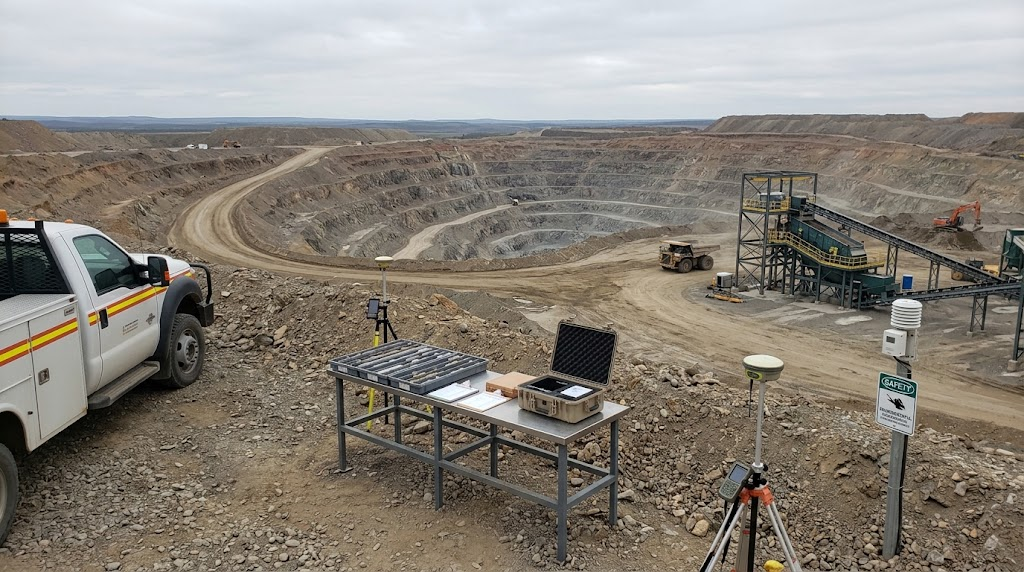
Mining is a delicate exercise for operators who are at the throes of gaining sound technical know-how, reliable machinery and well trained crew. A miscalculation or overlooked maintenance window, for instance, can affect overall productivity, add to operation costs and compromise the safety of personnel.
Field operators continue to invest in technology that enhances accuracy and equipment reliability but an effective operational performance requires looking beyond what goes below ground level or within processing facilities. It involves examining the precision of field measurements and worker well-being.
Why precision is important in mining operations
Accuracy is critical in mining operations as geological surveys are geared towards identifying lucrative ore deposits and drilling programs enable engineers to obtain information that can be used to plan mining activities such as production scheduling, estimation and grade control.
Lapses in precision during geological surveys pose multiple challenges as engineers could find themselves removing large volumes of waste material after finding out that an ore deposit is not economically viable.
Similarly, inaccurate installation of mining equipment can lead to excessive vibrations that speeds up machine deterioration and causes frequent breakdowns.
Precision measurements aids in informed decision-making
Survey crews utilise tools that measure distance, inclination, pressure, temperature and vibration to make decisions about mining activities. The accuracy of these instruments is critical to supporting sound decision-making in the wake of changing conditions at the worksite.
The calibration of sensors is regularly done as these tools are susceptible to gradual shifts in performance that could lead to faulty readings. Ideally, engineers should periodically verify the accuracy of the instruments they use including those used to measure atmospheric conditions.
Individuals making field measurements must rely on personal tools to provide consistent readings at all times. For instance, a Tissot watch enables individuals to check the time easily, especially when they are away from processing stations. Although this instrument should not replace SCADA systems and synchronised time clocks at a manufacturing plant, it promotes standardised procedures at all times.
Equipment reliability start with preventive maintenance
Mining equipment is prone to frequent wear and tear due to the abrasive nature of the minerals it handles, the weight of materials being transported and extreme environmental conditions. This makes preventive maintenance integral to extending the lifespan of mining equipment.
The key role of preventive maintenance is to detect early signs of wear so that technicians can adjust or replace defective parts in good time.
The common signs of impending failure in mining equipment may include:
Irregular vibrations due to unbalanced rotating machinery, misaligned components or faulty bearings
Temperature fluctuations due to abnormal friction
Abnormally high or low pressure in fluid lines
Unusual noise emanating from defective components
Higher energy consumption due to internal malfunctions
Although these signs rarely point to a specific problem, they are informative in identifying potential problems and formulating suitable maintenance strategies.
Condition monitoring data informs maintenance scheduling
Data collected during condition monitoring is useful in developing maintenance schedules. For instance, a maintenance worker can use records about the performance of vibrating screens to determine whether a machine requires servicing or not.
Monitoring data also helps technicians determine the scope of maintenance. For instance, if historical data indicates that a centrifuge has been operating within normal parameters, workers can decide to defer maintenance until later. Predictive maintenance software provides this information although its effectiveness depends on the reliability of the physical tools used and the integrity of the data being processed. Condition monitoring should, therefore, be carried out regularly to support timely maintenance decisions.
Understanding the properties of minerals
Mining operations require an in-depth understanding of the characteristics of the minerals being extracted as two seemingly similar rock formations could behave differently when subjected to drilling, blasting, crushing or flotation due to differences in their composition.
Geologists and metallurgists carry out tests to determine the density, hardness, lineament, distribution and chemical composition of the target minerals. Such information guides the selection of equipment as well as the processing circuitry.
Why geological characterisation is important
For instance, inconsistent hardness in a given formation combined with poor assumptions in designing a milling circuit could lead to rapid wear of mill linings and high energy consumption at the crushing station. The same applies to the uniformity of mineral dissemination; poor dissolution in a flotation circuit leads to low concentrate recovery.
It is worth noting that samples taken to determine the properties of a given ore must be highly representative to avoid skewed results. The collection and preparation procedures must also be standardised to ensure consistency. Poor sampling undermines downstream analyses and, by extension, the reliability of subsequent studies.
From industrial minerals to gemstones – characterisation guides value assessment
The importance of characterisation is evident in determining the value of gemstones. Although miners are interested in high-recovery veins or deposits, the cut, colour and clarity of the gems are integral to determining the final value.
Diamond ring appraisers exemplify how characterisation informs value assessment. Rough diamonds undergo several stages – evaluation, sorting, cutting and polishing – before being sold as diamond rings. The value of gemstones is largely determined by their quality, cut and size. Similarly, the number of tons mined, grade of the deposit and the amount of waste material influence the value of industrial minerals. In this case, material handling and proper characterisation play a significant role in mining operations.
Enhancing worker safety through improved operational design
The success of any mining operation hinges on the people involved. Mechanics ensure equipment breakdowns are minimal while operators monitor the production process to ensure there are no irregularities. As such, operators must implement measures that promote occupational safety.
How to enhance occupational safety in a mining environment
It is worth noting that the control measures to be implemented depend on the processes taking place at the mine. Heavy haulage, overhead lifting, exposure to loud noise and airborne dust are some of the dangers associated with mining. As such, operators must implement site-specific control measures such as machine guards and lockout/tagout procedures. Moreover, automated systems should be leveraged to reduce the risk of exposure to these dangers.
However, automation comes with its own risks as operators must understand how the systems being operated behave under different conditions. As such, it is important for workers to gain a good working knowledge of automated equipment and address any anomalies detected during routine rounds.
Creating a strong occupational safety culture
Developing a strong occupational safety policy entails cultivating a positive safety culture that empowers workers to take responsibility for their safety and that of others. As such, it is important for organisations to develop policies that encourage open and honest communication of near miss incidents for the entire team to learn from.
Workers must carry out regular verbal safety talks, especially during pre-shift safety meetings and handover meetings. Such events can provide a platform for addressing specific health and safety concerns in an appropriate setting. Supervisors should encourage workers to report unsafe working conditions without penalty allowing corrective measures to be taken in a timely manner.
Worker well-being and the importance of fitness
Workers who lead busy lifestyles or work at mining camps away from their families often neglect their fitness needs. Moreover, long hours at work expose these professionals to fatigue, which limits their ability to detect potential hazards in time. As such, it is important for the company to support wellness strategies that improve the overall well-being of the workers.
The role of fitness in promoting well-being
Fitness activities promote physical and mental well-being, making it important for employees to participate in such events at regular intervals. Individuals can achieve these health benefits by incorporating exercise into their daily routines. A rebounder, for instance, is a good exercise tool that can be used at mining camps without taking up much space. Nonetheless, it is important to note that these activities are appropriate for individuals whose body mass index and overall health status permits.
Similarly, workout trampoline can help workers at camps that have adequate space and ceiling height. However, the trampoline should be placed on a stable surface to avoid vibration and periodic inspection should be carried out to detect defects early.
Fitness activities cannot replace good working hours or the provision of quality accommodation. Nonetheless, operators should invest more in fitness activities that support physical and psychological well-being while adhering to established occupational safety standards.
The importance of fatigue risk management
Fatigue management has become increasingly significant in the mining industry due to the complex nature of contemporary excavating equipment. Moreover, the introduction of highly automated systems has reduced the number of personnel deployed at the worksite. Fatigue reduces a worker’s awareness and alertness, thereby compromising health and safety.
How to manage fatigue in a mining environment
The most practical way of managing fatigue is by encouraging employees to adopt healthy working and sleeping patterns. In addition, operators should use innovative wellness technologies to promote fitness and support healthy lifestyles. Shift rotation charts should be used judiciously to avoid consecutive night shifts and allow workers to have sufficient rest between shifts. Ideally, highly alerting tasks should be reserved for day workers and not night shift workers.
Conclusion
This guide highlights the key considerations in enhancing the efficiency and safety of mining operations. Survey accuracy enables operators to utilise the right machinery to maximise performance while preventive maintenance plays a pivotal role in minimising downtime. Moreover, the guide illustrates how mineral characterisation and operational considerations influence material handling and production decisions in the mining industry. By investing in these four areas, the mining industry can unlock huge potential to enhance performance.
The most effective techniques and strategies are those that have been proven to perform consistently. As such, it is important for operators to carry out comprehensive testing of proposed solutions before full-scale adoption. These tests should be used to develop baseline performance metrics that will help assess the impact of new technologies objectively.
The importance of digital systems in decision-making and management
Modern mining operations generate huge volumes of data on a daily basis. Information about drilling, fleet operation, and processing plant performance is used in decision-making at the mine. Nonetheless, information stored in disparate systems is rendered useless as it fails to provide a complete picture of ground conditions.
How digital networks support operational performance
A dashboard displaying critical information about engine hours, alarms and fluid analysis can help planners and maintainers make informed decisions about the best course of action. Similarly, geological block models can be updated with new data collected at the worksite, enabling mine planners to make rational long-term decisions concerning production scheduling and grade estimation.
It is important to note that a digital system is only as good as the information being inputted into it. Information such as log entries and block models should, therefore, be validated periodically for accuracy and integrity.
Assessing the impact of technological improvements on operational performance
Operators should focus on technologies and strategies that address specific performance issues in their mining operations. It is critical to identify performance indicators that should be monitored and measured to evaluate the effectiveness of proposed changes. Some of the key performance indicators that can be used include equipment availability rate and OEE (overall equipment effectiveness), number of unplanned downtime occurrences and associated costs, power consumption, safety observations and mill recovery.
Establishing a baseline is useful in determining whether the proposed change or strategy has the intended effect. It is equally important to take the total cost of ownership of a proposed solution into account and not just its ability to overcome the identified limitation.