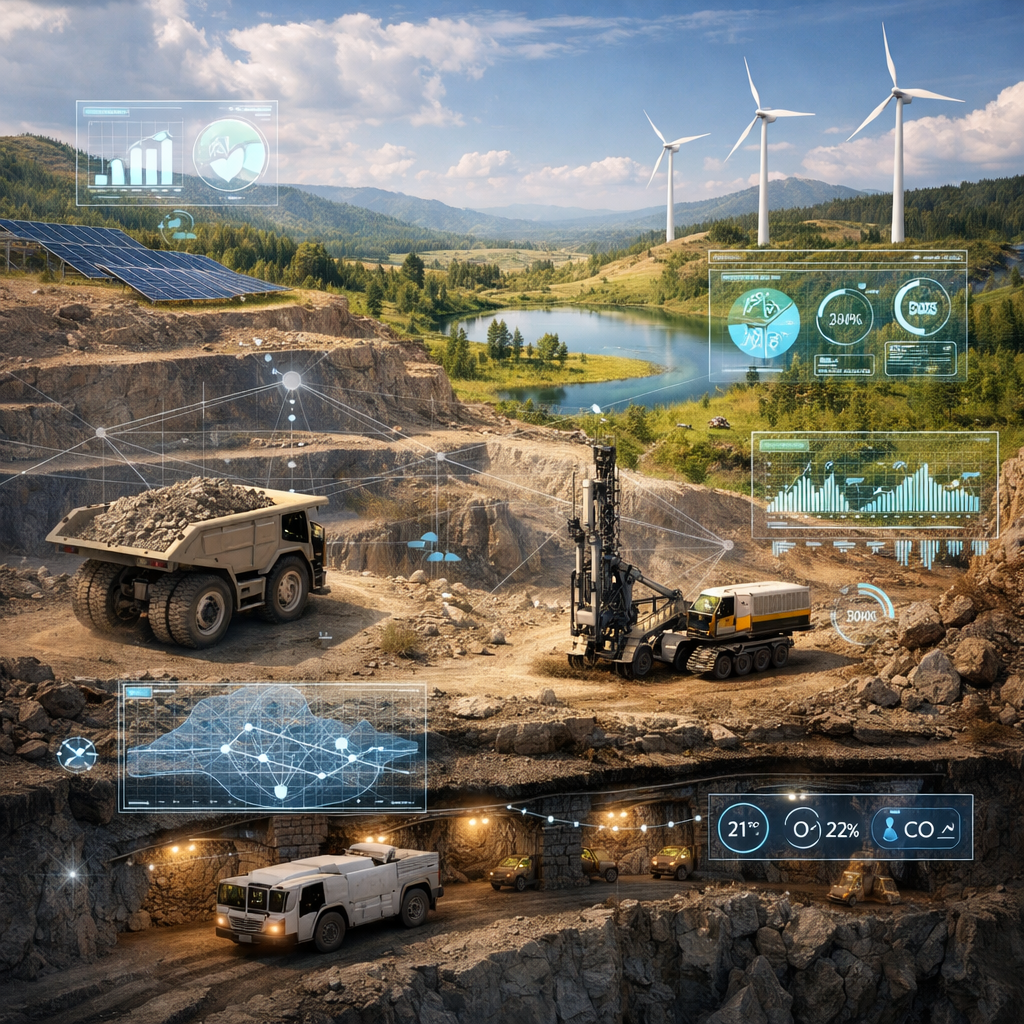
For decades, the phrase “sustainable mining” was often dismissed as an oxymoron. The traditional image of the industry, scarred landscapes, massive tailings dams, and carbon-heavy machinery, seemed fundamentally at odds with environmental preservation. However, as of 2026, the narrative is shifting. Driven by the urgent need for critical minerals like lithium and copper for the green energy transition, technology is no longer just a tool for extraction; it is becoming the primary vehicle for sustainability.
The digital nervous system: ai and IoT
The most significant leap toward sustainability comes from “Mining 5.0,” where Artificial Intelligence (AI) and the Internet of Things (IoT) act as a digital nervous system for the mine. In modern operations, thousands of sensors monitor everything from air quality to equipment health in real time.
AI-driven predictive models allow companies to target ore bodies with surgical precision, reducing the amount of “waste rock” excavated. This “precision mining” ensures that less land is disturbed and fewer resources are spent processing low-grade material. Furthermore, AI-powered predictive maintenance reduces unplanned downtime by up to 35%, ensuring that heavy machinery operates at peak efficiency, thereby minimizing unnecessary fuel consumption and emissions.
Electrification and automation
The transition from diesel-powered fleets to electric and autonomous vehicles is perhaps the most visible change. Battery-electric vehicles (BEVs) are increasingly replacing diesel trucks in underground mines. This does more than just lower the carbon footprint; it eliminates the need for massive, energy-intensive ventilation systems required to clear diesel exhaust, creating a safer and more efficient working environment.
Autonomous haulage systems (AHS) further optimize these benefits. Unlike human drivers, autonomous trucks can be programmed to accelerate and brake in ways that maximize energy efficiency and reduce tire wear. In some of the world’s most advanced sites in Chile and Australia, these fleets are powered by dedicated on-site solar and wind farms, creating a near-closed loop of renewable energy.
Circular mining and waste innovation
Sustainability also means rethinking what we leave behind. Traditional mining creates vast quantities of tailings, waste material often stored in risky dams. Modern technology is transforming these liabilities into assets through circular mining practices:
- Biomining: using microorganisms to leach metals from low-grade ores or mine waste, reducing the need for harsh chemicals like cyanide.
- Dry stack tailings: advanced filtration technology removes water from waste, allowing it to be stacked safely rather than stored in liquid dams, which significantly reduces the risk of catastrophic failures and water contamination.
- Reprocessing: new chemical and mechanical methods are being used to “mine the waste,” extracting secondary minerals from old tailings that were previously discarded.
The verdict: a work in progress
Can technology really make mining sustainable? The answer is a cautious “yes,” provided the industry continues to move beyond mere compliance toward proactive stewardship. While high initial costs and the “operational complexity” of deeper mines remain challenges, the integration of AI, electrification, and circular economy principles is proving that we can extract the materials needed for a green future without destroying the present.