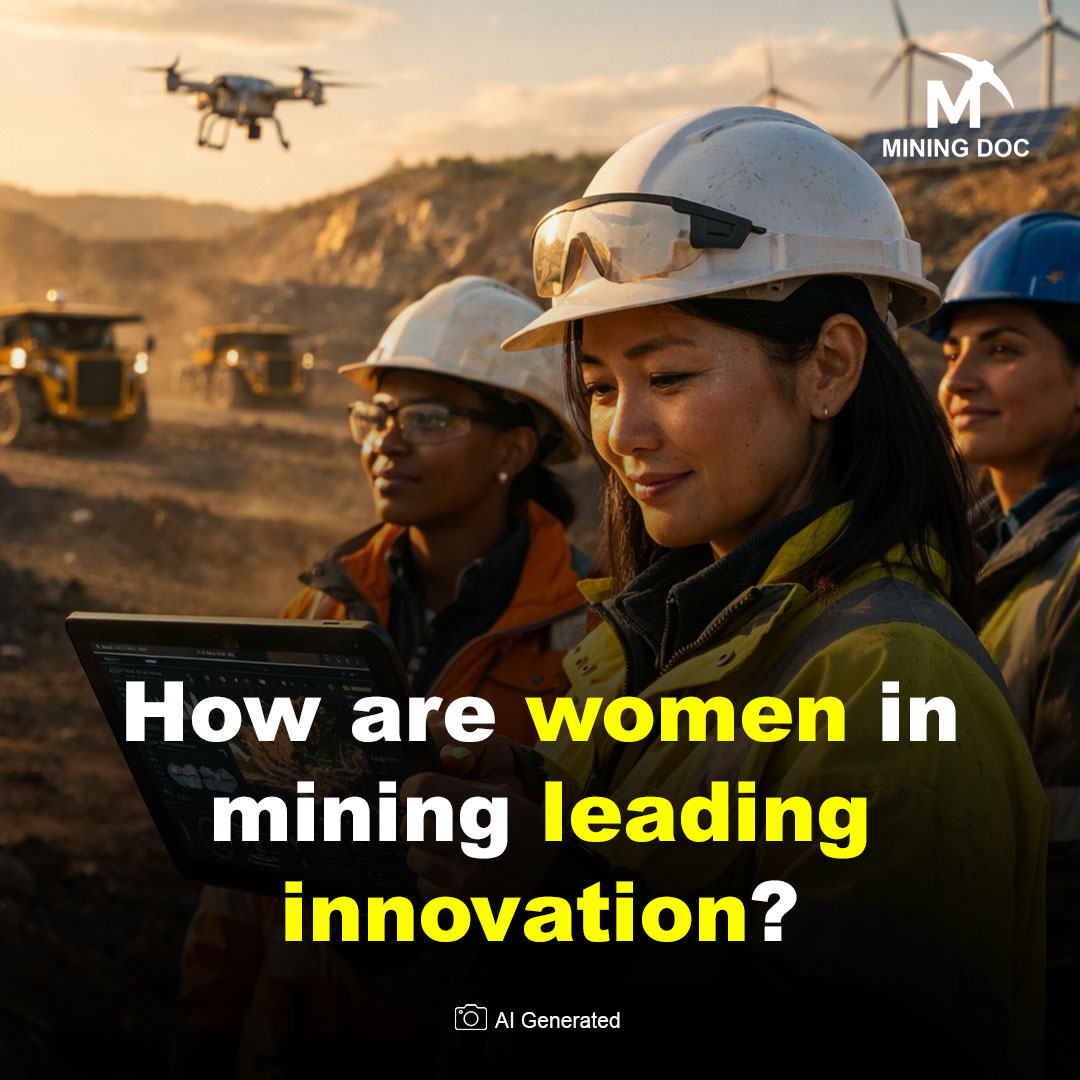
The mining industry worldwide is undergoing a significant paradigm shift, driven by the cumulative effect of digitalization and the energy revolution. This industry, which has been marked by hypermasculinity and discrimination, is increasingly recognizing that gender diversity is a critical catalyst for technical and organizational innovation [1]. Recent literature has emphasized that the incorporation of women is not just a social imperative but a strategic business imperative for organizational resilience and modernization [2].
Women are increasingly taking up prominent positions in the application and implementation of ‘Mine of the Future’ technologies, which include artificial intelligence, big data, and remote operations. According to Morrison, who is cited in [3], female professionals are at the vanguard in ensuring that these technologies are integrated to improve efficiency and minimize environmental degradation. Furthermore, a positive correlation has been noted between female leadership and better Environmental, Social, and Governance (ESG) scores. This is because female leaders prefer a visionary and organic leadership style, which is centered on collaboration, community development, and resource management [4].
Despite these positive contributions, it is estimated that females make up between 8% and 17% of the global mining industry workforce [5]. Gender-blind training, wage inequality, and poor facilities are significant barriers to female participation in mining [6]. However, educational programs are a critical catalyst for change. According to a study carried out by the International Labor Organization (ILO), as education levels improve, females successfully transition from administrative to technical and executive positions [7].
To conclude, it is safe to argue that women in mining are revolutionizing the industry by advocating for sustainable and digitalization practices. This is because they are breaking patriarchal norms and ensuring the industry’s longevity in a post-carbon economy.
References
[1] “Women and the Mine of the Future Global Report”.
[2] “100 Global Inspirational Women in Mining 2020,” International Women in Mining (IWiM). Accessed: Feb. 25, 2026. [Online]. Available: https://internationalwim.org/iwim-reports/100-global-inspirational-women-in-mining-2020/
[3] csmith, “Women making great strides and reshaping the mining industry – Mining Engineering Online – Official Publication of SME.” Accessed: Feb. 25, 2026. [Online]. Available: https://me.smenet.org/women-making-great-strides-and-reshaping-the-mining-industry/
[4] K. Long, “Empowering Women Leaders in SA mining – a prerequisite for sustainable growth,” African Mining Online. Accessed: Feb. 25, 2026. [Online]. Available: https://www.africanmining.co.za/2023/11/22/empowering-women-leaders-in-sa-mining-a-prerequisite-for-sustainable-growth/
[5] K. Fernandez-Stark, V. Couto, and P. Bamber, “Industry 4.0 in Developing Countries: The Mine of the Future and the Role of Women”.
[6] S. M. Baker, T. L. Ngonyama-Ndou, and T. B. Skosana, “Managing gender diversity and barriers to inclusion: lived experiences of women employees in a South African coal mining company,” Front. Sociol., vol. 10, Nov. 2025, doi: 10.3389/fsoc.2025.1681829.
[7] S. Castañeda-Burciaga, O. A. Guirette-Barbosa, M. A. Ramírez-Salazar, J. M. Celaya-Padilla, and L. I. García-Estrada, “Inclusion of Women in the Mining Sector: Challenges and Opportunities Through Education,” Education Sciences, vol. 15, no. 1, Jan. 2025, doi: 10.3390/educsci15010069.