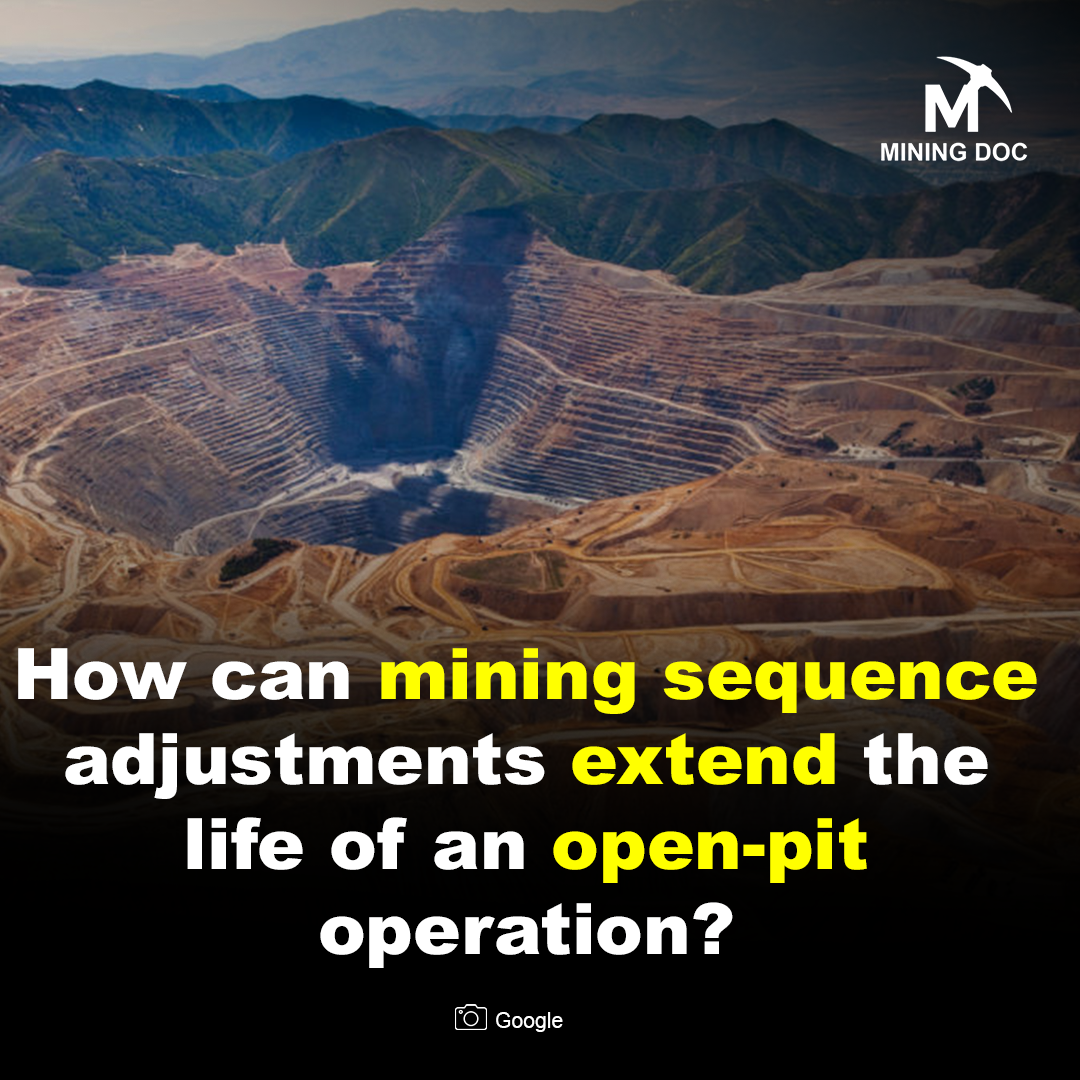
Mining sequence adjustments extend open-pit life by strategically balancing ore extraction against shifting waste stripping requirements. By implementing dynamic sequencing, operators prioritize high-margin ore during market volatility, ensuring sufficient cash flow to sustain long-term stripping (Hustrulid et al., 2013). This flexibility prevents premature closures by adapting to both economic cycles and unforeseen geological challenges.
Strategic “nested pit” designs allow for the deferral of high-ratio waste removal to later years when operational efficiencies are higher. By optimizing the pushback sequence, mines maximize early Net Present Value (NPV) while maintaining access to deeper reserves that might otherwise be deemed uneconomic (Read & Stacey, 2009). This phased approach ensures the operation remains resilient and protects the “tail” of the mine life.
Integrating real-time geotechnical data allows for rapid sequence changes to bypass unstable sectors without halting total production. These adjustments maintain a “steady state” of mill feed while remediation work is performed on high-risk walls (Sullivan, 2007). Ultimately, a flexible mining sequence transforms the mine plan into a living strategy that maximizes resource recovery and operational longevity.
When the market dips or a pit wall flinches, is your mine plan a rigid cage or a flexible shield? Sequencing isn’t just about moving dirt; it’s about buying time. Are you mining for this quarter’s bonus, or for the next decade of operation?
References:
-
Hustrulid, W., et al. (2013). Open Pit Mine Planning and Design.
-
Read, J., & Stacey, P. (2009). Guidelines for Open Pit Slope Design.
-
Sullivan, T. (2007). Geotechnical Considerations in Open Pit Design.