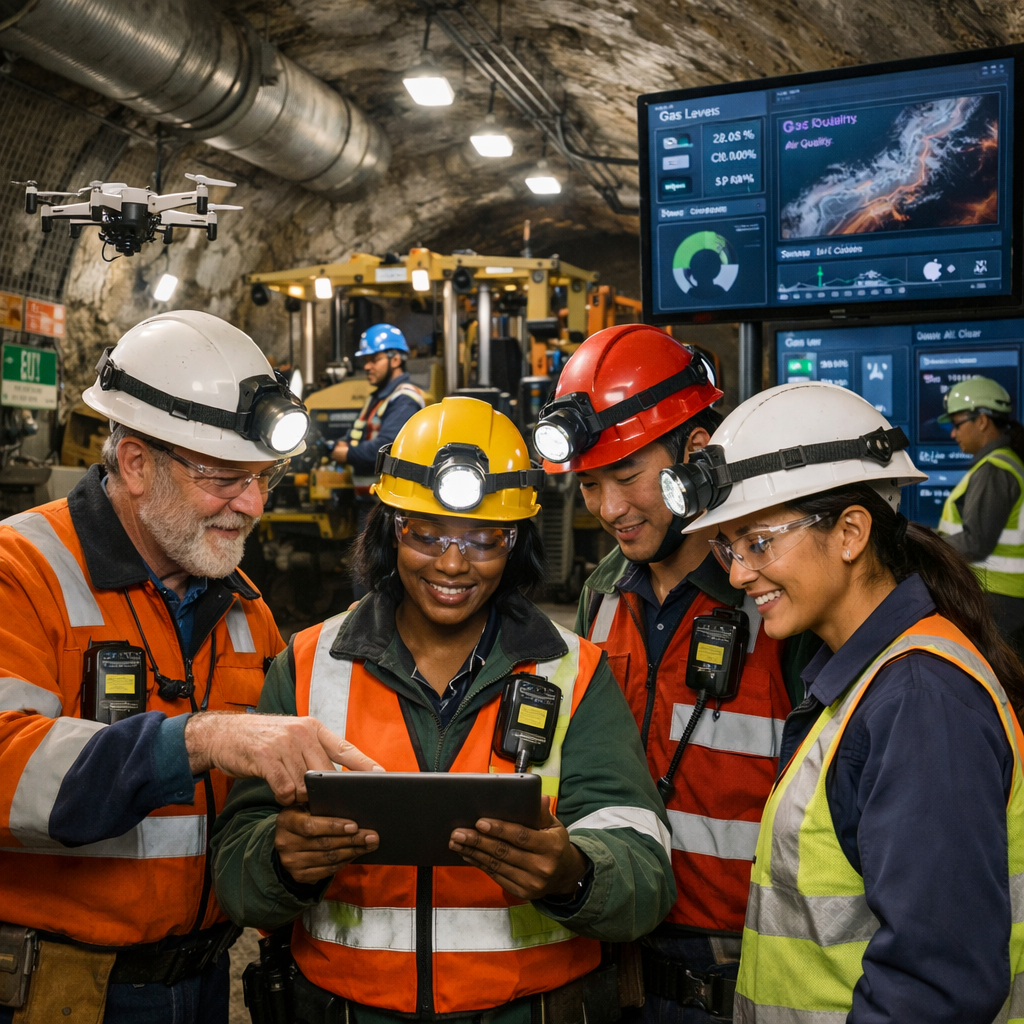
The mining industry is in a paradigm shift in which safety is no longer viewed from an engineering and technical perspective. In this modern world, diversity, including gender, culture, and leadership, is identified as a basic foundation in occupational health and safety. Empirical research has shown that the growth of a diverse workforce is critical in building a mature safety culture (Nelwamondo & Price, n.d.; Shah et al., 2022)
Diversity and the evolution of safety culture
Traditionally, the approach to ensuring the safety of mines was based on a rigid, top-down approach that focused on compliance. However, the latest trends suggest that the way forward in the development of a mature safety culture is to encourage the concept of buy-in, in which many voices and viewpoints are encouraged to participate in the process (Onyeabor & Onyeabor, 2025). The encouragement of diversity can also have a positive effect on safety, since it can help to prevent the phenomenon of groupthink and bring more viewpoints to the table in terms of assessing potential safety risks. For instance, the presence of multiple generations in the management of the organization can have a significant impact on the culture and the intent to comply with safety procedures (Kurata et al., 2022). Having a workforce that consists of people of different ages and cultural backgrounds can result in a more in-depth understanding of the potential safety risks, since there are more mental models and work experiences involved in the process (Kurata et al., 2022).
Inclusive leadership as a safety catalyst
The viability of the mining process from a safety perspective depends on the development of inclusive leadership styles. Leadership styles that prioritize the importance of empathy, respect, and inclusiveness, as represented by the Ubuntu leadership style, have been found to enhance the relationship between social resources and work attitude in a high-risk work environment (Nelwamondo & Price, n.d.). Inclusive leadership styles recognize the individual as a social being and appreciate the diversity of their contributions to the mining process, thereby creating a psychological safety culture in which miners are able to voice their concerns and near-miss incidents without the fear of reprisals, which is a key component of a learning-oriented safety culture (Shah et al., 2022). Ethical leadership styles, which prioritize the importance of transparency and fairness, exhibit a positive relationship with the development of worker well-being and accident reduction in the Congolese and Polish mining industries (Jimmy & Mpungose, 2025; Strzałkowski et al., 2025).
Gender diversity and health outcomes
Gender diversity plays a crucial role in the development of future safety standards. In the past, occupational health and safety (OHS) standards have been based on male physiology, often failing to address the specific health hazards that women face in their line of work. The increasing number of women in the mining sector has made it important to design more gender-diverse safety equipment and OHS protocols, which can help prevent musculoskeletal disorders and other responses to workplace stressors that women often experience in the workplace. Moreover, the development of demining and territory restoration activities aimed at promoting sustainable development goals has shown that gender diversity is important in ensuring the long-term safety of people living near mining areas, as discussed in Rohozian et al., (2024).
Conclusion
As the mining industry moves forward into 2030, diversity will become a major driver of safety innovation, and mining organizations will be able to move beyond compliance and into a work environment that is safe, productive, and resilient by embracing diverse cultural values and leadership styles.
References
Jimmy, I. K., & Mpungose, S. (2025). Investigating the Influence of the Forms of Ethical Leadership in Enhancing Workplace Health and Productivity in the Mining Sector in Congo. International Journal of Applied Research in Business and Management, 6(2). https://doi.org/10.51137/wrp.ijarbm.320
Kurata, Y. B., Ong, A. K. S., Andrada, C. J. C., Manalo, M. N. S., Sunga, E. J. A. U., & Uy, A. R. M. A. (2022). Factors Affecting Perceived Effectiveness of Multigenerational Management Leadership and Metacognition among Service Industry Companies. Sustainability, 14(21). https://doi.org/10.3390/su142113841
Nelwamondo, M. B., & Price, G. (n.d.). Ubuntu leadership and employee engagement in mining: The moderating role of safety culture. SA Journal of Human Resource Management, 23(1), 3065. https://doi.org/10.4102/sajhrm.v23i0.3065
Onyeabor, C. F., & Onyeabor, U. S. (2025). integrating geospatial technologies and machine learning for monitoring and assessing environmental impacts of mining activities in the south east of nigeria: a structured review. fudma journal of sciences, 9(1), 406–422. https://doi.org/10.33003/fjs-2025-0901-3197
Rohozian, Y., Sieriebriak, K., Akhromkin, Y., Plietnov, M., & Vakhlakova, V. (2024). International Determinants of Demining Territories in the Context of Sustainable Development: Economic Projection. Problemy Ekorozwoju, 19(2), 203–214. https://doi.org/10.35784/preko.6202
Shah, H. J., Ou, J. P., Attiq, S., Umer, M., & Wong, W.-K. (2022). Does Inclusive Leadership Improve the Sustainability of Employee Relations? Test of Justice Theory and Employee Perceived Insider Status. Sustainability, 14(21). https://doi.org/10.3390/su142114257
Strzałkowski, P., Bęś, P., Sitarska, M., Woźniak, J., Pactwa, K., Konopacka, Ż., & Niemiec, K. (2025). Management Commitment to Compliance with Occupational Safety and Health Laws and Regulations in Polish Rock Mining Companies. Sustainability, 17(20). https://doi.org/10.3390/su17209168