Sign In


Forgot Password?

Don't have account, Sign Up Here

Forgot Password

Lost your password? Please enter your email address. You will receive a link and will create a new password via email.


Have an account? Sign In Now

Sorry, you do not have permission to Add a Post, You must login to Add a Post.


Forgot Password?

Need An Account, Sign Up Here

Sorry, you do not have permission to add Article.


Forgot Password?

Need An Account, Sign Up Here

Please briefly explain why you feel this Post should be reported.

Please briefly explain why you feel this Comment should be reported.

Please briefly explain why you feel this user should be reported.

Mining Doc Logo Mining Doc Logo Mining Doc Logo
Sign InSign Up

Mining Doc

Mining Doc Navigation

  • Home
    • About
    • Contact us
  • Mining articles
  • Online Courses
Search
Sign up

Mobile menu

Close
join for free
  • Home
  • Online courses
  • Case study
  • Mining Community
  • Solutions listing
    • Lase Solutions
    • O-PitBlast Solutions
    • Continuous Mining
    • Longwall mining
    • Geosight Scanners
    • LoopX AI
    • Terafil solutions
    • Blasting solutions
    • Geotechnical
    • Submersible Pumps
    • Mine rescue system
    • Ore sorting
    • Whittle Consulting Solutions
  • Add Blog
  • Feed
  • User Profile
  • Posts
    • New Posts
    • Trending Posts
    • Must read Posts
    • Hot Posts
  • Polls
  • Badges
  • Home
    • About
    • Contact us
  • Mining articles
  • Online Courses

Mining Doc Latest Posts

Mining Doc
  • 0
  • 0
Mining DocTeacher
Added: March 18, 20262026-03-18T07:01:16-04:00 2026-03-18T07:01:16-04:00In: Mining Human Resources

Safety tips for a geologist in the field?

  • 0
  • 0

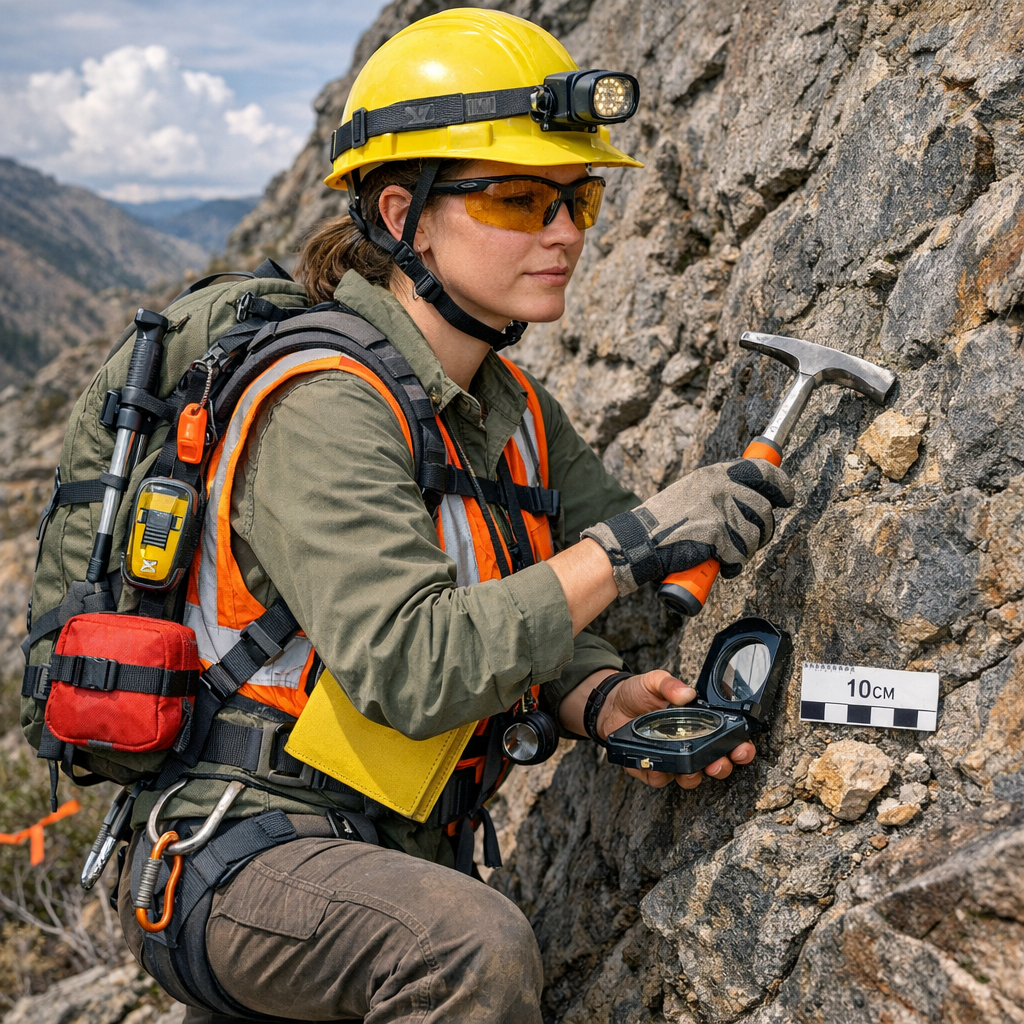
Safety is of utmost importance in geological fieldwork to protect the lives of the personnel involved from major hazards such as unstable terrain, rockfall, remote operations, and severe weather conditions, which may cause harm to the workers, leading to loss of life. Stringent safety measures such as thorough safety planning, risk assessment, and the use of PPE help to respond to emergencies in an effective manner. Let’s explore 20 tips to work safely when you are out for geological activities.

  • Universal safety trinity:field safety relies on three core principles: Being Prepared, Assessing & Monitoring Hazards, and Knowing What to Do in an Emergency.
  • Pre-fieldwork preparation:before heading out, ensure you have the correct, working equipment, including navigation tools (map, compass, GPS), sufficient food and emergency rations, and appropriate clothing for all weather conditions.
  • Communication is key:always carry a reliable means of raising emergency services, such as a mobile phone, radio, or satellite phone, and be aware of signal coverage in your area.
  • First aid readiness:at least one member of the party must be trained in first aid, and a well-stocked first aid kit is non-negotiable.
  • Conduct a risk assessment:if required, complete a risk assessment form and be honest about your physical fitness for the terrain you plan to traverse.
  • Remote hazard assessment:before entering an area, assess potential hazards by consulting maps, satellite imagery (like Google Earth), aerial photos, or speaking with someone who has been there before.
  • Continuous on-site monitoring:hazards can change rapidly. Constantly monitor your surroundings for new dangers, even in familiar locations, and be prepared to abandon a locality if conditions become too dangerous.
  • Rockfall protocol:always wear a certified hard hat near cliffs or slopes. Avoid areas with recent rockfall, large overhangs, or unstable faces, and be mindful not to dislodge rocks onto others.
  • Avalanche awareness:in mountainous snowy terrain, be aware that avalanches are most common on 30-45° convex slopes after new snow or during temperature changes. Stick to ridges or wooded/uneven slopes.
  • Coastal and tidal safety:when working on tidal coasts, know the time and height of high tide, identify potential cut-off points, and be wary of onshore winds that can cause higher-than-average tides.
  • Slip, trip, and fall prevention:wear sturdy footwear that supports your ankles. Avoid slippery, algae-covered rocks by walking above or below the algal zone. Take your time navigating boulder fields and uneven terrain to avoid fatigue-induced slips.
  • Weather as a primary hazard:be prepared for unpredictable weather. In heat, use a hat, sunglasses, and sunblock, and stay hydrated. In cold and wet conditions, wear warm layers, waterproofs, and a warm hat to prevent hypothermia.
  • Lightning safety:if caught in a thunderstorm within ~5 miles, avoid tall objects like trees. Crouch low in an open space, minimizing ground contact. Move away from water and avoid touching metal if in a vehicle.
  • Beware of biota:research and know how to deal with local wildlife and plant hazards, including snakes, insects, bears, poisonous plants, and water-borne infections.
  • Industrial site vigilance:in quarries and mines, working machinery is a major hazard. Be aware of drivers’ blind spots and follow all site-specific health and safety guidelines for machinery and toxic substances.
  • Manage fatigue:tiredness slows reactions and increases risk. Maintain regular working hours, take breaks to eat and drink, and watch for signs of fatigue, headaches, or nausea in yourself and your colleagues.
  • Emergency chain of command:in larger parties, establish a clear chain of command so everyone knows who is in charge in case of an incident.
  • Know emergency procedures:ensure everyone knows how to contact local emergency services, including the correct emergency number for the country you are in.
  • Working alone protocol:if working alone, establish a regular check-in schedule (e.g., daily) with a contact person who can raise the alarm if you fail to report.
  • Leave a trip plan:when working alone or in a group, it’s good practice to leave detailed information about your planned route and daily working locations with someone reliable.
Safety tips for a geologist in the field?
0
  • 0 0 Comments
  • 37 Views
  • 37 Reactions
  • 0 Followers
  • 0
    • Report
  • Share
    Share
    • Share on Facebook
    • Share on Twitter
    • Share on LinkedIn
    • Share on WhatsApp

Related Posts

  • Is mechanization reducing the value of human skill in mining engineering?
  • Mentorship programs: a strategic investment saving millions in mining
  • Safety culture starts with people: the human foundation of organizational safety

You must login to add an Comment.


Forgot Password?

Need An Account, Sign Up Here
aalanaalan

Sidebar

  • Recent
  • India's Jindal Stainless flags operations disruption due to fuel shortage
    • On: March 13, 2026

    India's Jindal Stainless flags operations disruption due to fuel shortage

  • Chile, US eye collaboration on rare earths and other critical minerals
    • On: March 13, 2026

    Chile, US eye collaboration on rare earths and other critical ...

  • Sinomine in talks with Zimbabwe to resume lithium exports
    • On: March 13, 2026

    Sinomine in talks with Zimbabwe to resume lithium exports

  • Safety Innovations in Construction and Mining Workplaces
    • On: March 13, 2026

    Safety Innovations in Construction and Mining Workplaces

  • How to Choose the Right Mobile Stone Crusher for Granite Crushing?
    • On: March 13, 2026

    How to Choose the Right Mobile Stone Crusher for Granite ...

  • Operational Advantages of Mobile Crushing and Screening Plant in Remote Mining Locations
    • On: March 6, 2026

    Operational Advantages of Mobile Crushing and Screening Plant in Remote ...

  • South America’s strategic minerals: the new epicenter of the global resource rush
    • On: March 6, 2026

    South America’s strategic minerals: the new epicenter of the global ...

Go to Home page to view more

Top Members

Olena Skyba

Olena Skyba

  • 150 Posts
  • 2 Comments
Pundit
Marcial

Marcial

  • 91 Posts
  • 0 Comments
Enlightened
Jean Marais (Sanodea Group)

Jean Marais (Sanodea Group)

  • 25 Posts
  • 0 Comments
Beginner
Trending on Mining Doc

Trending Communities

Fixed Plant General Information Geology Mining Case Studies Mining Doc Documentary Mining Engineering Mining Events Mining Finance and Economy Mining Human Resources Mining Industry Research Mining Operations Mining Software Solutions Mining Sustainability Mining Technology Solutions Mobile Plant Equipment

Explore

  • Home
  • Online courses
  • Case study
  • Mining Community
  • Solutions listing
    • Lase Solutions
    • O-PitBlast Solutions
    • Continuous Mining
    • Longwall mining
    • Geosight Scanners
    • LoopX AI
    • Terafil solutions
    • Blasting solutions
    • Geotechnical
    • Submersible Pumps
    • Mine rescue system
    • Ore sorting
    • Whittle Consulting Solutions
  • Add Blog
  • Feed
  • User Profile
  • Posts
    • New Posts
    • Trending Posts
    • Must read Posts
    • Hot Posts
  • Polls
  • Badges

Footer

Mining Doc

Join our community and connect with other people in the Mining industry for knowledge sharing.

Legal Stuff

  • Privacy Policy
  • Terms of Service

Help

  • Support
  • FAQs
  • How to add new content and how to promote a content
  • Compliance and guidelines
  • Subscribe to Mining Doc

Follow

© 2026 Mining Doc. All Rights Reserved