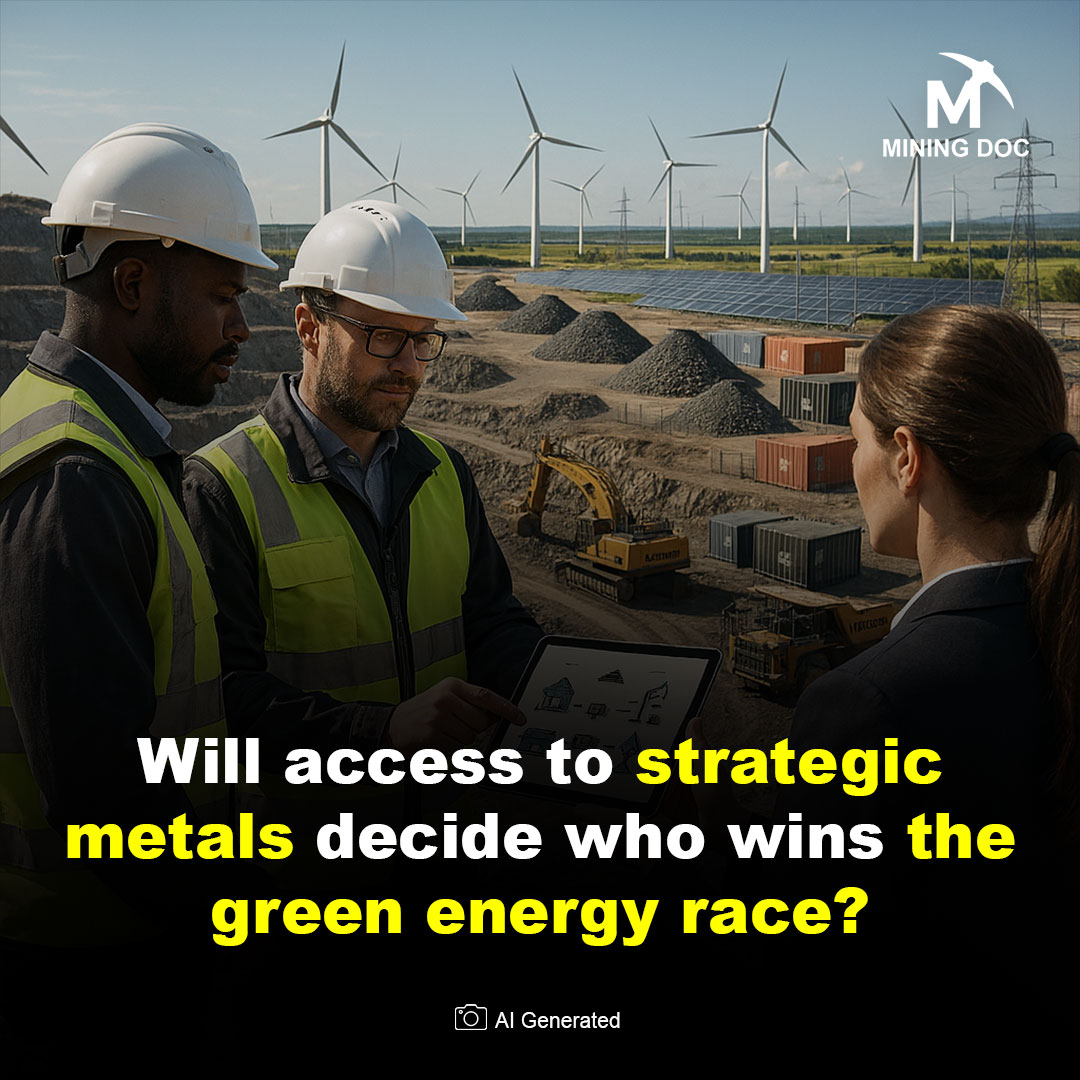
The move towards the global energy transition to carbon neutrality has changed the energy landscape in fundamental ways that have raised the status of strategic metals from being merely industrial commodities to key players in the new “green economy.” Thus, in the drive towards the Paris Agreement targets, the need for these key “green energy” technologies’ associated minerals such as Lithium, Cobalt, Nickel, and Rare Earth Elements (REE) is set to grow by approximately 90% for Lithium alone in the next two decades (Bedoya Londoño et al., 2023; Smelror et al., 2023).
The key role that these strategic metals are set to play in the energy transition is through the production of “green energy” technologies. For example:
- Energy storage: Lithium and Cobalt are key components in Lithium-Ion Batteries that are used in Electric Vehicles (EV) (Bedoya Londoño et al., 2023).
- Renewable energy production: Rare Earth Elements such as Neodymium and Dysprosium are key components in the production of Permanent Magnets used in Wind Turbines (Rochmadi, 2021), while Silver is key in Solar Panel Efficiency (Rochmadi, 2021).
- Hydrogen economy: Platinum Group Metals (PGMs) are at the core in the production of Fuel Cells for the production of Hydrogen as an alternative source of “green energy” (Bedoya Londoño et al., 2023).
Despite the positive impacts that these “green energy” technologies have on the environment, the risks associated with the production of these strategic metals are significant. For example, the production of these key “green energy” technologies is highly concentrated in the hands of key players such as China for Rare Earth Elements (more than 85%) and the Democratic Republic of Congo for Cobalt (more than 60%) (Smelror et al., 2023).
Thus, the risks associated with the “green revolution” are the “green conflict” that may come with the production of these key “green energy” technologies (Bedoya Londoño et al., 2023). Finally, the focus is now being placed on “green innovation” and “digital integration” in the supply chain to ensure that the energy transition is “green” in the sense that the energy transition is achieved in an environmentally friendly manner (Ren & Bu, 2024).
References
Bedoya Londoño, J. A., Franco Sepúlveda, G., & De la Barra Olivares, E. (2023). Strategic minerals for climate change and the energy transition: The mining contribution of Colombia. Sustainability, 16(1), 83. https://doi.org/10.3390/su16010083
Ren, S., & Bu, W. (2024). Smarter and sustainable development: Evaluating the impact of artificial intelligence on energy conservation and emission reduction. Journal of Information Economics, 2(3), 35. https://doi.org/10.58567/jie02030004
Rochmadi, B. N. (2021). Analysis of processing rare earth elements from monazite as tin by product mineral. Jurnal Manajemen Bisnis Transportasi dan Logistik, 7(2). https://doi.org/10.54324/j.mbtl.v7i2.652
Smelror, M., Hanghøj, K., & Schiellerup, H. (2023). Entering the Green Stone Age – introduction. Geological Society, London, Special Publications, 526(1), 1-12. https://doi.org/10.1144/sp526-2022-312