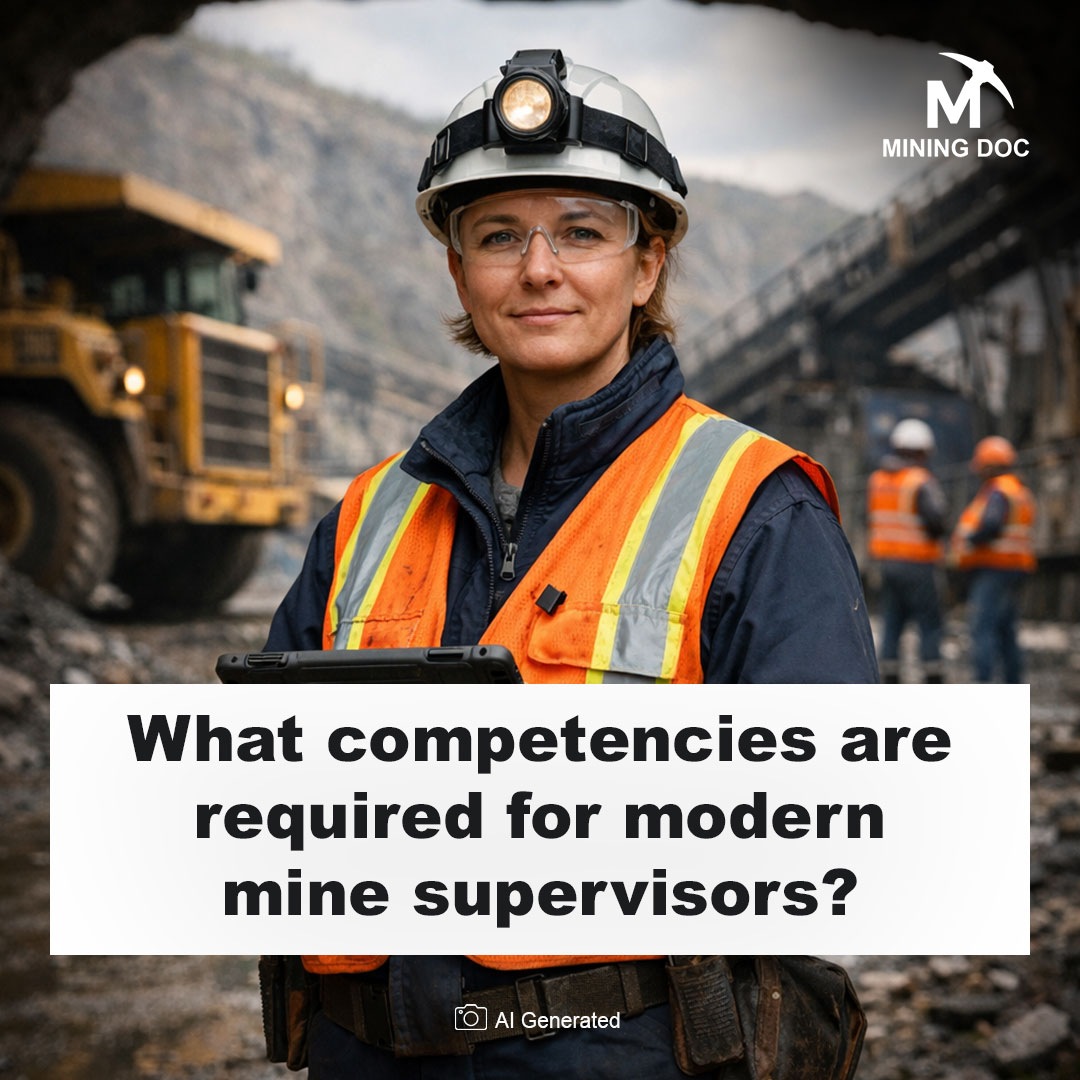
The role of the mine supervisor has evolved from traditional oversight to a complex management position requiring a diverse set of technical and soft skills. As the industry integrates advanced technologies and prioritizes worker well-being, the competencies required for effective supervision have expanded significantly.
Technical and digital literacy
Modern supervisors must possess robust technical proficiency, particularly in the context of “Mining 4.0.” This includes the ability to interpret real-time data from autonomous systems and utilize integrated management software to optimize production (Lööw et al., 2019). Beyond equipment operation, digital literacy is now essential for monitoring environmental impact and ensuring geological precision during extraction.
Safety leadership and risk management
Safety remains the primary competency. However, the focus has shifted from mere compliance to proactive safety leadership. Supervisors are expected to cultivate a “chronic unease” regarding hazards, enabling them to identify weak signals before accidents occur (Bonsu et al., 2017). This requires a deep understanding of human factors and the ability to conduct dynamic risk assessments in high-pressure environments.
Interpersonal and soft skills
The transition toward “soft” competencies is a defining feature of modern mining. Supervisors must act as mentors and communicators to manage increasingly diverse workforces. Effective conflict resolution, emotional intelligence, and the ability to foster a culture of psychological safety are critical for maintaining team morale and reducing turnover.
In summary, the modern mine supervisor must balance traditional technical knowledge with digital fluency and sophisticated leadership skills. By integrating data-driven decision-making with a human-centric approach to safety and management, supervisors ensure both the operational efficiency and the physical security of the mining environment.
References
Bonsu, J., van Dyk, W., Franzidis, J.-P., Petersen, F., & Isafiade, A. (2017). A systemic study of mining accident causality: An analysis of 91 mining accidents from a platinum mine in South Africa. Journal of the Southern African Institute of Mining and Metallurgy, 117(1), 59–66. https://doi.org/10.17159/2411-9717/2017/v117n1a9
Lööw, J., Abrahamsson, L., & Johansson, J. (2019). Mining 4.0—The Impact of New Technology from a Work Place Perspective. Mining, Metallurgy & Exploration, 36(4), 701–707. https://doi.org/10.1007/s42461-019-00104-9