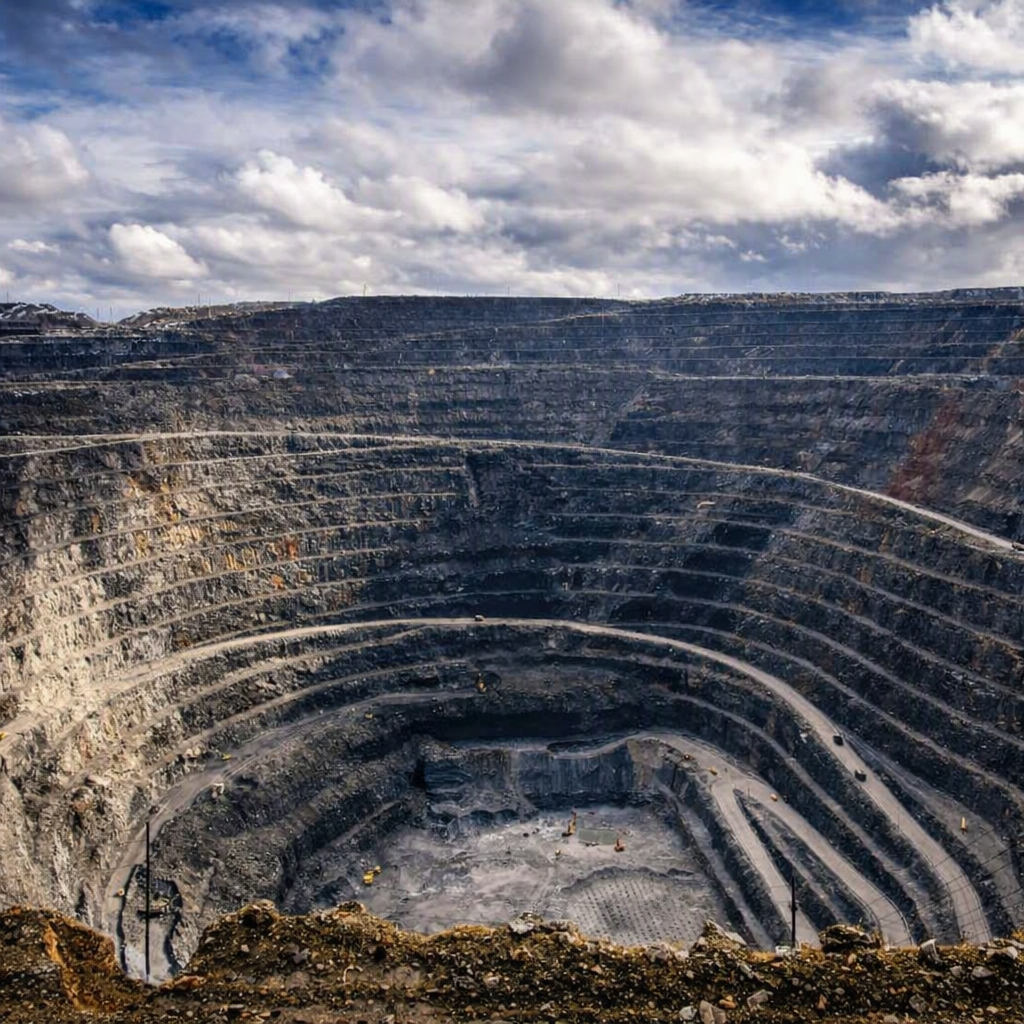
Orogenic Gold Deposit is the term used to denote a certain category of mineral formations that were created within a geological event of orogeny, in which the collision between tectonic plates forces mineral-bearing hydrothermal solutions into the faults of the Earth crust. One of the world’s largest and most productive orogenic gold deposit can be described as the Olimpiada Mine. As one of the key elements of the global market of precious metals, Olimpiada gives great insights into large geological processes and ore-mineral extracting operations.
The Olimpiada gold deposit is located in the central part of Yenisei ridge (Eastern Siberia of Russia). Geologically, it is the part of the Neo-Proterozoic collision orogen that was formed as a result of heavy tectonic collisions many hundreds of million years ago (Silyanov et al., 2021). This orogenic gold deposit is contained in silicate and carbonate bands of ancient stratigraphic series, which are represented by complex composition of W-type folds. It is very important to know the accurate dating of this gold deposit formation for the determination of the tectonic development of the whole area.
In terms of the economic benefit, size, and geological value of the deposits, the Olimpiada deposit is known internationally as one of the largest deposits of precious metals in the world. Accumulated historical reserves of precious metal ore amount to around 80 million ounces, that is, approximately 2,500 metric tons of gold (Silyanov et al., 2021). By 2020, the proved and potential reserves of the mine amounted to around 24 million ounces. As seen from above-mentioned data, the mine is a significant source of the gold ore for global production.
As for the mineralogical characteristics of the deposit, it is notable for the high diversity and specificity of minerals. It should be noted that the gold found in the Olimpiada deposit occurs mainly in association with sulfide minerals that account for 2-7% of the total rock volume in the host quartz mica carbonate ores (Silyanov et al., 2021). Around 50 hypogene ore minerals have been discovered in the deposit, among which arsenopyrite, pyrrhotite, pyrite, and stibnite dominate. At that, an interesting fact about this deposit is the development of a vast oxidized zone due to chemical weathering of the primary sulfide ore over thousands of years.
The genesis of deposits in the Yenisei Ridge, including Olimpiada, is deeply tied to the movement of hydrothermal fluids from deep within the Earth’s crust. Deposits in this region typically form when ascending, high-temperature water-carbon dioxide fluids interact with host metamorphic rocks, precipitating gold within structural shear zones (Shaparenko et al., 2022). These mineralizing fluids transport gold and sulfur upward, depositing them as temperature and pressure conditions gradually drop. Extensive fluid inclusion studies across the region emphasize the complex hydrothermal nature of these world-class orogenic systems (Shaparenko et al., 2022).
In conclusion, the Olimpiada Mine represents a pinnacle of geological complexity and profound economic importance. From its structural origins in the W-shaped folds of the Yenisei Ridge to the intricate sulfide and oxidized mineral assemblages that house its resources, the deposit is a premier example of an orogenic gold system. Advancements in structural geology and geochemistry continuously demystify the origins of the mineralizing fluids that created such vast wealth. Ultimately, the ongoing exploration of the Olimpiada Mine will continue to drive scientific innovation in the global mining industry.
References
Gibshner, N. A., Sazonov, A. M., Travin, A. V., Tomilenko, A. A., Ponomarchuk, A. V., Silyanov, S. A., Nekrasova, N. A., Shaparenko, E. O., Ryabukha, M. A., & Khomenko, M. O. (2019). Age and duration of the formation of the Olimpiadinski gold deposit (Yenisei ridge, Russia). Геохимия, 64, 548–553. https://doi.org/10.31857/s0016-7525645548-553
Shaparenko, E., Gibsher, N., Khomenko, M., Tomilenko, A., Sazonov, A., Bul’bak, T., Silyanov, S., Petrova, M., & Ryabukha, M. (2022). Parameters for the Formation of the Dobroe Gold Deposit (Yenisei Ridge, Russia): Evidence from Fluid Inclusions and S–C Isotopes. Minerals, 13(1), 11. https://doi.org/10.3390/min13010011
Silyanov, S. A., Sazonov, A. M., Zvyagina, Y. A., Savichev, A. A., & Lobastov, B. M. (2021). Gold in the Oxidized Ores of the Olympiada Deposit (Eastern Siberia, Russia). Minerals, 11(2), 190. https://doi.org/10.3390/min11020190