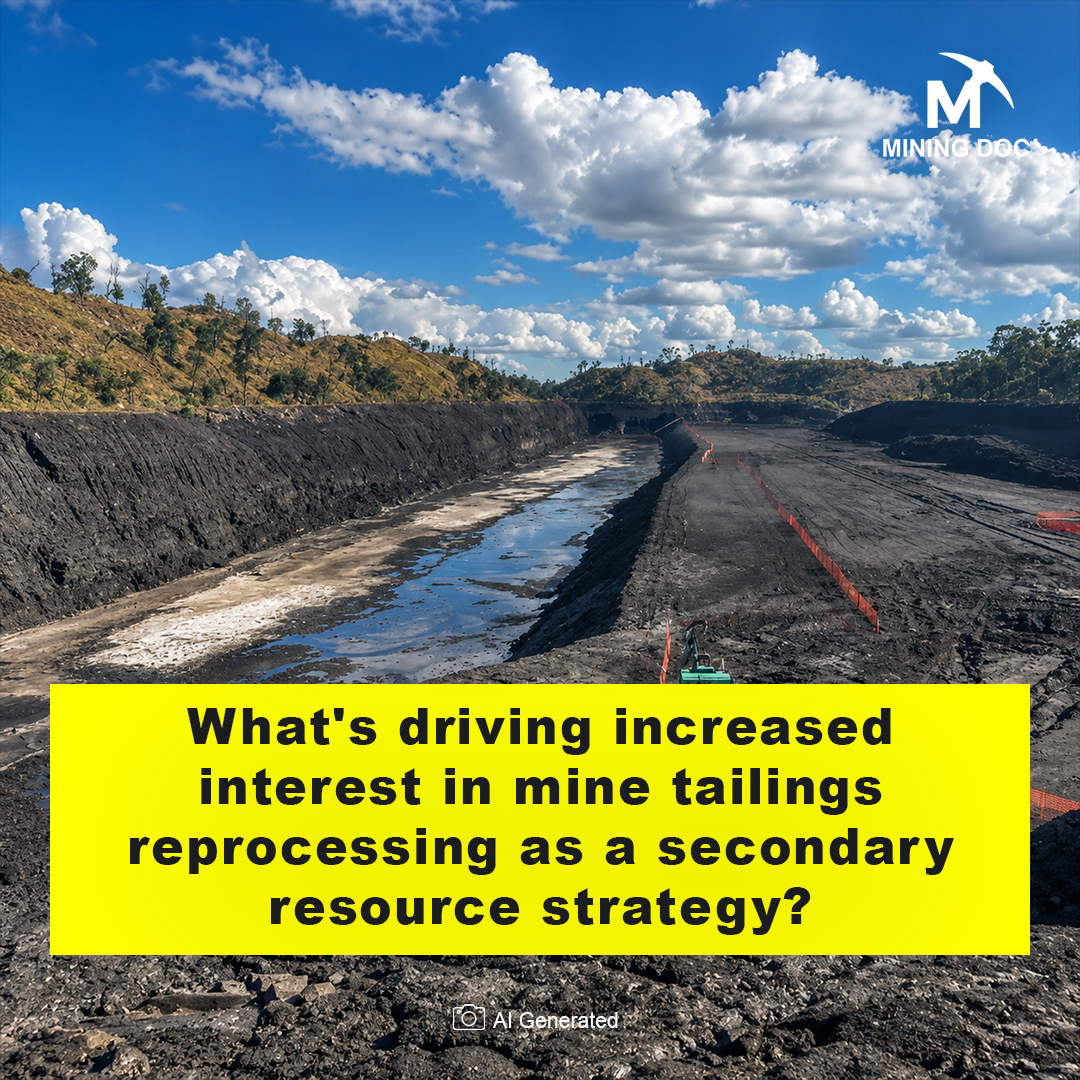
The mine tailings refer to finely dispersed waste produced as a result of mineral extraction from primary ores. Secondary resource strategy is a targeted processing of previously disposed of material to extract additional minerals from such substances or use them for another purpose. In recent times, there have been seen increased activities regarding reprocessing of mine tailings in terms of their transition into valuable secondary resources.
Among other factors driving this process is the development of circular economy on the international level. This concept is more sustainable compared to traditional take-make-dispose economic model and it focuses on reducing the amount of waste produced and reusing the existing resources. Such an approach works well for the reprocessing of mine tailings because with its help industries will be able to create a sustainable pattern ensuring that they get critical minerals while also neutralizing harmful waste (Chowdhury & Talan, 2025).
Increasingly, there has been a trend of diversifying supply chains as global demand for raw materials is escalating. Contemporary net-zero transition heavily relies on particular metals that are required in low-carbon technologies such as electric cars and wind power turbines. Reprocessing of mine waste has become an obvious solution due to dwindling primary ore grades and geopolitical instabilities, which could result in supply disruption. The study of historical tailings provides the means to discover secondary sources of minerals and secure the resources in the country by using a simple solution that does not involve creating environmentally hazardous mines (Britt & Czarnota, 2024).
These solutions to utilize secondary resources are made more relevant by developments in metallurgy. It has always been challenging and economically inefficient to process fine grained and complex tailings that were characterized by small amounts of valuable trace elements. Modern innovations in pyro- and hydrometallurgy drive modern mining toward zero-waste operations. This is evidenced by the co-processing of companion rare elements along with other base metals from the tailing of copper ores and the removal of matrix material (Reijnders, 2021).
Apart from supply chain reasons, rigorous environmental legislation and various economic incentives make the reprocessing of tailings increasingly profitable. Storage of waste minerals in artificial dams implies serious risks of their potential collapse and formation of acid drainage. Tailings reprocessing not only eliminates such environmental threats but additionally ensures additional profits from this process. The process of remediation of abandoned areas and recovery of resources significantly boosts the ESG performance and compensates the high expenses on keeping the storage of tailings.
To sum up, the increasing attention paid to mine tailings reprocessing marks a pivotal stage of development of the industry in regard to its impact on the environment. Driven by the urgent need for critical minerals, ideas of circular economy and modern extraction techniques, previously discarded tailings are quickly viewed as an asset. By transforming ecological threat to valuable resources, the industry ensures sustainability of the energy transition on a global scale and helps to remedy ecological problems in the past.
References
Britt, A. F., & Czarnota, K. (2024). A review of critical mineral resources in Australia. Australian Journal of Earth Sciences, 71, 1016–1049. https://doi.org/10.1080/08120099.2024.2430279
Chowdhury, M. O. S., & Talan, D. (2025). From Waste to Wealth: A Circular Economy Approach to the Sustainable Recovery of Rare Earth Elements and Battery Metals from Mine Tailings. Separations, 12(2), 52. https://doi.org/10.3390/separations12020052
Reijnders, L. (2021). Is Near-zero Waste Production of Copper and Its Geochemically Scarce Companion Elements Feasible?. Mineral Processing and Extractive Metallurgy Review, 43, 1021–1048. https://doi.org/10.1080/08827508.2021.1986706