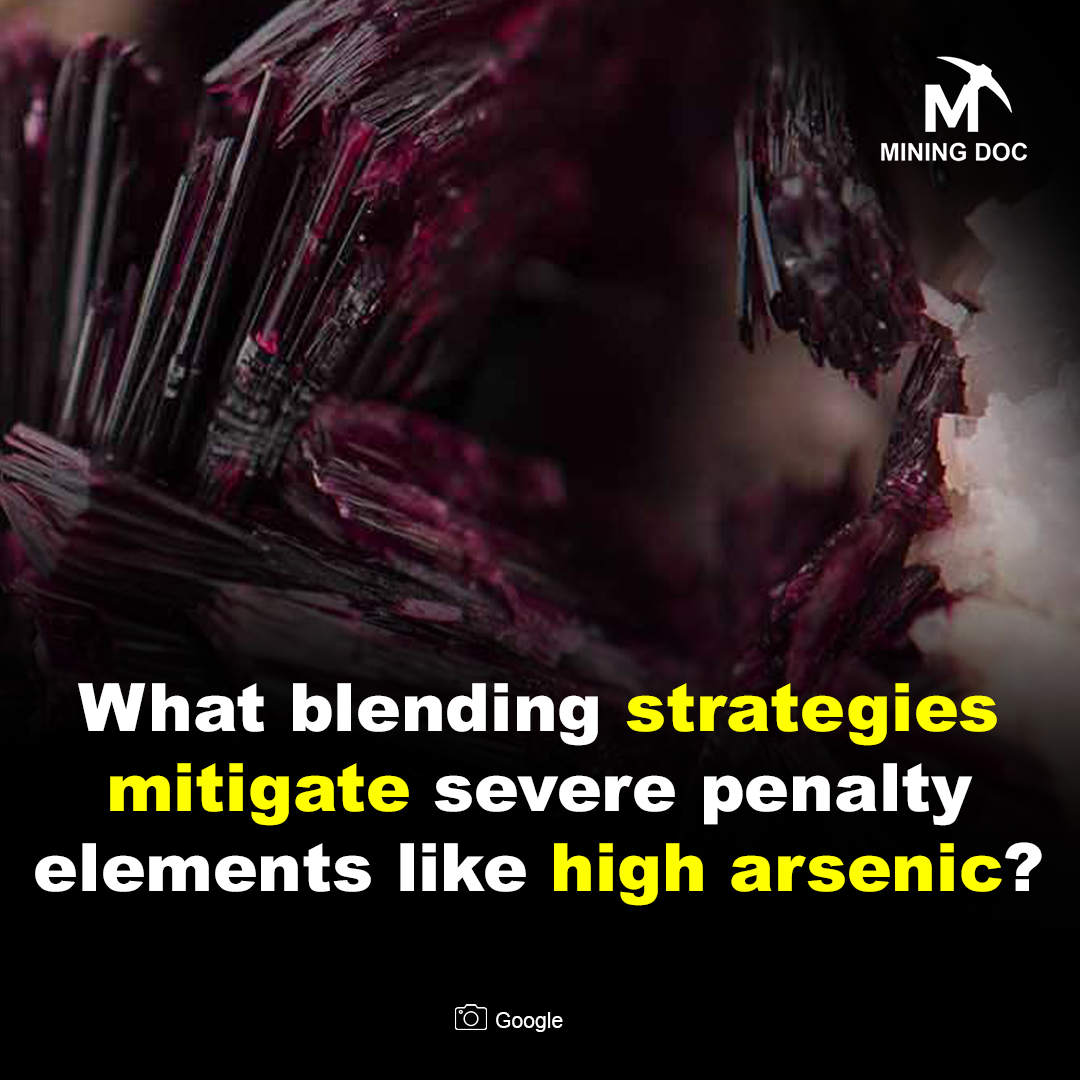
A shipment gets rejected. A smelter contract stalls. Millions in TC/RC penalties eat straight into margin all because of one element: arsenic (As).
As global copper deposits get deeper and more complex, high-arsenic ore bodies (think enargite- and tennantite-rich zones) are becoming the norm, not the exception. Most smelters cap concentrate arsenic at 0.2–0.5%, and regulatory bodies are tightening environmental thresholds further. Miss the mark, and you face steep penalty deductions, rejected cargoes, or worse a stranded deposit that never reaches the market.
Here’s the 4-step mitigation framework
1️⃣ ROM Stockpile Blending
At the pit face, geostatistical block models identify high-As zones ore-by-ore. Mine planners blend these with clean ore before crushing think of it like diluting a strong concentrate of coffee with water until it’s drinkable. Get the sequencing wrong, and downstream processing pays for it.
2️⃣ Concentrate-Level Blending
At port or terminal facilities, high-As concentrates are physically blended with ultra-clean parcels to land under smelter thresholds (e.g., <0.2% As). This is the last line of defense and often the fastest lever traders can pull to save a cargo.
3️⃣ Dynamic Flowsheet Control
When a high-As parcel hits the plant, flotation reagents and depressants are adjusted on the fly much like a chef adjusting seasoning mid-cook when the ingredients change. Cut-points shift, recovery is sacrificed slightly, but concentrate quality is protected.
4️⃣ Offtake Partner Diversification
Not all smelters are built the same. Some run pressure oxidation (POX) or roasting circuits designed specifically to handle arsenic-bearing feed; others rely on traditional flash smelting with tight tolerances. Strategic offtake diversification means routing high-As material to the facilities built for it rather than penalizing every buyer equally.
As arsenic-bearing deposits become more common globally, should more producers be investing directly in POX/roasting capacity or is smart blending diversification still the more capital-efficient path forward?
References
-
Fuentes, S., & Espinoza, D. (2022). Managing penalty elements in copper concentrate marketing: A blending and offtake perspective. Resources Policy, 78, 102876.
-
International Council on Mining and Metals (ICMM). (2021). Concentrate quality and penalty elements: A guidance note for responsible sourcing. ICMM Publications.
-
Society for Mining, Metallurgy & Exploration (SME). (2019). SME mineral processing and extractive metallurgy handbook (3rd ed.). SME.