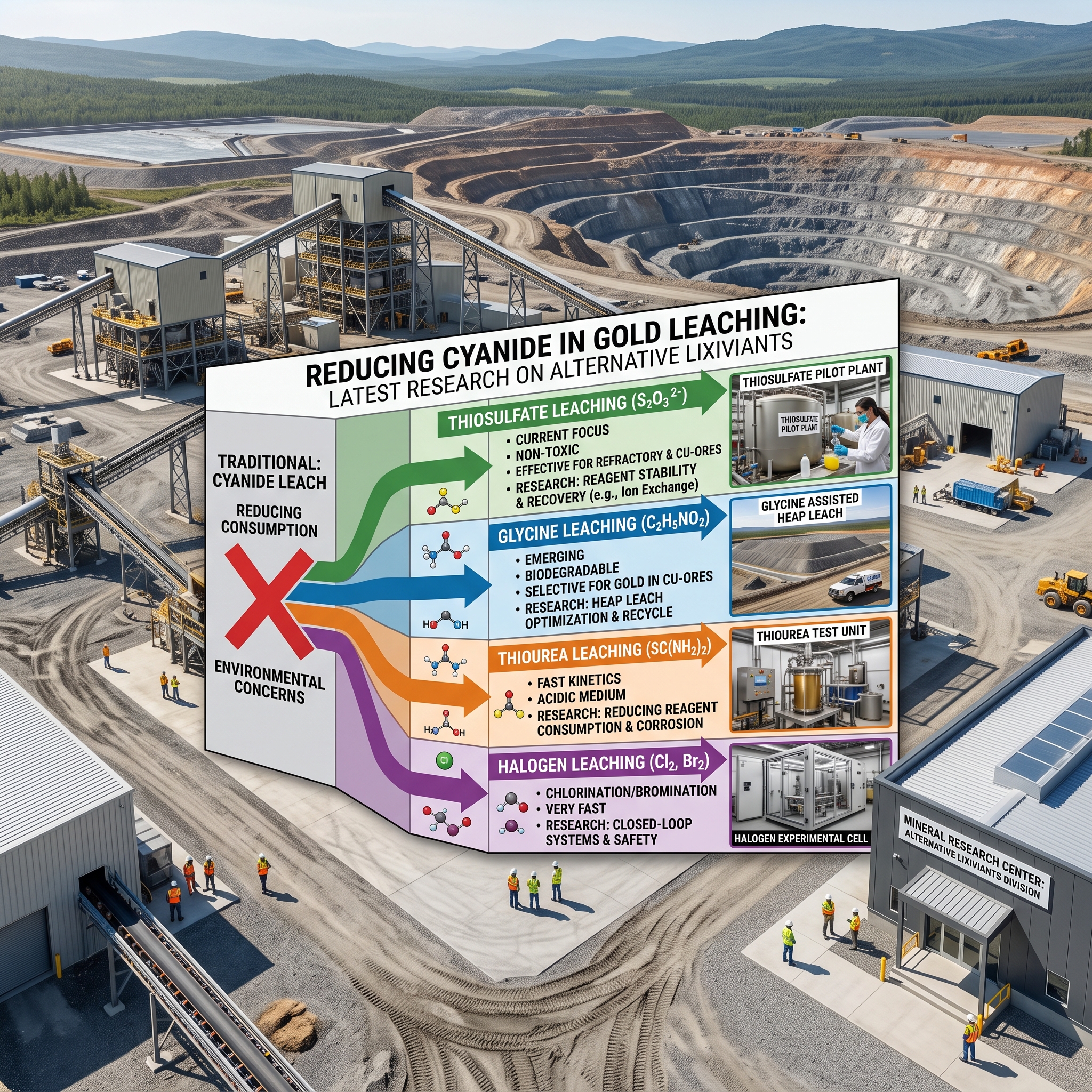
Gold extraction through traditional means utilizes cyanidation extensively; cyanidation is a technique that was invented at the turn of the 19th century, and which is increasingly being opposed environmentally and subjected to stringent regulations. Global deposits of gold that can be easily extracted due to being free milling are less than 20%. Mining companies therefore must deal with ore bodies that consist of reactive copper compounds and carbonaceous material. These result in increased consumption of cyanide and environmental hazards from the waste material. Hydrometallurgy concentrates on two techniques; one is synergistic dual lixiviant and the other involves total replacement of cyanide.
The exhaustion of high-grade free milling ore deposits drives the mining industry to resort to treating difficult-to-treat gold-containing copper ores. The copper oxides and copper sulfides that are reactive in nature dissolve easily in cyanide solutions to form complex compounds like dicyanocuprate and tricyanocuprate compounds. One percent of copper present in the ore is consumed by around thirty kilograms of sodium cyanide per tonne, which makes conventional cyanidation uneconomical. Environmental norms and public pressure on cyanide detoxification by means of WAD make the need for improved leaching technology inevitable.
Synergistic leaching involves the combination of eco-friendly amino acids such as glycine along with extremely low amounts of cyanide to attain selectivity in metals. In synergy with glycine, the copper ions selectively chelate to form copper glycinate complexes, ensuring that copper does not utilize the available cyanide. The chemical process ensures that the bound cyanide is released into the solution to dissolve the gold effectively. From experiments, it has been observed that glycine-cyanide solutions ensure a decrease in the amount of cyanide used by seventy-five to over ninety percent as compared to traditional cyanidation, along with an increase in the rate of gold dissolution by six point five times.
Thiosulphate leaching provides an example of a technically viable process without cyanide, especially for carbonaceous preg-robbing ores and copper-rich concentrates. The company Barrick Gold runs a commercial-scale plant that utilizes calcium thiosulfate at the Goldstrike mine after pressure oxidation and resin-in-leach operations. New studies investigate the use of catalysts of nickel and ferric citrate to avoid thiosulphate decomposition and substitute ammonia. Thiourea under acidic conditions is a quick way of dissolving secondary e-waste materials and pyritic concentrates; however, the oxidative leaching of base metals before is required to reduce the usage of the leaching agent.
The development of hydrometallurgy shows that there is a definite shift to hybrid low cyanide lixiviants and specific non-cyanide reagents. Glycine-cyanide synergy greatly contributes to the economic success of a project by reducing the cost of reagents and maintaining the WAD cyanide under international discharge limits. Thiosulfate and thiourea methods can be used as alternative extraction procedures for difficult ore bodies and for recycling electronics. The successful use of these techniques depends on overcoming difficulties of the following processing steps.