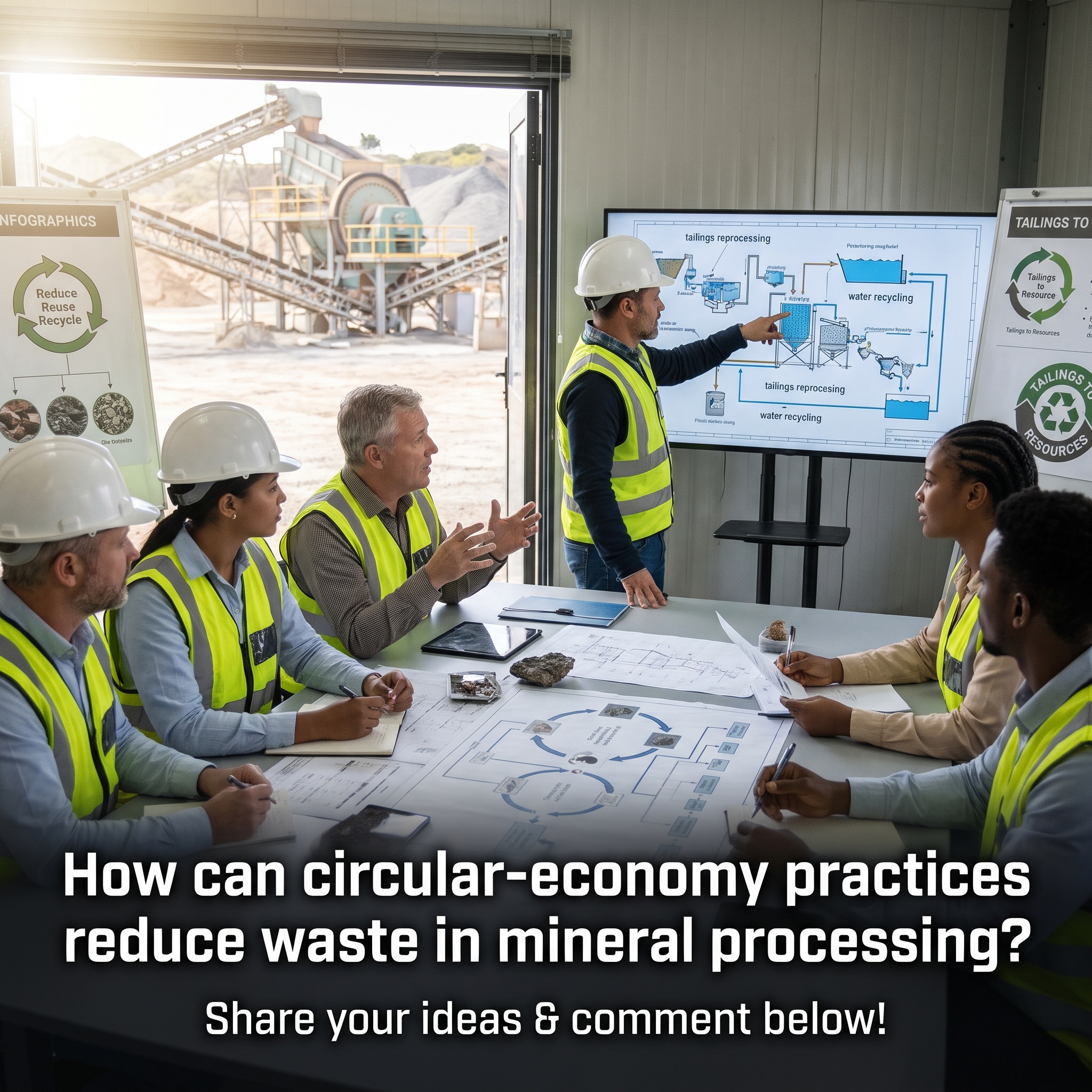


Global mineral extraction generates more than one hundred billion tons of solid waste each year, chiefly as coarse waste rock and wet tailings slurry. Traditional mineral processing follows a linear pathway of extraction, concentration, and surface disposal that concentrates severe ecological and safety risks inside large retention facilities. Lower grade orebodies exacerbate this burden across the mining industry, demanding substantially greater water, chemical reagents, and electrical power per ton of finished metal. A circular economy model counters this linear degradation by treating industrial residues as secondary resource stocks rather than terminal liabilities. This operational transition prioritizes upfront waste elimination, systematic secondary recovery, and broad cross-sector material utilization to ensure long-term environmental and financial resilience.
Effective waste abatement begins directly inside primary beneficiation circuits prior to fine comminution. Sensor-based ore sorting systems deploy radiometric, optical, and X-ray transmission sensors to reject barren gangue from run-of-mine feed, discarding twenty to thirty percent of sub-economic mass ahead of fine milling. Selective fragmentation technologies, notably high-voltage electrical pulse systems, generate targeted micro-cracks along mineral grain boundaries instead of crushing whole rock indiscriminately. This selective approach enables effective coarse particle flotation, lowers plant power consumption, and prevents massive slurry volumes. Closed-loop circuit design integrates high-rate thickeners, membrane filtration, and mechanical vapor compression to reclaim over ninety percent of plant water, allowing companies to adopt safe dry-stacked tailings.
Historical tailings impoundments function as extensive technogenic reservoirs that host valuable base and critical raw materials left unliberated by historic processing techniques. Targeted reprocessing flowsheets merge secondary froth flotation, centrifugal gravity separators, and advanced hydrometallurgical extraction to recover residual metals economically. Active industrial retreatment projects successfully produce refined cobalt and copper from historic African tailings, gold from South African waste dumps, and rare earth elements from metallurgical coal tailings. Microbial bioleaching systems harness specialized bacteria to solubilize trapped metals from complex sulfide matrices under ambient temperatures, converting persistent acidic hazards into lucrative secondary resource streams.
Comprehensive circularity requires high-volume industrial symbiosis to absorb the non-metallic mineral bulk. Precision sizing and classification transform inert iron ore tailings into high-grade manufactured ore-sand, replacing vulnerable riverbed aggregates across regional construction sectors. Commercial mining operations divert millions of tons of mineral residues into concrete aggregates, commercial blocks, and road sub-base infrastructure. Aluminosilicate tailings function effectively as supplementary cementitious materials or alkali-activated geopolymeric binders, encapsulating heavy metals securely within durable structural matrices. High-purity magnesium residues form advanced thermal ceramic coatings, while weathered mineral by-products produce fertile technosols for post-mining land rehabilitation.
Circular-economy strategies establish a pragmatic roadmap for curbing mining waste volumes while fulfilling global demands for essential mineral commodities. Meaningful industry progress relies on three interdependent pillars: precision sorting to eliminate barren waste upfront, secondary extraction to harvest residual critical minerals from legacy deposits, and market-scale upcycling of bulk mineral residues into durable secondary products. Wide industrial adoption demands harmonized legislative standards, predictable landfill fiscal policies, and digital characterization frameworks that provide rigorous supply-chain transparency and stimulate sustainable infrastructure investments across the mineral sector.