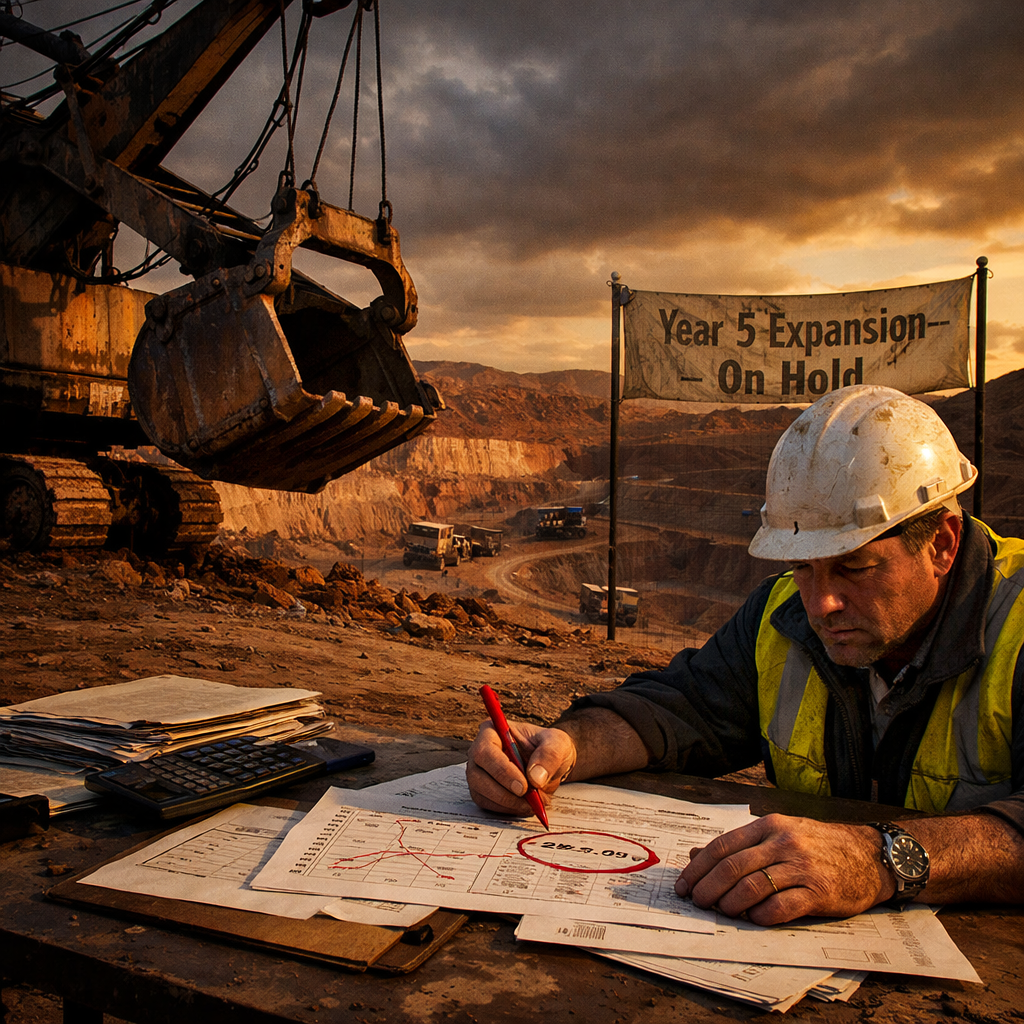
The concept of capital discipline, i.e., the management of financial resources in the pursuit of maximizing shareholder value as opposed to the pursuit of output growth, has been a highly controversial aspect of the extractive industry for many years. In the wake of the commodity supercycle that ended in the 2000s, marked by a phase of value-destructive megaprojects and overpriced deals, the mining majors announced their commitment to capital discipline. However, the trend of mining investments suggests that the commitment to capital discipline may be wavering. The following article seeks to explore whether the commitment to capital discipline in the mining industry is indeed wavering or if the industry has structurally learned from past experiences.
The experience of the 2000s, during which a commodities boom driven by the rapid industrialisation of China prompted mining groups to pursue growth at the expense of shareholder value, demonstrated that both governments and shareholders suffered as a result of overvaluation and misplaced incentives. Write-downs at BHP, Rio Tinto, and Anglo American during 2012 to 2016 alone exceeded $50 billion and attest to the fact that capital was being inefficiently allocated on a systemic scale. Dobbs et al. (2013) found that mining was one of the lowest-performing sectors globally on a measure of ROIC relative to cost of capital, a function of poor capital governance.
The investor backlash that ensued led to a structural recalibration of the industry, where capital expenditure was cut throughout the industry, balance sheets were strengthened, and the focus on free cash flow became the new norm. According to Humphreys (2015), the recalibration of the industry signaled not just a cyclical response but also represented a fundamental philosophical shift in the thinking of mining industry executives around asset management. As such, dividend growth and share repurchases became the new metrics of success, replacing volume growth as the primary metric of success in the mining industry, a phenomenon that is supported by the empirical evidence of FTSE 350 mining companies from 2014 to 2019.
However, since 2021, the intensifying need to source critical minerals in support of the energy transition has started to erode this discipline. The projected demand for copper, lithium, cobalt, and nickel has led governments and automakers to encourage miners to step up supply, thus providing political cover for high capital expenditures to be incurred. Sovacool et al. (2020) have already warned that the urgency narrative used to justify green metal supply chains may replicate the strategic rationale failings of the last supercycle in prioritizing volume security over financial discipline. In fact, merger and acquisition (M&A) premiums in mining have risen substantially between 2022 and 2024, with deals like BHP’s attempt to acquire Anglo American and Glencore’s effort to acquire Teck Resources redolent of pre-2012 consolidation trends. The lithium price crash in 2023–2024 after a spate of overinvestment has been an early and circumspect validation of these concerns (Herrington, 2021).
The evidence points to the fact that capital discipline in the mining industry is currently under significant pressure, though not completely lost. The balance sheet position remains stronger than in 2012, and institutional investors continue to apply pressure through their ESG and dividend models. However, the story of the energy transition offers a new ideological rationale for high levels of spend, and this should be questioned. The question remains to be seen whether the industry will pass the final test of discipline in the upcoming cycle peak.
References
Dobbs, R., Oppenheim, J., Kendall, A., Thompson, F., Bratt, M., & van der Marel, F. (2013). Reverse the curse: Maximizing the potential of resource-driven economies. McKinsey Global Institute.
Herrington, R. (2021). Mining our green future. Nature Reviews Materials, 6(6), 456–458. https://doi.org/10.1038/s41578-021-00325-9
Humphreys, D. (2015). New mercantilism: A perspective on how the politics of resource security is changing mining investment. Resources Policy, 45, 136–142. https://doi.org/10.1016/j.resourpol.2015.03.011
Sovacool, B. K., Ali, S. H., Bazilian, M., Radley, B., Nemery, B., Okatz, J., & Mulvaney, D. (2020). Sustainable minerals and metals for a low-carbon future. Science, 367(6473), 30–33. https://doi.org/10.1126/science.aaz6003