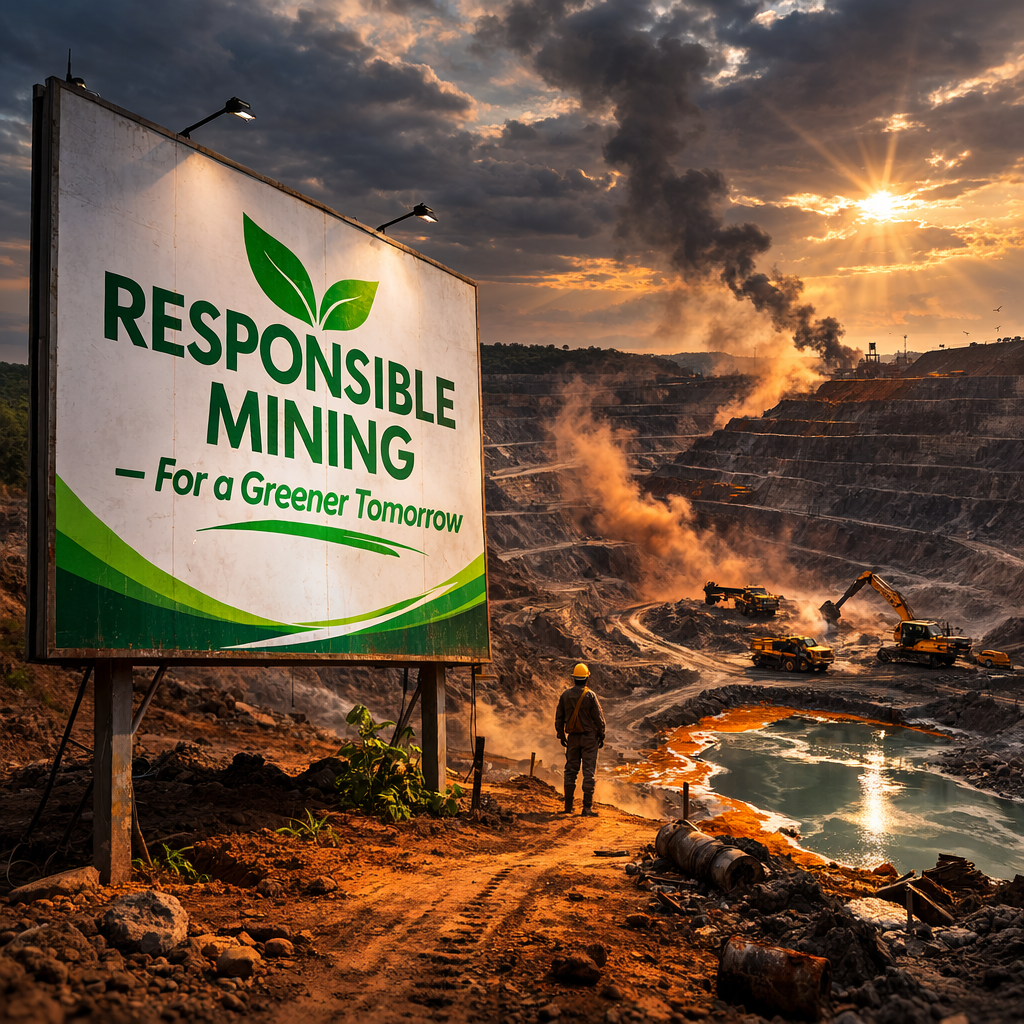
The question of whether “responsible mining” represents a paradigm shift or merely a sophisticated form of branding remains a key issue in current research on the extractive industries. While the extractive industries themselves claim such initiatives to be indispensable to the energy transition to green energy, observable phenomena in the immediate surroundings reveal a disconnect between the rhetoric and the reality of their operation.
Recent studies have argued that “responsible mining” is, in essence, a paradoxical concept since mining activity inherently implies the degradation of non-renewable resources. Observations reveal that although mining companies increasingly adopt voluntary standards set by the Initiative for Responsible Mining Assurance (IRMA), such standards tend to prioritize incremental technological advances over the overall degradation of the environment caused by the expansion of extractive activity.
Responsible mining prioritizes ethical governance, environmental stewardship, social responsibility, and transparency throughout the entire mining process. Its key principles include participatory decision-making, accountability for pollution costs, and monitoring. Its objective is to reconcile economic demands with social and environmental protection.
Exemplars of real-world operations include OceanaGold’s Didipio Mine in the Philippines, which incorporates rainwater harvesting, reforestation activities, and community engagement through education and health programs. In a similar context, other operations like Cerro Verde in Peru and Oyu Tolgoi in Mongolia focus on water recycling, emission reductions, employment generation, and infrastructure support. The Responsible Mining Index (RMI) 2025 ranks 25 major corporations in ESG disclosure, reflecting an improvement in policies regarding economic development, community well-being, and environmental protection. Transparency in disclosure positively correlates with maintaining market share.
Critiques of the issue have highlighted some operations of major corporations that fail to implement policies and actions, for instance, in failing to report on air pollution and socio-economic issues.
The RMI states an increase in ESG reporting, but corporations have been slow in disclosing information regarding the implementation of commitments, leading to reputational damage, legal issues, and erosion of trust.
The 2019 Brumadinho dam disaster in Brazil is an exemplary case of the gap between rhetoric and actual results. Independent assessment of corporations, such as the biennial RMI, relies on publicly available information to rate corporations, thereby creating accountability without depending on corporations’ self-reported information. In order to avoid greenwashing, corporations have to show verifiable information, use standards like the Task Force on Climate-related Financial Disclosures (TCFD), and report on problems and successes.