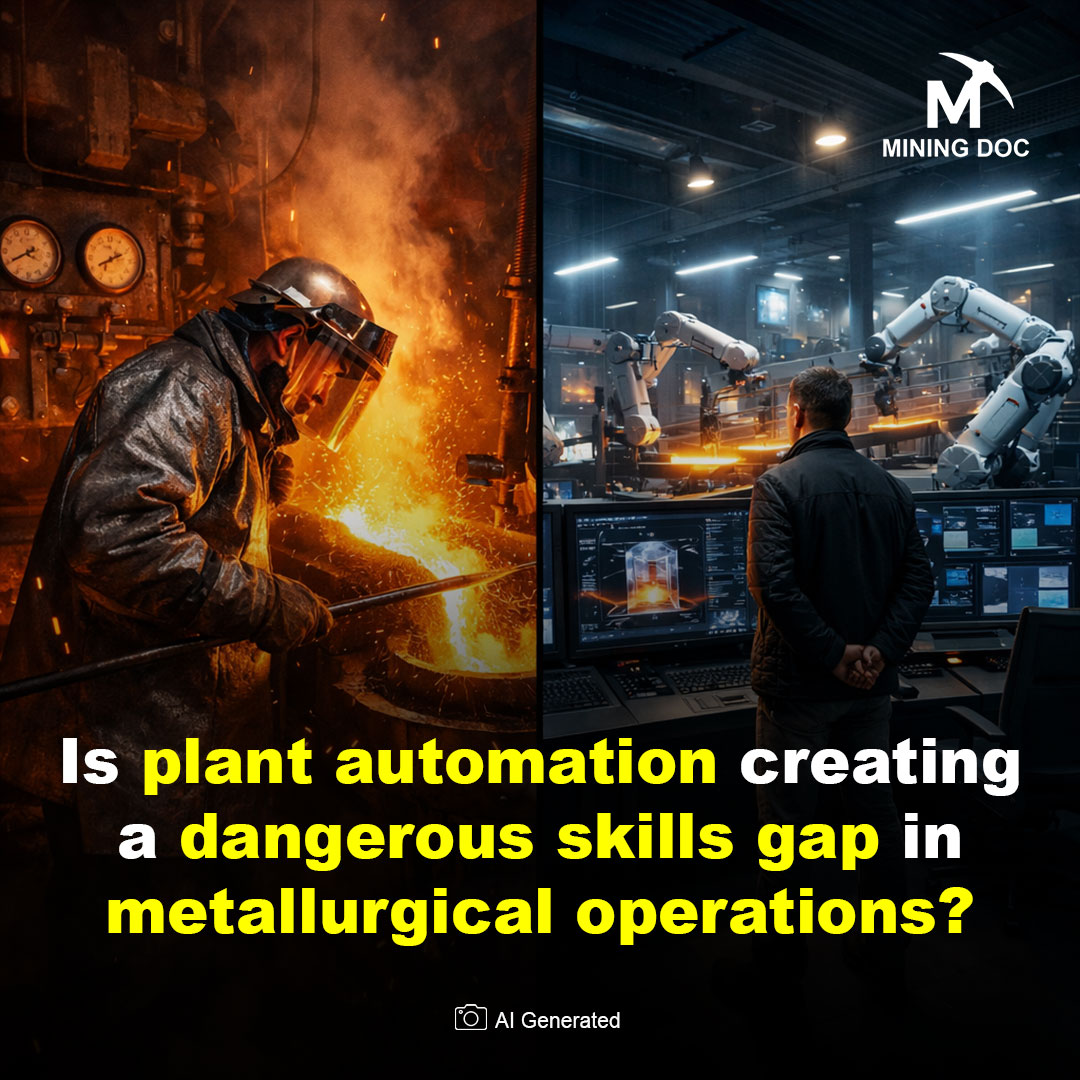
The swift digitalisation of metallurgical processes reveals a notable paradox. Instead of reducing the significance of human capabilities, the increasing sophistication of automated systems underscores the significance of the workforce’s skills. As the European metallurgical industry speeds up the adoption of Industry 4.0 technologies, the qualification and experience of the current workforce prove to be not only relevant but indispensable to the success of the digitalisation process.
The metallurgical industry faces a complex challenge. On the one hand, the industry slowly but surely undertakes a technological revolution. Firms increasingly resort to technological solutions to attain competitive advantage and comply with environmental regulations. On the other hand, the industry faces a demographic challenge. It is forecasted that within the United Kingdom alone, 50% of welders are expected to retire by 2027, resulting in over 35,000 unfilled positions that the industry cannot currently address through conventional recruitment strategies.
The shortage of skills is not limited to manual workers. Figures collected from the Midlands Advanced Manufacturing Survey reveal that the largest gap in experienced workers lies within experienced operatives (60%), followed by engineers (54%), whereas the demand for skills in the near future lies mainly within the field of automation and robotics (59%) and critical thinking (56%).
Unlike the widespread belief that technological advancements might replace workers, the adoption of technological solutions within the metallurgical industry fundamentally changes the operator’s role. Instead of direct control over the process, the operator’s role shifts to supervising the process. As a comprehensive analysis of the impact of the integration of AI within the metallurgical industry reveals, the operator’s role changes to supervising the automated process, evaluating the recommendations provided by the automated system, and handling exceptions.
The European Steel Skills Agenda (ESSA) project, an industry-led initiative supported by the European Union, emphasizes that upskilling the current workforce is an essential requirement to deliver digital transformation. The imperative does not just include the difficulties of hiring but also the requirement for experience to interpret and optimize the processes carried out by machines. The way forward is seeing forward-thinking companies implement blended learning strategies, including digital, simulator, and operational learning. Simulation and digital twin technologies have allowed trainees to operate normal and abnormal scenarios without risk to equipment and safety. Perhaps most encouraging is that employers increasingly favour blended learning approaches (64%), as well as on-site learning (51%), as they recognize that knowledge must be complemented with application. The road ahead is one of collaboration between employers, equipment suppliers, and educators to create competencies that can grow with technology. As the metallurgical industry continues to progress in its digital revolution, the body of evidence suggests that the most beneficial use of automation is not to replace human skill but to enhance it.