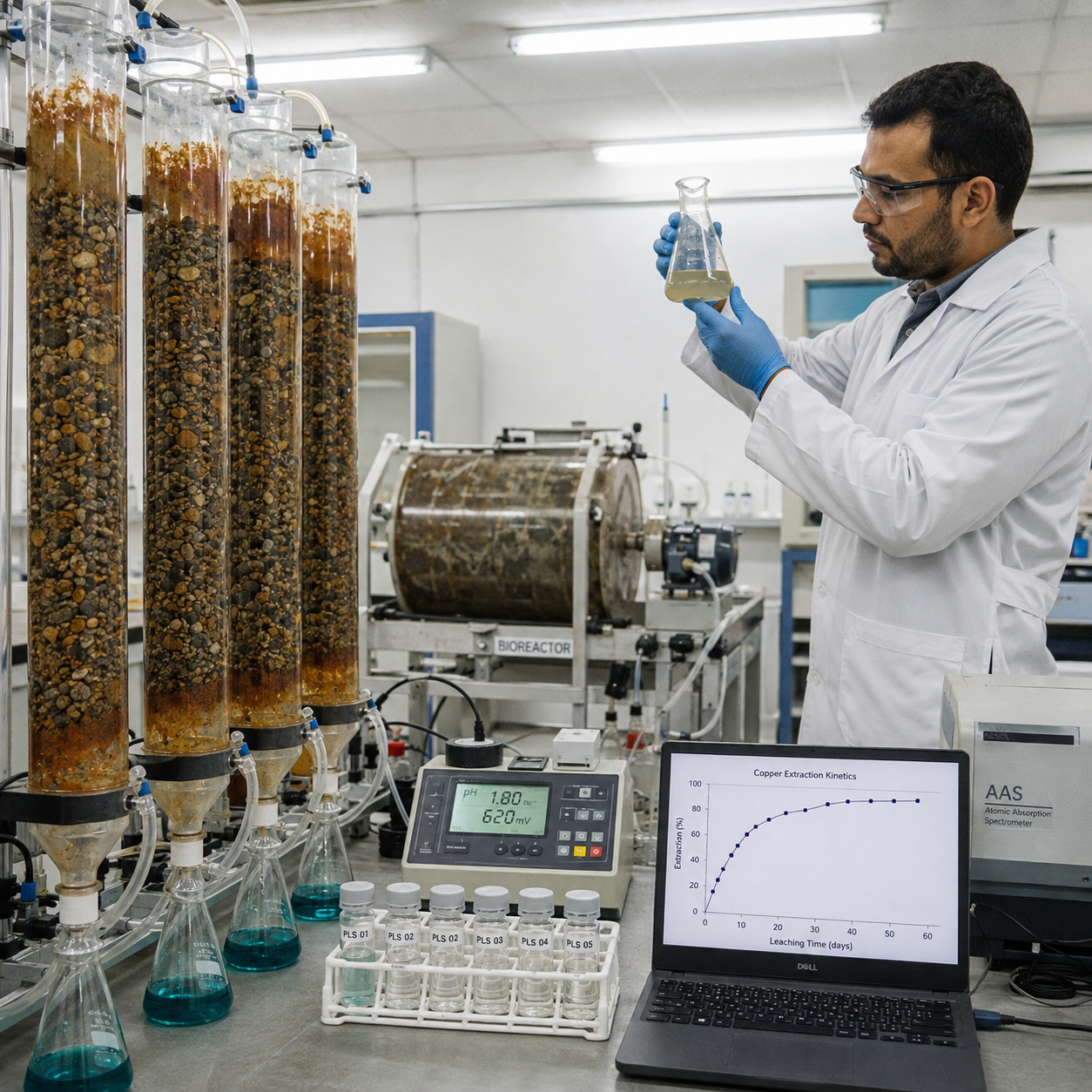
Bioleaching can be described as an emerging metallurgical technology that uses biological agents to recover valuable metals. Low-grade ores can be described as mineral rocks that contain low amounts of desirable metals, making them economically unfavorable to extract using traditional methods. In the light of the reduction in supply of high-grade ores, there has been intense research on bioleaching, and its potential use as a viable solution in retrieving metals such as gold and copper from low-grade sources.
As minerals of high-grade keep dwindling around the world, there is an increasing problem in the mining sector due to the dwindling high-grade ore sources. The traditional processes used to extract metals such as copper and gold include the expensive process of pyrometallurgy or the aggressive process of hydrometallurgy. This is not economical or even environmentally friendly because of the immense amount of energy required in crushing and smelting large amounts of mineral rocks.
The metabolism of specially developed organisms (extremophiles) forms the essence of the technology of bioleaching. Chemolithotrophic bacteria acquire energy by means of the oxidation of inorganic substances and transform metal sulfide minerals into soluble metal sulfates. Bioleaching occurs due to biological catalysis under normal temperature. Furthermore, the use of extremophiles is optimal in terms of working under extreme conditions and lowering the costs of operation and preventing the passivation of mineral surfaces hindering continuous extraction of metals (Adetunji & Erasmus, 2024).
Some research shows that even poor grades of copper ores may be efficiently processed through bioleaching technique. Thus, Wang et al. (2020) proved the importance of the interaction of native microbial communities and certain mineral composition. Conducting microbial experiments, the researchers found that domestication and adaptation to certain environment significantly increase the efficiency of leaching. The exact adjustment of pH and redox potential by means of some bacterial strains leads to the faster dissolution of copper.
Even though the direct dissolvability of copper is possible, there is need for slightly varied procedure for gold extraction in low grade ores that are refractory. This is because gold occurs in minerals like pyrite where it has to be released from. Bio-oxidation is then used by the microorganisms to extract gold particles from the sulfide mineral layer. Once the mineral structure is broken, gold is then ready for recovery process. Recent studies show biocyanidation method which directly extracts gold through biogenic agents.
In conclusion, bioleaching can be regarded as a practical means of processing low grade ores of copper and gold. Through the use of microorganisms that have been optimized, the mining industry is able to utilize hidden metallic sources in a sustainable way without creating much environmental impact as would be created in conventional smelting operations.
References
Adetunji, A. I., & Erasmus, M. (2024). Unraveling the potentials of extremophiles in bioextraction of valuable metals from industrial solid wastes: An overview. Minerals, 14, 861. https://doi.org/10.3390/min14090861
Bosecker, K. (1997). Bioleaching: metal solubilization by microorganisms. FEMS Microbiology Reviews, 20, 591–604. https://doi.org/10.1016/s0168-6445(97)00036-3
Wang, X., Ma, L., Wu, J., Xiao, Y., Tao, J., & Liu, X. (2020). Effective bioleaching of low-grade copper ores: Insights from microbial cross experiments. Bioresource Technology, 308, 123273. https://doi.org/10.1016/j.biortech.2020.123273