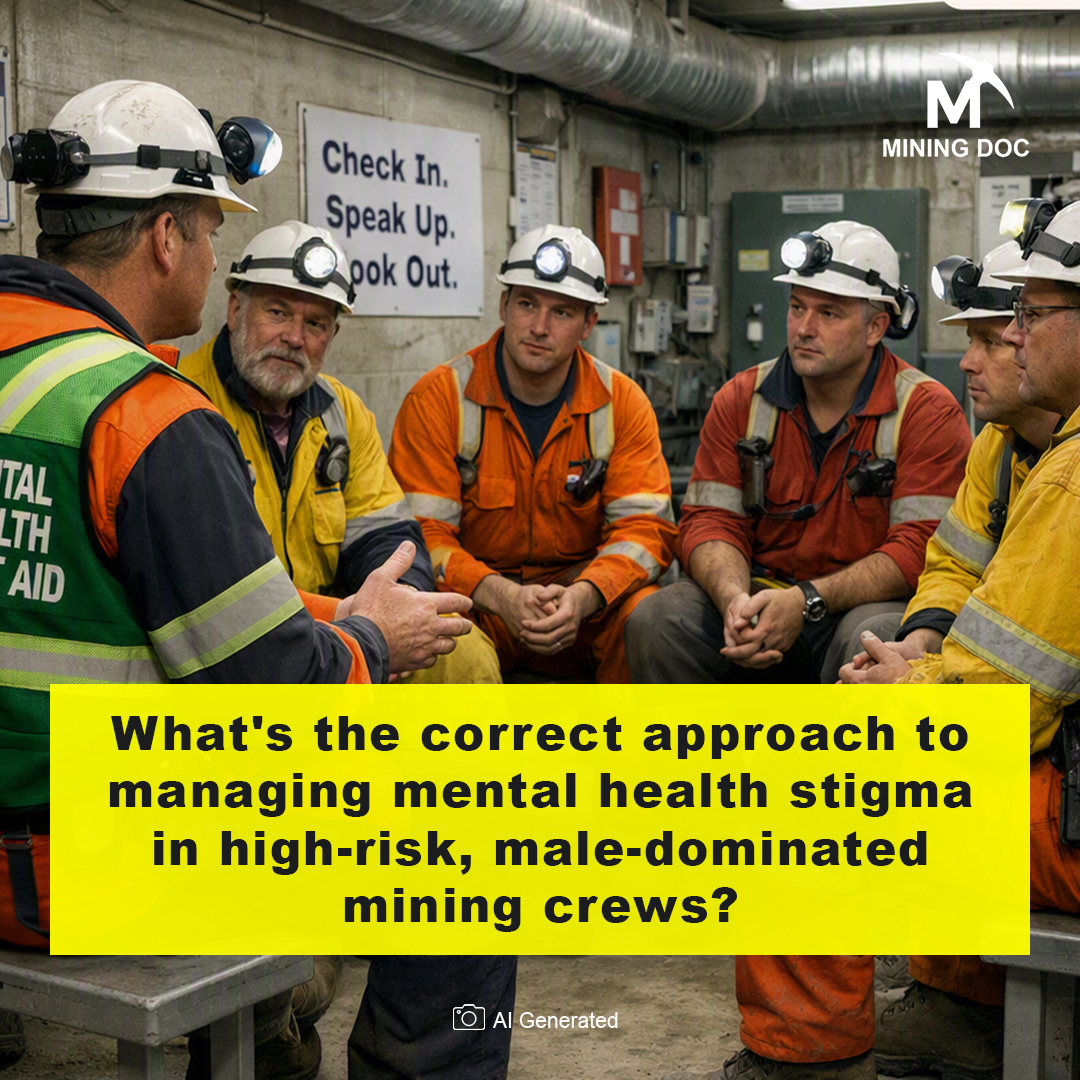
Mental health in relation to work involves defining key terms. These include mental health stigma, hazardous workplaces, and male-dominated crew teams. Mental health stigma is defined as negative stereotypes, which make individuals reluctant to talk about mental health problems or seek help. Mining hazardous environment is defined as an environment full of physical dangers, working shifts are long, and mining takes place in remote locations. Male-dominated crew teams usually have a culture of hyper-masculinity, which glorifies stoicism and devalues vulnerability. Therefore, there is need for specific strategies when addressing mental health stigma in such environments.
It is important to note that specific socio-environmental conditions associated with mining have a significant effect on worker welfare. Psychological problems among coal mining workers are more pronounced than among members of the general population (Considine et al., 2017). Increased risks are caused by specific characteristics of work, remoteness of mining sites, and increased consumption of alcohol (Considine et al., 2017). Because of hyper-masculinity, workers with depression feel very little support at the workplace, and this leads to significant internalized stigma.
Effective stigma management necessitates change at the organizational level. According to Carpini et al. (2024), formal support structures are key, as mental health problems in the workplace have a significant impact on employee productivity and security. One of the main formal organizational support interventions is the implementation of specific positions within the organization, such as Mental Health First Aid Officers (Carpini et al., 2024). Once such support programs receive the endorsement of leadership, it reduces the perception that seeking help is a threat to employment. Thus, psychological safety is considered equally important as physical safety.
While organizational support is critical, grassroots peer support programs are highly effective in male-dominated industries. According to Sayers et al. (2019), the peer support intervention “MATES in Mining” was assessed, and it proved that using the culturally embedded concept of “mateship” increases help-seeking. This is because employees are taught how to notice colleagues in distress and become their channel to professionals. Furthermore, Sayers et al. (2019) revealed that peer-led interventions can help reduce stigma, as workers expected less stigmatization from their colleagues after disclosing.
Specifically designed psychoeducational approaches are needed to change deep-rooted beliefs about mental illnesses. Anti-stigma initiatives that have to be applied in the work setting need to go beyond mere awareness and aim at changing attitudes towards mental disorders (Ramírez-Vielma et al., 2023). Training that focuses on mental health enables workers to have the competence to openly talk about their emotional difficulties. Once miners get to know the biological and work-related factors that may cause mental problems, the traditionally assumed moral failures of people who suffer from such disorders will be destroyed. These approaches help to create an environment where seeking help would be considered a sign of strength and resilience (Ramírez-Vielma et al., 2023).
To conclude, overcoming mental health stigma among high-risk, all-male mining crews calls for a multi-faceted culturally sensitive strategy. The optimal approach combines structural changes made at the top level with peer-support approaches. By considering both physically challenging nature of mining and sociocultural obstacles created by hyper-masculinity, companies can create a supportive environment. Ultimately, stigma reduction improves the mental health of the workforce while making mining safer overall.
References
Carpini, J. A., Booth, J., Johal, S., et al. (2024). Mental Health First Aid Officers in the Wild: A Qualitative Study of Role Formalisation, Motivation and Support Systems. Advances in Mental Health, 22, 249–267. https://doi.org/10.1080/18387357.2024.2320627
Considine, R., Tynan, R., James, C., et al. (2017). The Contribution of Individual, Social and Work Characteristics to Employee Mental Health in a Coal Mining Industry Population. PLOS ONE, 12, e0168445. https://doi.org/10.1371/journal.pone.0168445
Ramírez-Vielma, R., Vaccari, P., Cova, F., et al. (2023). Interventions to reduce the stigma of mental health at work: a narrative review. Psicologia: Reflexão e Crítica, 36. https://doi.org/10.1186/s41155-023-00255-1
Sayers, E., Rich, J., Rahman, M. M., Kelly, B., & James, C. (2019). Does Help Seeking Behavior Change Over Time Following a Workplace Mental Health Intervention in the Coal Mining Industry?. Journal of Occupational & Environmental Medicine, 61, e282–e290. https://doi.org/10.1097/jom.0000000000001605