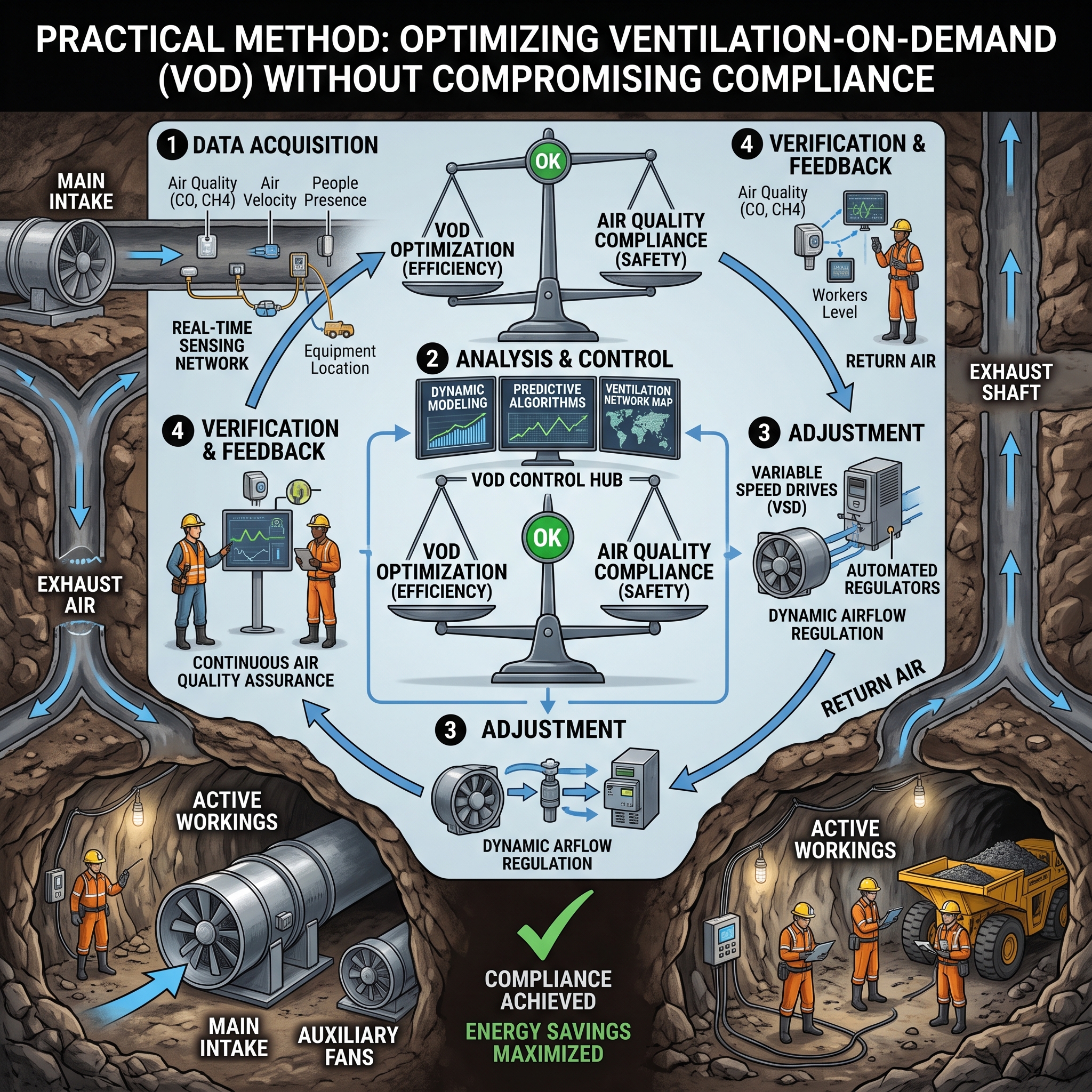
Fixed capacity ventilation systems are designed to be run perpetually at the full design flow rate, resulting in higher electricity usage due to inefficiency of operation. On the other hand, demand-controlled ventilation and ventilation on demand approaches can save lots of electricity costs by dynamically adjusting ventilation flow according to occupancy of the room and presence of contaminants in the environment. Nevertheless, incorrectly implemented approach will result in dangerously low ventilation levels as well as violation of standards for proper air quality. The optimization process can ensure efficiency of the system through the combination of three key components: appropriate sensors, automation, and minimum flow guarantee.
Optimization will be effective by choosing appropriate sensors that fit the operational needs as opposed to using a general monitoring technique for the whole building. Areas where the population varies will use carbon dioxide sensors or occupancy counters while areas with consistent personnel will operate effectively through time-of-day schedule. Industries and underground mines will use multigas sensors, airborne dust sensors, and machine location tags to determine contaminant emissions. It is important for facilities managers not to use one sensor placed in a common return air duct to monitor multi-zone variable air volume system. The common return duct sensors determine the average concentration levels of contaminants while highly populated zones are under ventilated and less populated zones are unnecessarily ventilated.
The design of modern architectural systems sees the transformation of manual or dual frequency fans into complete closed loop system controls. Central controllers utilize data from sensors via building automation software or reinforcement learning algorithms to always adjust for fan drives and modulating duct dampers. Ventilation reset algorithms are implemented in the whole system to reprogram and calculate outdoor air intake depending on real-time ventilation efficiencies of the zones. The connection of dynamic zone variable-air-volume controllers with the primary air-handling unit fans ensures proper air balance and pressure in the system. This helps avoid unnecessary fan activity and guarantees that each zone gets proper amount of air flow.
Air quality compliance with strict requirements requires absolute minimum baseline ventilation which cannot be reduced regardless of the load by demand-based controls. The constant air flow rate reduces the concentration of pollutants which do not come from the occupancy, such as off-gassing of building materials or background dust generated by industry. Flow measurement stations installed in the central intakes provide direct measurement to prove compliance with the standard, e.g., ASHRAE 62.1. The system control algorithms should include the failure mode with predefined safety limits and warning thresholds to ensure that even when there is sensor or communications failure, the safety will not be compromised.
The optimal deployment of ventilation on demand system allows for both significant energy savings and strict environmental compliance at the same time. The process consists of making the ventilation system smart through a combination of customized sensing schemes, closed loop automatic controls, and mandatory minimum flows. The field experience shows that such ventilation on demand approaches allow for cutting down fan power consumption by up to 20-50% while fully complying with health safety standards.