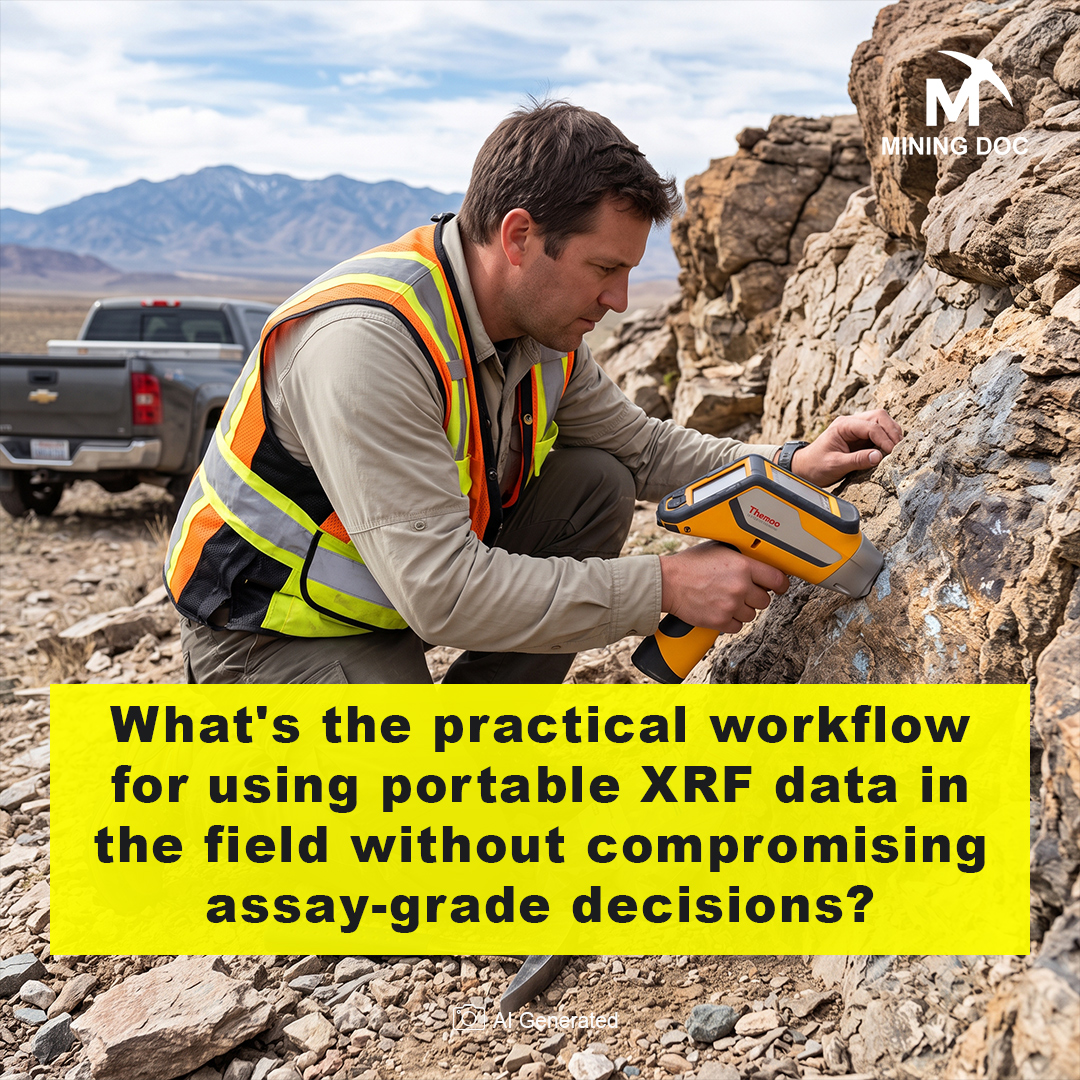
pXRF is defined as the type of analysis method which is non-destructive and applied to determine the chemical composition of materials in the field. In cases of mineral exploration and environmental analysis, pXRF allows for rapid and cost-effective analysis compared to traditional laboratory analyses and provides geologists with the opportunity to make real-time operational decisions. However, one of the major obstacles to overcome is creating high-quality data without damaging the quality of the assay grade decisions. A comprehensive and practical workflow is therefore required.
The first crucial stage of a successful pXRF workflow is a thorough selection and preparation of samples. Although pXRF analysis of unprepared rock cores can be performed, heterogeneous texture and moisture content may substantially influence the accuracy of element reading. Research proves that moisture leads to lower detection of total element concentration, which requires certain correction procedures (Kim et al., 2023). Field users should ideally perform analysis of dried, powdered, and homogenized samples since proper sample preparation and sufficient homogenization improve geochemical analysis accuracy (Zhou et al., 2023).
The next important step after sample preparation is the calibration of instruments. The use of only factory calibration may result in poor precision, which does not allow the investigation to be conducted properly. It is very important to establish matrix-matched secondary calibration with the help of Certified Reference Materials, which should be similar in geological matrix to the field site of interest (Ross et al., 2024). With the help of analyzing these materials, geologists can make an empirical correction of the data obtained with the help of pXRF.
Another important factor that influences field data is the measurement parameters. Usually, the duration of exposure is rather small; however, longer beam detection time increases the signal-to-noise ratio and makes it possible to obtain more precise data and detect trace elements (Zhou et al., 2023). In addition, when analyzing unprepared and rough samples, geologists can significantly increase sample precision by conducting measurements in several spots on the sample (Bourke & Ross, 2015).
Any field workflow must include Quality Assurance and Quality Control (QA/QC) protocols. A well-designed QA/QC plan should be embedded in routine practice and involve regular monitoring of the instrumental drift and contamination. Specifically, one should measure blanks to detect cross-contamination, along with constant re-assessing of certified reference materials (CRMs) to prove the sustained accuracy of analyses (Ross et al., 2024). The consistent application of such quality control measures will help keep the level of confidence in the field data equal to that of laboratory standards (Barago et al., 2022).
To sum up, although pXRF analysis is not able to substitute laboratory methods completely, it is a highly efficient technology provided it is used properly. Following the proposed workflow and including the procedures of thorough sample preparation, matrix matching, optimizing scanning parameters, and QA/QC, one can trust the results of the analysis performed using pXRF.
References
Barago, N., Pavoni, E., Floreani, F., Crosera, M., Adami, G., Lenaz, D., Larese Filon, F., & Covelli, S. (2022). Portable X-ray Fluorescence (pXRF) as a Tool for Environmental Characterisation and Management of Mining Wastes: Benefits and Limits. Applied Sciences, 12, 12189. https://doi.org/10.3390/app122312189
Bourke, A., & Ross, P.-S. (2015). Portable X-ray fluorescence measurements on exploration drill-cores: comparing performance on unprepared cores and powders for ‘whole-rock’ analysis. Geochemistry: Exploration, Environment, Analysis, 16, 147–157. https://doi.org/10.1144/geochem2014-326
Kim, E., Moon, Y., & Kim, J. (2023). Field Application of Portable XRF with Glass Bead Certified Reference Material(CRM) in Nickel Laterite Deposit. Journal of the Korean Society of Mineral and Energy Resources Engineers, 60, 99–111. https://doi.org/10.32390/ksmer.2023.60.2.099
Ross, P.-S., Beaudette, M., & Daoudene, Y. (2024). Portable XRF applied to regional bedrock mapping in Quebec, Canada. Journal of Geochemical Exploration, 258, 107397. https://doi.org/10.1016/j.gexplo.2024.107397
Zhou, S., Wang, J., Wang, W., & Liao, S. (2023). Evaluation of Portable X-ray Fluorescence Analysis and Its Applicability As a Tool in Geochemical Exploration. Minerals, 13, 166. https://doi.org/10.3390/min13020166