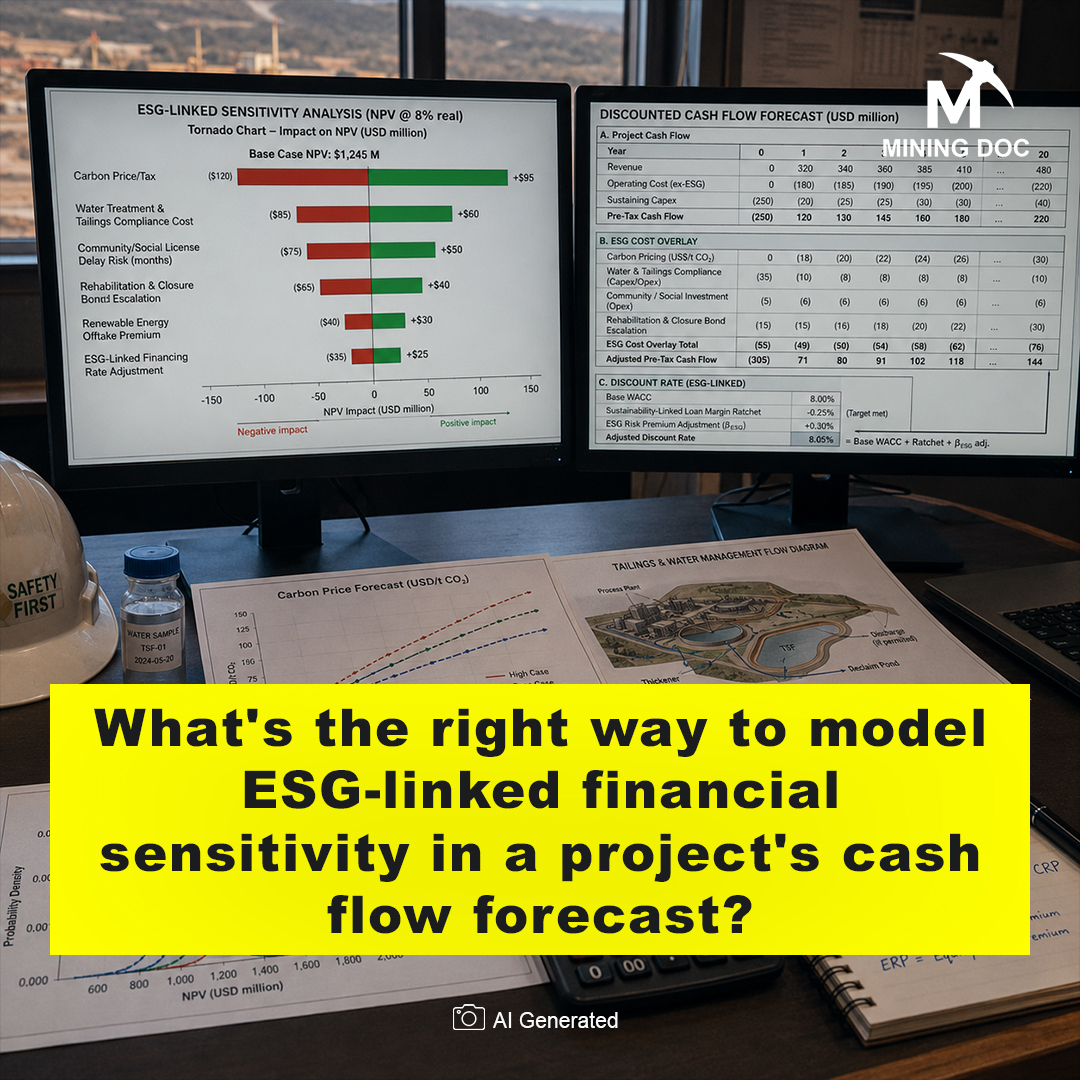
In the world of contemporary project finance, the integration of ESG variables is an important factor in the assessment process. The important thing to do before anything else would be to define certain terms. ESG refers to non-financial criteria employed in assessing the company’s ability to manage itself and create an effect. ESG related financial sensitivity in the context of cash flow projection involves the impact of the fluctuations in sustainability-related ESG variables on the projections and valuation of the project.
The most important point is that the proper inclusion of the variable must involve its conversion into the form of a quantifiable financial parameter. The most important thing in this regard is the identification of the most important material parameters related to the project from the point of view of sustainability. In other words, modellers need to look at variables that would have direct effects on the business model of the project.
The above drivers must then be related to the cash flows of the proposed project through modifications in operating and capital spending. The good reputation of the firm will decrease regulatory costs, minimize waste disposal expenses, and protect the project from any unforeseen changes in regulation. Operational effectiveness translates directly into increased cash flow. Additionally, better ESG performance decreases investment–cash flow sensitivity by decreasing the effect of uncertainty concerning economic policies on corporate investments (Dash & Sethi, 2024).
While line-item modifications are necessary to incorporate ESG sensitivity into the model, the analysts need to modify the discount rate used. In the discounted cash flow model, the discount rate depends on the riskiness of the venture and, correspondingly, on its cost of capital. It goes without saying that the ESG strategy for the firm will be considered as the risk minimization strategy. Consequently, the companies focused on sustainability activities will see better financial conditions and decreased cost of capital (Almulhim et al., 2023).
The uncertainty inherent in future ESG regulations makes static modelling unsuitable. The best option would be through the use of scenario analysis and stress testing. Modellers need to develop several scenarios of how ESG regulations may affect the future of firms. From regulatory compliance scenarios to those where there are strict climatic conditions, sensitivity needs to vary depending on factors in different scenarios and firms’ evaluation of the effect of sustainable policy on their performance (Weston & Nnadi, 2021).
In summary, what is needed to model financial sensitivity due to ESG is to change from the way things are usually done when considering such factors to an entirely new way which is quantitative. With the identification of ESG drivers, adjustment of the cash flow line items, and calibration of the discount rate and use of scenario analysis, it is possible to create resilient financial forecasts.
References
Almulhim, T., Almubarak, N., & Aljabr, N. (2023). How to Comprehensively Evaluate Firm Performance from Operational, Financial, and Sustainability Perspectives? A Two-Stage Data Envelopment Analysis Approach. Emerging Markets Finance and Trade, 60, 1447–1467. https://doi.org/10.1080/1540496x.2023.2278651
Dash, S. R., & Sethi, M. (2024). The Impact of Economic Policy Uncertainty on Investment – Cash Flow Sensitivity: Does ESG Make Any Difference? Australasian Business, Accounting and Finance Journal, 18, 202–222. https://doi.org/10.14453/aabfj.v18i3.11
Weston, P., & Nnadi, M. (2021). Evaluation of strategic and financial variables of corporate sustainability and ESG policies on corporate finance performance. Journal of Sustainable Finance & Investment, 13, 1058–1074. https://doi.org/10.1080/20430795.2021.1883984