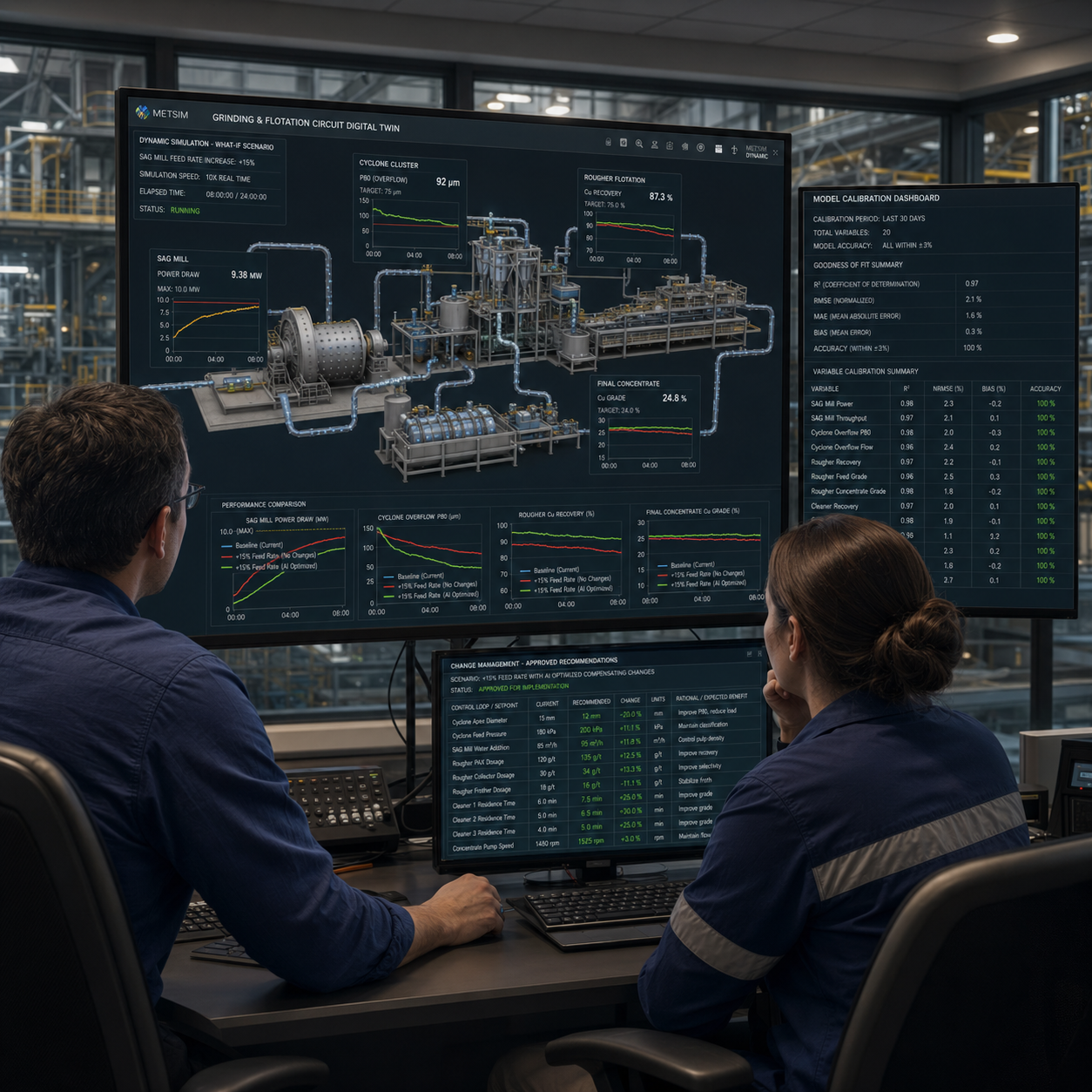
The digital twin of a mineral processing plant is its virtual replica which gets continuous input from physical assets using IoT sensors. This allows metallurgical engineers to simulate, observe and optimize processes taking place in the plant while keeping production uninterrupted. Mineral processing plants have digital twins that replicate the flow of mineral resources from raw ores to end products by dynamic simulation of process chemistry, process thermodynamics and time delays in each step of the process.
A process digital twin calculates a full mass balance and energy balance for the whole plant. It determines what is currently going on in the processing plant in real-time through integration of data provided by IoT devices, SCADA systems, control systems and lab information management systems. These twins allow metallurgists to conduct simulations of circuits’ performance under various scenarios of feed rate and conditions in a risk-free environment. Grinding circuits’ digital twins calculate in real-time dynamic material balance and particle size distribution by tracking comminution by breakage matrices determined by the hardness of ore materials being ground.
Digital twins help to detect hotspots and predict maintenance needs through equipment monitoring and early warning systems that help avoid costly failures. This system combines analytics and machine learning to predict wear and tear, offering precise calculations regarding the remaining useful life of mill liners, pump boxes, and hydrocyclones among other infrastructure parts. With this process, facilities can cut down 50-70% of their unexpected downtime. In addition, digital twins help avoid costly repairs and equipment replacements by extending equipment life. Operators can monitor cracks in the boom of an excavator or cyclone roping, for instance.
This technology provides the entire environment needed for optimization of control systems and acts as an efficient instrument used to train process and control engineers about the workings of grinding circuits and other processing facilities. Training platforms provide the opportunity to play around with operating parameters, provoke ad hoc equipment failure, and manage training situations without jeopardizing real-life plants. In this way, it is possible to transfer experience from experienced operators to unexperienced ones and improve safety levels in the plant at the same time.
They assist mining companies with the minimization of their environmental footprint due to simulation of the environmental effect caused by various processes, the optimization of resource consumption, reduction in pollution and generation of waste. Digital twins measure exhausts of greenhouse gases, electricity consumption and water usage with high precision, avoiding errors caused by manual calculations and assisting companies to meet regulatory standards, for example, EU Carbon Border Adjustment Mechanism (CBAM). Companies optimize operations and prevent machinery malfunction, which decreases costs and enables renewable energy integration.
Digital twin application in mining companies leads to increased profits via efficiency gains from automation of manual process monitoring, better decision making from real-time data, and real-time analysis of process improvement options. The innovation allows users to plan future maintenance tasks, optimize resources, and avoid unnecessary interruptions by preparing work packages in advance. As per statistics, 70% of tech leaders in major enterprises are considering digital twins or have already invested in the technology.