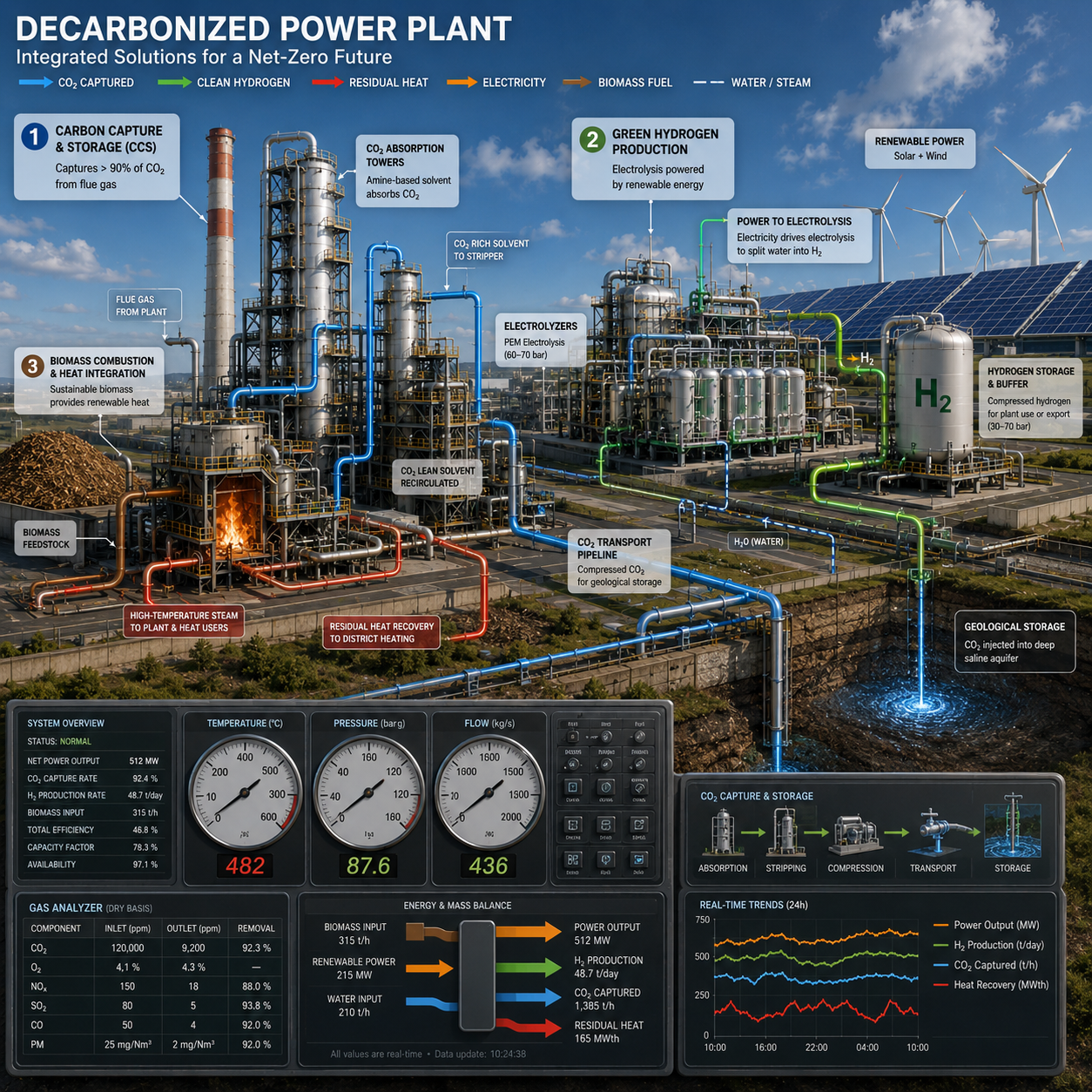
Decarbonization of stationary or fixed industrial plants involves a range of actions combining energy efficiency, fuel-switching (electrification and low-carbon fuels), carbon capture and storage/utilization (CCS/CCUS), bio-based inputs, and process changes like material substitution and circular approaches.
First and most important is energy efficiency: heat recovery, better boilers/burners, variable speed drives, process integration (using pinch technology), and digital energy management systems are all applied to decrease fuel consumption and thus direct CO2 emissions due to fuel burning. This action lowers the costs of further decarbonization since a reduction in thermal energy reduces the need for either electrification or CO2 capture equipment.
Electrification and fuel switching entail electrifying processes or substituting fossil fuels with cleaner options such as electric resistance heating, heat pumps, hydrogen (green H2 via electrolysis), and biofuels/renewable fuels where appropriate, in line with the carbon footprint of electricity and fuels produced throughout their life cycle. Adoption by industry would favor those processes capable of using electric or hydrogen heating at higher temperatures, with harder to electrify processes being candidates for more specialized approaches.
Point source carbon capture technologies have been widely deployed or are feasible in three main forms, including post combustion, pre combustion and oxy-fuel systems, along with transport and storage options such as pipelines/ships, and geological storage sites or utilization purposes (such as enhanced oil or gas recovery or industrial applications); capture rates above 85-95 percent are possible and a complete carbon capture system is estimated to cut CO2 emissions from plants by up to 80-90 percent, although with additional energy use (10-40 percent higher energy demand from power plants).
Large scale carbon capture has been realized in projects such as Sleipner, Weyburn and In Salah, and is still seen as the main solution for highly emitting, harder-to-electrify processes like cement, steel and some chemical operations.
Bio-based pathways and negative emission technologies are applied where possible, by substituting fossil fuel feedstocks with sustainable biomass feedstocks or using biomass conversion combined with carbon capture and storage (BECCS), which allows achieving net-negative CO2 effects at plant level. Industrial carbonation (mineralization) and carbon utilization in durable goods are other methods of carbon sequestration that do not have sufficient feedstock availability, energy efficiency, or scalability yet.
Finally, systemic and policy enablers are key components, such as availability of low-carbon power supply, transportation and/or storage of hydrogen and CO2, carbon price signals and/or incentives, clustered industrial facilities sharing the same utilities and pipelines, and regulatory regimes for carbon storage and monitoring. Otherwise, even technologically feasible solutions may become economically unfeasible or stranded.