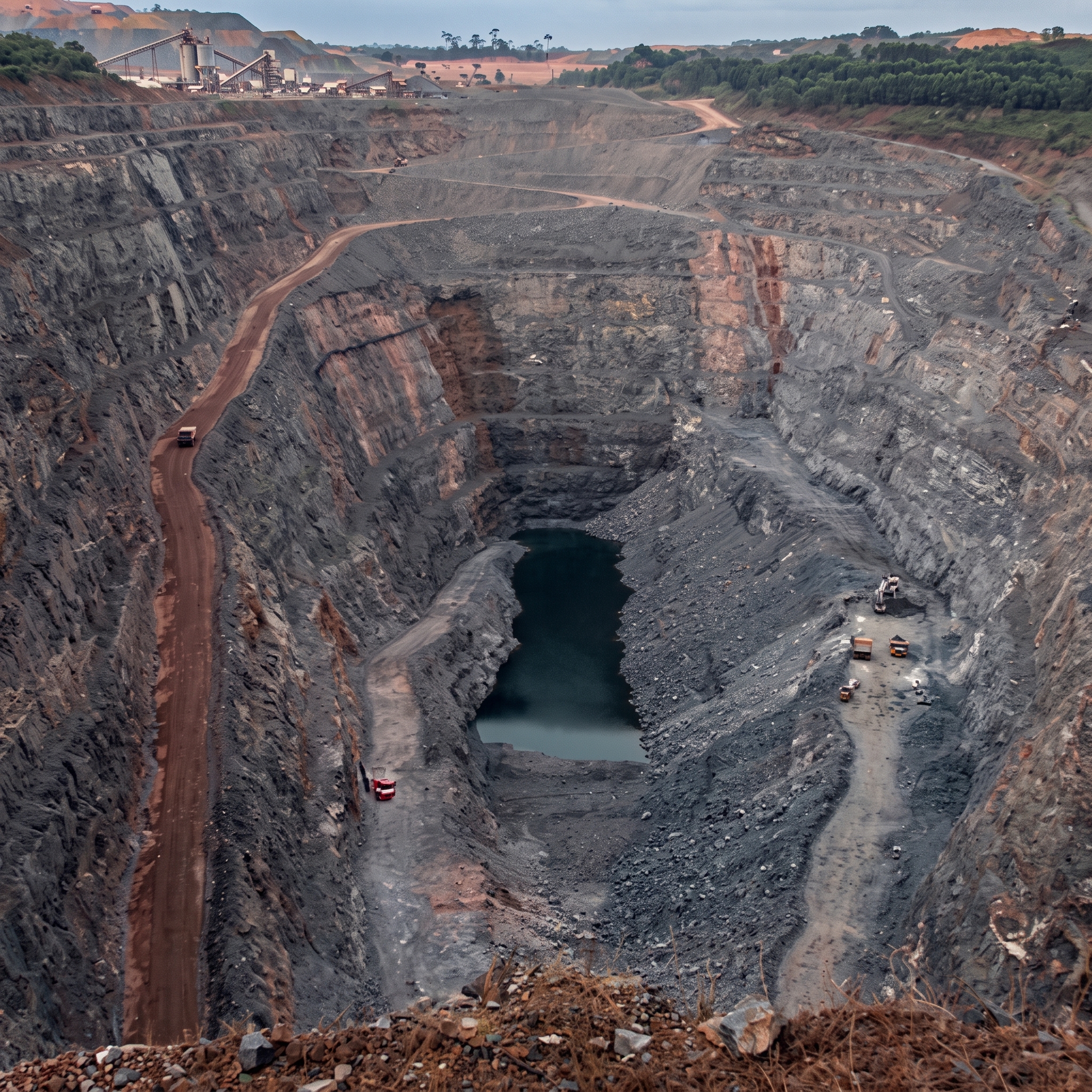
The Damang Gold Mine is found in the Western Region of Ghana and is located in the Tarkwa-Damang Gold Belt some 30 kilometers north of Tarkwa and some 300 kilometers by road from Accra. It is near the port town of Takoradi and is operated by Abosso Goldfields, a company that used to be a subsidiary of Gold Fields. Gold Fields held a 90% equity in the company while the rest was owned by the Government of Ghana. Historically the operation had been known to be an open pit mine, but recent efforts have largely focused on the processing of stockpiled ore in addition to finishing up the active mining operations.
Geologically, the Damang area is made up of rocks in the Lower Proterozoic Tarkwaian Group that are sedimentary rocks above the older Birimian rocks. Gold mineralization has structural and lithological control and occurs in areas that are folded and faulted associated with antiform, quartz veins and favorable horizons in the sedimentary rocks. The mineralization in Damang is made up of hydrothermal and palaeoplacer mineralization, the latter having similarities to the conglomerate-hosted gold deposits of the Tarkwa mine.
Damang has always had significant amounts of gold resources and reserves; however, the amounts have been adjusted as a result of mining depletion, economic re-assumptions, and re-adjustment of the mine plan. By the end of 2018, Gold Fields reported the existence of about 85.15 million tons of Mineral Resources at a grade of 2.21 g/t gold containing about 6.06 million ounces of gold along with 28.88 million tons of Mineral Reserves at 1.74 g/t gold containing about 1.62 million ounces of gold. By 2024, Gold Fields estimated approximately 3 million ounces of remaining Mineral Resources but did not report any Mineral Reserves because the remaining stockpiles were not able to satisfy the economic criteria set by the company for reserve classification.
The mine has created positive impacts for social and economic development through employment creation, procurement locally, taxes paid, royalties, infrastructural development, health services, education, water projects, and livelihood creation programs conducted by the Gold Fields Ghana Foundation. Simultaneously, there have been grievances from the community about agricultural land acquisition, compensation, relocation, water pollution, dust, blasting, employment opportunities, and strain on local services. In terms of the closure or post-mining phase of Damang mine, the key social objectives include workforce transition, livelihood transition, consultative process, rehabilitation of disturbed lands, water management, and accountability for the closure.