
Sign In


Forgot Password?

Don't have account, Sign Up Here

Forgot Password

Lost your password? Please enter your email address. You will receive a link and will create a new password via email.


Have an account? Sign In Now

Sorry, you do not have permission to Add a Post, You must login to Add a Post.


Forgot Password?

Need An Account, Sign Up Here

Sorry, you do not have permission to add Article.


Forgot Password?

Need An Account, Sign Up Here

Please briefly explain why you feel this Post should be reported.

Please briefly explain why you feel this Comment should be reported.

Please briefly explain why you feel this user should be reported.

Mining Doc Logo Mining Doc Logo Mining Doc Logo
Sign InSign Up

Mining Doc

Mining Doc Navigation

  • Home
    • About
    • Contact us
  • Mining articles
  • Online Courses
Search
Sign up

Mobile menu

Close
join for free
  • Home
  • Online courses
  • Case study
  • Mining Community
  • Solutions listing
    • Lase Solutions
    • O-PitBlast Solutions
    • Continuous Mining
    • Longwall mining
    • Geosight Scanners
    • LoopX AI
    • Terafil solutions
    • Blasting solutions
    • Geotechnical
    • Submersible Pumps
    • Mine rescue system
    • Ore sorting
    • Whittle Consulting Solutions
  • Add Blog
  • Feed
  • User Profile
  • Posts
    • New Posts
    • Trending Posts
    • Must read Posts
    • Hot Posts
  • Polls
  • Badges
  • Home
    • About
    • Contact us
  • Mining articles
  • Online Courses

Mining Doc Latest Posts

Mining Doc
  • 0
  • 0
Mining DocExplainer
Added: September 22, 20262026-09-22T07:14:45-04:00 2026-09-22T07:14:45-04:00In: Geology

What are the key indicators separating orogenic gold systems from intrusion-related gold systems in the field?

  • 0
  • 0

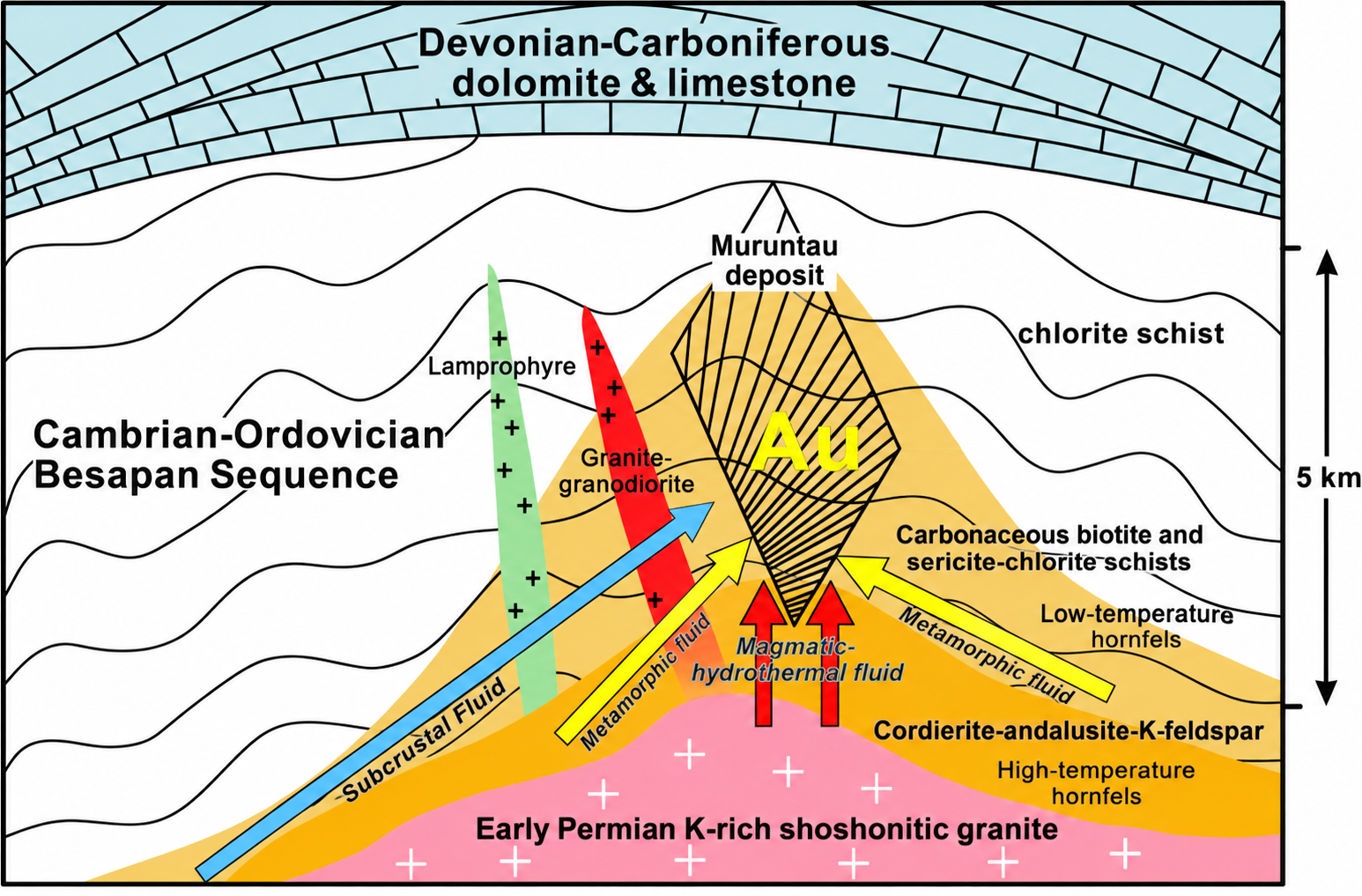
The identification of types of gold deposits is economically relevant for many reasons. There are two main types of gold deposits, namely, orogenic gold systems (OGS) and intrusion-related gold systems (IRGS), each requiring its own approach to prospecting. OGS appear to be related to regionally metamorphosed terranes and result from the processes of compression deformation in convergent margins (Groves et al., 1998). IRGS show close spatial and genetic relationship with felsic magmatic intrusions (Elshourbagi & Fan, 2021). It is necessary to evaluate some criteria in order to distinguish between these systems in the field.

The first field criterion is the regional tectonic regime and host rock lithology. OGS occur in accretionary and collisional orogens, with the host rocks being greenstone belts and turbidites (Konate et al., 2024). The OGS are formed over a wide range of depths during major tectonic events (Groves et al., 1998). In turn, IRGS occur in deformed shelf sequences, showing close spatial association with felsic batholiths. The presence of nearby tungsten or tin magmatic provinces strongly favors IRGS models.

Structure and vein morphology can be considered as the second important field criterion. OGS have strong control of regional-scale deep-seated ductile and brittle-ductile shear zones (Konate et al., 2024). Extensively laminated or massive quartz-carbonate veins are usually observed in such faults. In case of IRGS, mineralization occurs in the apical part of intrusions or around intrusion contact aureole. Veins in IRGS appear to be localized sheeted vein systems or magmatic-hydrothermal breccias.

Another line of evidence is the hydrothermal alteration mineral assemblages. The interaction of deep fluids and host rocks at OGS leads to the development of significant alteration halos characterized by abundant carbonate alterations, sericitizations, and disseminated pyrites that spread over a wide zone away from the primary shear zones. The alteration of IRGS, on the other hand, is always restricted and typical of magmatic-hydrothermal environments, involving potassic, albitic, or greisen-type mineral assemblages.

Fourthly, the geochemical characteristics of the ore deposit are another key factor used in distinguishing OGS from IRGS. OGS are “gold-only” ores containing high amounts of Au, Ag, As, Sb, but no base metals (Groves et al., 1998; Konate et al., 2024). Intrusion-related deposits, on the other hand, are characterized by magmatically enriched fluids with a distinctive gold-bismuth-tellurium-tungsten-tin metal association (Elshourbagi & Fan, 2021). The occurrence of bismuthinite or scheelite or zonational development of silver-lead-zinc vein deposits in the field is a strong indicator of the intrusion-related type of deposit.


To sum up, despite the commonality of gold bearing veins in deformed terrains of both types of deposits, it is possible to confidently distinguish OGS from IRGS based on field observation. A geologist should be aware of the regional shear zones and extensive carbonate alteration when searching for OGS. Instead, one should look for the sheeted vein deposits, a distinctive magmatic metal association, and felsic intrusions when dealing with IRGS.

References

Elshourbagi, H. M., & Fan, H.-R. (2021). An oxidised intrusion-related origin in the controversial Jiaodong gold province (China) for the Shicheng Au-Cu deposit. All Earth, 33, 5–29. https://doi.org/10.1080/09853111.2021.1883314

Groves, D. I., Goldfarb, R. J., Gebre-Mariam, M., Hagemann, S. G., & Robert, F. (1998). Orogenic gold deposits: A proposed classification in the context of their crustal distribution and relationship to other gold deposit types. Ore Geology Reviews, 13, 7–27. https://doi.org/10.1016/s0169-1368(97)00012-7

Konate, S. I. M., Bolarinwa, A. T., Kazapoe, R. W., Bouare, M. L., Traore, E. M., Ngiamte, G. L., & Kouagou N’Dah, N. D. (2024). A review of the current state of knowledge on gold mineralization in Mali, Western Africa. Geology, Ecology, and Landscapes, 1–25. https://doi.org/10.1080/24749508.2024.2441514

What are the key indicators separating orogenic gold systems from intrusion-related gold systems in the field?
0
  • 0 0 Comments
  • 32 Views
  • 18 Reactions
  • 0 Followers
  • 0
    • Report
  • Share
    Share
    • Share on Facebook
    • Share on Twitter
    • Share on LinkedIn
    • Share on WhatsApp

Related Posts

  • How to build a reliable 3D structural model when outcrop is limited to less than 10% exposure?
  • What's the correct method for logging RQD and core recovery to ensure defensible geotechnical domain models?
  • What's the practical workflow for using portable XRF data in the field without compromising assay-grade decisions?

You must login to add an Comment.


Forgot Password?

Need An Account, Sign Up Here
aalan

Sidebar

Sponsored Ads

aalan
  • Recent
  • Legal Validity of OTR Tire Supply Contracts: How Technical Appendices Protect the Interests of Mining Enterprises
    • On: September 21, 2026

    Legal Validity of OTR Tire Supply Contracts: How Technical Appendices ...

  • Mobile Crusher for Sale Philippines for Producing Road Base and Construction Aggregates
    • On: September 18, 2026

    Mobile Crusher for Sale Philippines for Producing Road Base and ...

  • Customs Clearance and Logistics Practices for Imported Crusher to Chile
    • On: September 18, 2026

    Customs Clearance and Logistics Practices for Imported Crusher to Chile

  • Mining ERP: Bridging the Gap Between Planned and Actual Costs
    • On: September 14, 2026

    Mining ERP: Bridging the Gap Between Planned and Actual Costs

  • Ore Crushing Plant for Mountain Mines: Managing Access, Transport, and Production
    • On: September 12, 2026

    Ore Crushing Plant for Mountain Mines: Managing Access, Transport, and ...

  • How Does the Crushing Chamber Design of Aggregate Crushing Equipment Affect Output and Finished Product Quality?
    • On: September 12, 2026

    How Does the Crushing Chamber Design of Aggregate Crushing Equipment ...

  • How Can Mine Construction Teams Reduce Rework During Fast-Track Projects?
    • On: September 8, 2026

    How Can Mine Construction Teams Reduce Rework During Fast-Track Projects?

Go to Home page to view more

Top Members

Olena Skyba

Olena Skyba

  • 150 Posts
  • 2 Comments
Pundit
Marcial

Marcial

  • 91 Posts
  • 0 Comments
Enlightened
Jean Marais (Sanodea Group)

Jean Marais (Sanodea Group)

  • 26 Posts
  • 0 Comments
Beginner
Trending on Mining Doc

Trending Communities

Fixed Plant General Information Geology Mining Case Studies Mining Doc Documentary Mining Engineering Mining Events Mining Finance and Economy Mining Human Resources Mining Industry Research Mining Operations Mining Software Solutions Mining Sustainability Mining Technology Solutions Mobile Plant Equipment

Explore

  • Home
  • Online courses
  • Case study
  • Mining Community
  • Solutions listing
    • Lase Solutions
    • O-PitBlast Solutions
    • Continuous Mining
    • Longwall mining
    • Geosight Scanners
    • LoopX AI
    • Terafil solutions
    • Blasting solutions
    • Geotechnical
    • Submersible Pumps
    • Mine rescue system
    • Ore sorting
    • Whittle Consulting Solutions
  • Add Blog
  • Feed
  • User Profile
  • Posts
    • New Posts
    • Trending Posts
    • Must read Posts
    • Hot Posts
  • Polls
  • Badges

Footer

Mining Doc

Join our community and connect with other people in the Mining industry for knowledge sharing.

Legal Stuff

  • Privacy Policy
  • Terms of Service

Help

  • Support
  • FAQs
  • How to add new content and how to promote a content
  • Compliance and guidelines
  • Subscribe to Mining Doc

Follow

© 2026 Mining Doc. All Rights Reserved