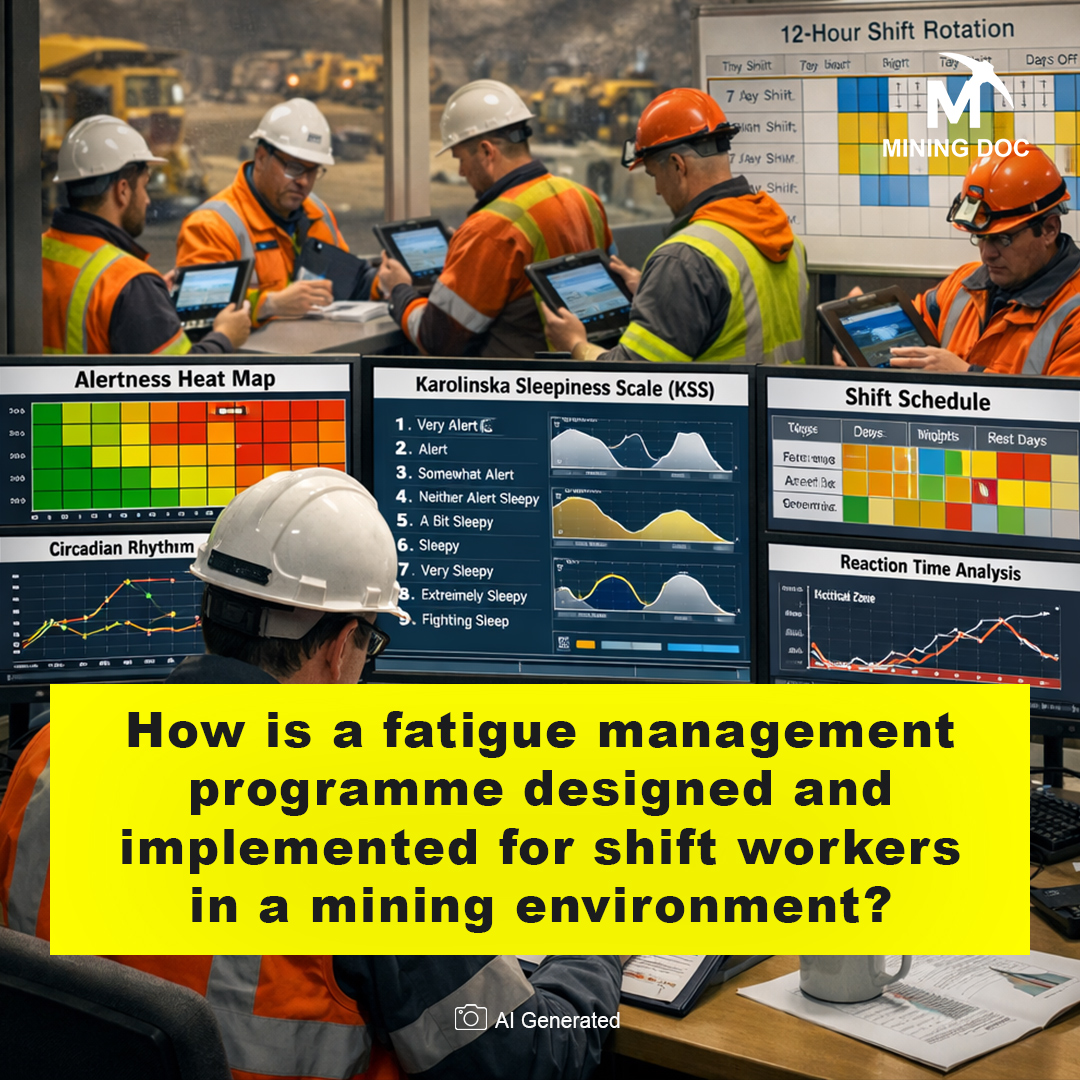
Fatigue in mining may be described as a condition characterized by either mental and/or physical impairment due to continuous mental or physical activity, inadequate sleep or circadian misalignment, manifesting itself through reduced alertness, poor decision making, and degraded performance. The FRMS is a scientifically driven initiative involving advanced monitoring and prediction techniques as a means of proactive management of fatigue risk factors prior to fatigue-related incidents.
During the planning stage, shift schedules are optimized by applying biomathematical modeling approaches (FAST or Readi) in order to estimate the locations of “fatigue hot spots” in terms of shift schedule characteristics such as sleep opportunities and rotating patterns. Such good practices as shift rotation (forward rotating rather than backward one; day –> afternoon –> night), limiting night shifts’ duration to reduce sleep debt and commuting time (especially important in cases of Fly-In Fly-Out employees who require extra travel time to reach the mine).
The implementation layer utilizes both prediction and reactivity technologies to track alertness. Wearable devices measure brain activity or heart rate variability for real-time scores on fatigue; cameras within the cab can detect microsleeps by measuring eye closures and head position. In addition to these measures, the administration utilizes the PVT – a tablet-based reaction test conducted prior to a work shift. These quick psychomotor vigilance tests allow the supervisor to spot individuals that are already fatigued before operating any heavy equipment. This way, when schedule-based measures fail, technology-based measures pick up the slack.
An important factor in dealing with fatigue in operations is creating a non-punitive safety culture, in which employees and managers understand their responsibilities in preventing accidents associated with fatigue. Employees should feel free to report any fatigue without fear of reprisals, and the supervisor should be aware of how to detect symptoms of fatigue, such as irritability, delayed response times, or lack of awareness. Here again, we can use the “Swiss Cheese Model,” whereby the organization creates the opportunities, but the responsibility lies with the worker to take advantage of scheduled rest periods, eat right, and show up ready to work.
Moreover, fatigue prevention must include non-work-related factors that have been found to contribute to exhaustion. Workers are educated about good night shift sleeping habits, which include not drinking any caffeine or smoking cigarettes four hours prior to sleeping, having light snacks rather than large meals, and aligning meals with their new shift schedule, e.g., having breakfast at 6 PM before night shift. In terms of interventions, priority areas should be targeted in African mining operations where limited organizational funds can produce desired effects.
Lastly, a FRMS programme needs constant monitoring for its effectiveness. Analysis of data from incidents, close-calls, and fatigue alerts, including lane-departure alerts at 3:00 AM in a certain haul road, will help modify the programme accordingly to adapt lighting, job rotations or breaks. This way, the programme remains flexible, allowing 35-60% of mining accidents associated with human fatigue to be reduced by means of evidence-based changes rather than compliance alone.