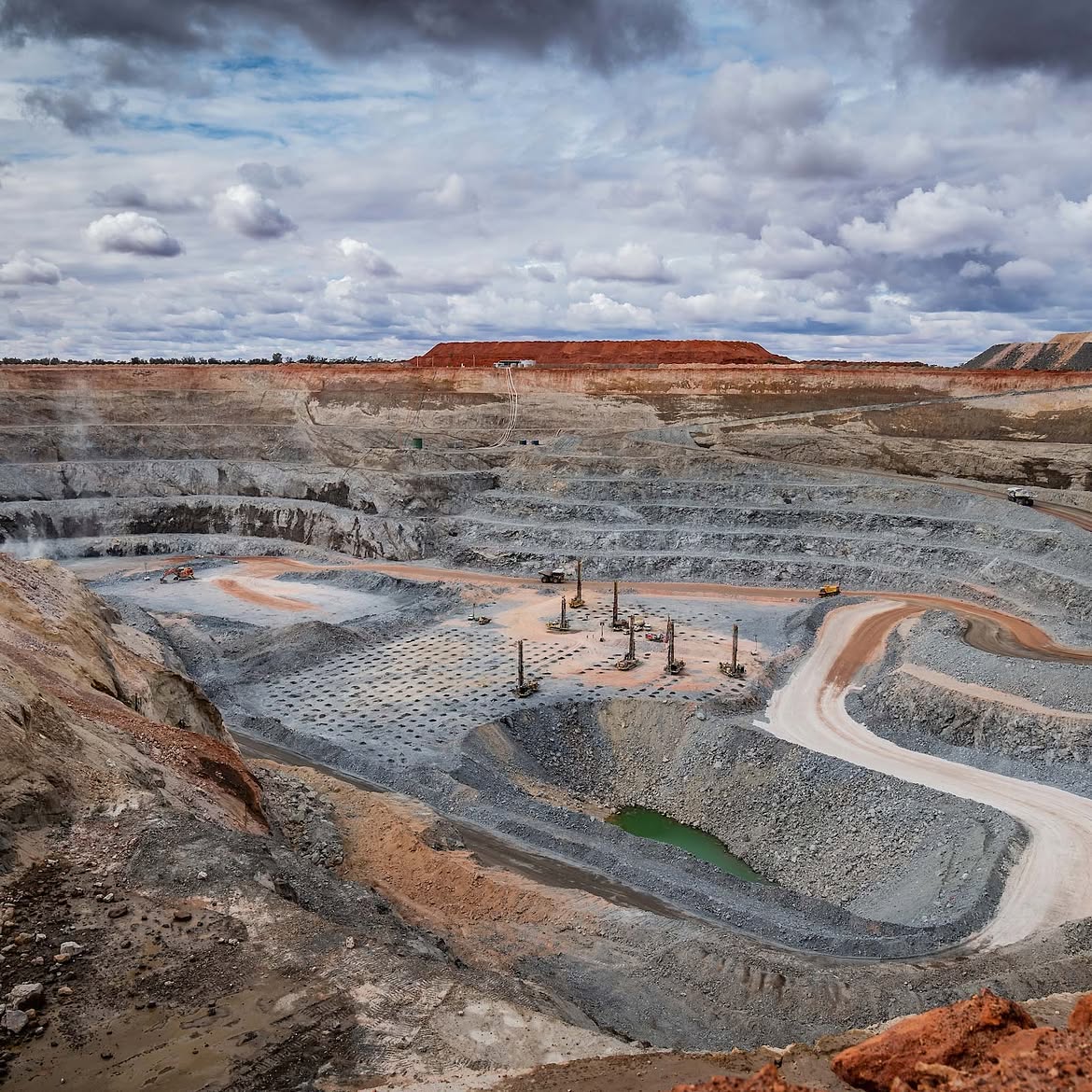
Tropicana Gold Mine is one of the gold mines in Australia which is located 330 kilometers northeast of Kalgoorlie in Great Victoria Desert, Western Australia. In the period since the mine started commercial gold production in 2013, AngloGold Ashanti together with its joint ventures have produced over 5 million ounces of gold. It is an example of how remote mining projects can employ advanced technology, geotechnical techniques, and renewable energy in its operations. The following is a summary of Tropicana in sections.
Geological investigations resulted in the discovery of gold at Tropicana in 2005 in an isolated area requiring the construction of an access road of 220 kilometers from Pinjin. The first joint venture was formed in 2002 between AngloGold Ashanti and Independence Group (IGO). The AngloGold Ashanti had 70 percent stake in operating the mine while the IGO owned 30 percent. The ownership changed hands in May 2021 when Regis Resources purchased the 30 percent stake belonging to IGO for A$903 million in cash. The initial surface mining activities took place using four major open pits; namely, Tropicana, Havana, Boston Shaker, and Havana South. The underground operations at Boston Shaker started in 2020.
Metallurgy test work was used in the design of the processing plant for Tropicana which has a rated throughput capacity of nine million tonnes per year. The use of a High-Pressure Grinding Roll (HPGR) along with a ball-mill circuit consisting of two ball mills was adopted in place of a SAG mill to reduce energy usage during the crushing of hard primary ore. Fine wet screening of 3-4 mm size enhanced grinding efficiency and helped the circuit achieve its nameplate capacity after two months of startup in 2013. Underground stability depends on the use of a state-of-the-art implicit geotechnical modeling process using software such as Leapfrog, GeotAgg, and Map3D.
The adoption of clean energy reached a major landmark in February 2025 when Australia built its biggest off-grid hybrid renewable energy power station in Tropicana. Pacific Energy has set up a 61 megawatts hybrid power plant for a period of ten years, which includes four 6 megawatts wind turbines, a 24 megawatts solar farm, and a 13 megawatts battery storage system with gas generation. This set-up will result in cutting down of 65,000 tonnes of carbon emission per year and 50% reduction in gas fuel use. Environmental sustainability is also promoted by land rehabilitation on over 3,000 hectares of disturbed land. Plans to close the mine include rehabilitation of the land to be Unallocated Crown Land that can sustain native desert vegetation, and completion is expected between 2029 and 2030.
Tropicana epitomizes state-of-the-art mining through its evolution from a remote desert find to becoming a highly productive, multi-pit, and underground mine complex. The major technical successes include improved grinding effectiveness through high pressure grinding rolls (HPGR) and improved implicit geotechnical modeling that have set benchmarks in grinding hard ore and securing stability in deep stopes. Furthermore, heavy investment in hybrid renewable power generation, as well as progressive reclamation, highlight the importance of environmental management in modern gold extraction and site closure planning for the future.