
Sign In


Forgot Password?

Don't have account, Sign Up Here

Forgot Password

Lost your password? Please enter your email address. You will receive a link and will create a new password via email.


Have an account? Sign In Now

Sorry, you do not have permission to Add a Post, You must login to Add a Post.


Forgot Password?

Need An Account, Sign Up Here

Sorry, you do not have permission to add Article.


Forgot Password?

Need An Account, Sign Up Here

Please briefly explain why you feel this Post should be reported.

Please briefly explain why you feel this Comment should be reported.

Please briefly explain why you feel this user should be reported.

Mining Doc Logo Mining Doc Logo Mining Doc Logo
Sign InSign Up

Mining Doc

Mining Doc Navigation

  • Home
    • About
    • Contact us
  • Mining articles
  • Online Courses
Search
Sign up

Mobile menu

Close
join for free
  • Home
  • Online courses
  • Case study
  • Mining Community
  • Solutions listing
    • Lase Solutions
    • O-PitBlast Solutions
    • Continuous Mining
    • Longwall mining
    • Geosight Scanners
    • LoopX AI
    • Terafil solutions
    • Blasting solutions
    • Geotechnical
    • Submersible Pumps
    • Mine rescue system
    • Ore sorting
    • Whittle Consulting Solutions
  • Add Blog
  • Feed
  • User Profile
  • Posts
    • New Posts
    • Trending Posts
    • Must read Posts
    • Hot Posts
  • Polls
  • Badges
  • Home
    • About
    • Contact us
  • Mining articles
  • Online Courses

Mining Doc Latest Posts

Mining Doc
  • 0
  • 0
Mining DocEnlightened
Added: August 7, 20262026-08-07T04:34:24-04:00 2026-08-07T04:34:24-04:00In: Mining Engineering

What are the technical and economic barriers to implementing in-situ leaching (ISL) as an alternative to conventional open-pit mining for copper oxide deposits?

  • 0
  • 0

In-situ leaching (ISL), or in-situ recovery, refers to a process where the leaching agent (lixiviant) is used to dissolve the metals from an orebody and pumped out to the surface. In contrast, conventional open-pit mining of copper oxide ores requires the physical excavation of rocks and subsequent crushing and leaching on the surface. Although ISL does not require costly earthmoving and large tailings impoundments, switching to ISL from conventional open pit copper oxide extraction processes presents technical and economic challenges.

Fluid flow is the most important technical barrier to using ISL technology. While conventional open-pit mining entails crushing rocks to desired size in order to facilitate efficient lixiviant interaction, ISL depends entirely on natural or induced permeability of the orebody. There should be high feasibility, strict monitoring, and good control of fluid flow in order to make sure that lixiviant makes contact with the copper oxide minerals and is recovered safely (Jenkin et al., 2024). Without good hydraulic conductivity, the lixiviant does not flow uniformly and therefore leaves many parts of the copper deposit untouched.

In addition to fluid dynamics challenges, geochemical complexities are another obstacle. As sulfuric acid attacks copper oxide, it reacts with other mineral gangues. This additional reaction quickly eliminates the acid and increases the amount of chemicals that must be used in the process. On top of this, when gangue minerals are dissolved, secondary minerals, such as gypsum, may be precipitated and actively clog the natural pores and cracks, cutting off the fluid flow and halting the process before achieving desired results.

Economically, ISL does not require huge initial investments into heavy machinery or construction of huge tailing dams but raises the problem of uncertainties of the process below the surface. The main economic challenge is unpredictable recovery rate in conjunction with long time needed for leaching process. Open-pit mining ensures physical access to the ore and thus provides quick revenues. On the contrary, in situ processes heavily rely on kinetics which takes much time.

Environmental and regulatory factors are also intrinsically connected with the economics of the process. Even though ISL helps reduce surface scarring of the landscape, the process carries the high risk of groundwater contamination by the fluids that might leak outside the containment zone. It is crucial to have either neutral or positive impacts on the ecosystem and groundwater in order to perform the in situ process safely (Jenkin et al., 2024). Thus, there are tough and expensive monitoring regulations. The costs of groundwater remediation may discourage investments, similarly to very tight regulations that prevail in mature ISL industries, such as uranium mining (Li & Yao, 2024). Besides, the issue of subsurface microbes needs to be controlled (Roberto & Schippers, 2022).

To summarize, although in situ process is an attractive and less invasive solution than open-pit one in case of copper oxides extraction, it is limited. First of all, it is impossible to ensure even fluid movement in the underground reservoirs and the risk of pore clogging by chemicals creates unpredictable economic projections. It is very likely that open pit mining will continue being the dominating technique until there are some technical achievements in this area.

Image rights: Estay, H., Díaz-Quezada, S., Arancibia, E. et al. Economic Assessment of an In Situ Leaching Operation with Ore Preconditioning Using Sublevel Stoping Techniques. Mining, Metallurgy & Exploration 40, 493–504 (2023). https://doi.org/10.1007/s42461-023-00736-y
References

Jenkin, G., Arcilla, C., Abbott, A., Bateson, L., Bautista VII, A., Chambers, J., Devanadera, M. C., Duddigan, S., Fernando, E., Gervasio, J. H., Gibaga, C., Lazaro, J. E., Menor, T., Naden, J., Newsome, L., Pan, Y., Quierrez, R., Quimado, M., Samaniego, J., Selvaraj, V., Smith, D., Swift, R., Symons, J., Tanciongco, A., & Tibbett, M. (2024). Recent developments in the science and technology of in situ solvent leaching of tailings for reprocessing, rehabilitation and closure. Proceedings of the International Conference on Mine Closure, 29–44. https://doi.org/10.36487/acg_repo/2415_0.03

Li, G., & Yao, J. (2024). A Review of In Situ Leaching (ISL) for Uranium Mining. Mining, 4, 120–148. https://doi.org/10.3390/mining4010009

Roberto, F. F., & Schippers, A. (2022). Progress in bioleaching: part B, applications of microbial processes by the minerals industries. Applied Microbiology and Biotechnology, 106, 5913–5928. https://doi.org/10.1007/s00253-022-12085-9
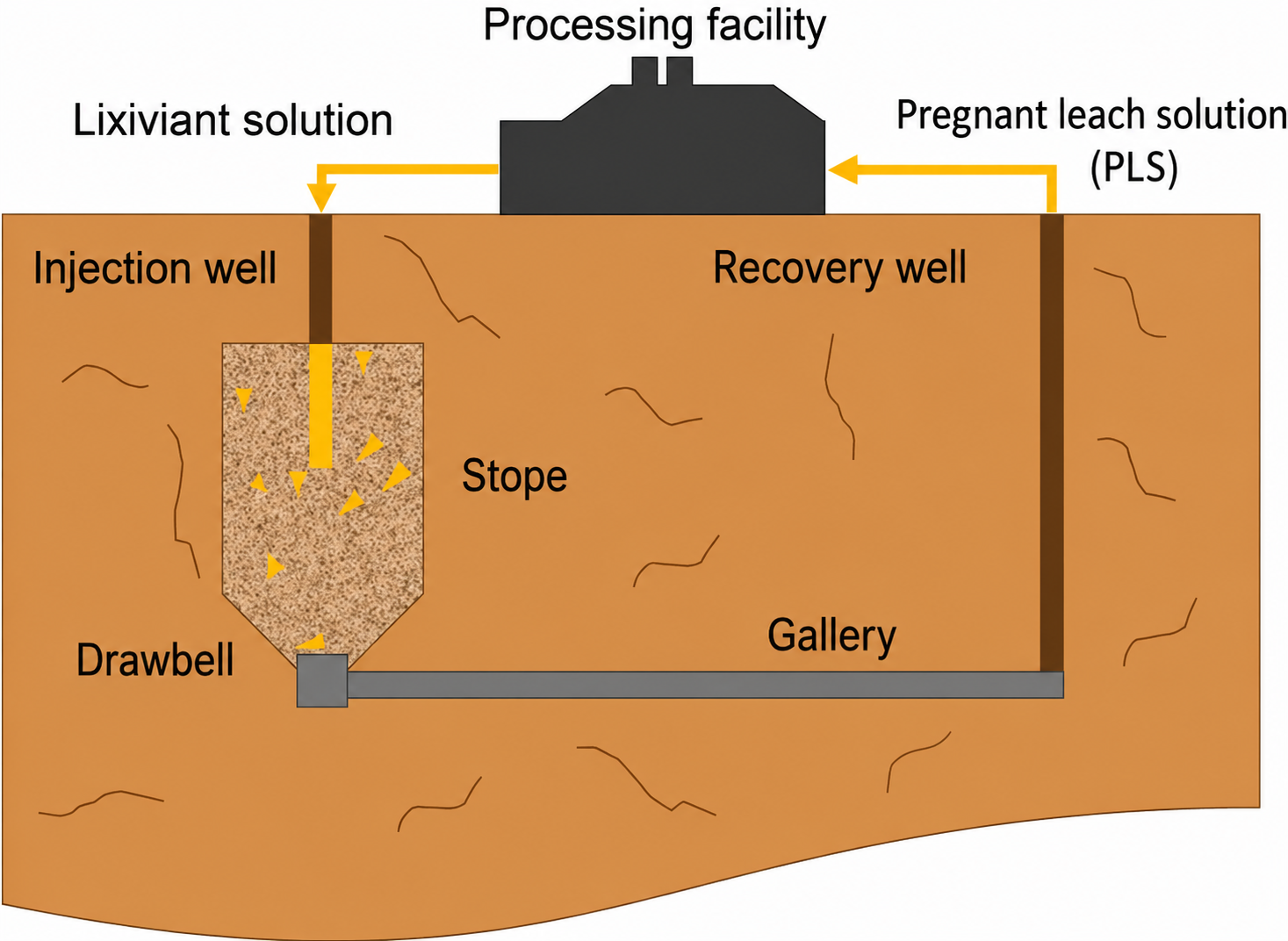

What are the technical and economic barriers to implementing in-situ leaching (ISL) as an alternative to conventional open-pit mining for copper oxide deposits?
0
  • 0 0 Comments
  • 23 Views
  • 23 Reactions
  • 0 Followers
  • 0
    • Report
  • Share
    Share
    • Share on Facebook
    • Share on Twitter
    • Share on LinkedIn
    • Share on WhatsApp

Related Posts

  • How do you calibrate and validate a shovel payload monitoring system to reduce overloading of haul trucks and improve fleet ...
  • How to estimate and schedule sustaining capital expenditure over the life of a mine to maintain equipment reliability and production ...
  • How to design a pillar layout for a room-and-pillar operation in a flat-lying coal seam with variable roof conditions?

You must login to add an Comment.


Forgot Password?

Need An Account, Sign Up Here
aalanaalan

Sidebar

  • Recent
  • Why Concrete Line Pumps Are Becoming Essential for Construction Projects in Peru’s Mountain Areas
    • On: August 4, 2026

    Why Concrete Line Pumps Are Becoming Essential for Construction Projects ...

  • Sand Making Machine in Mining Industry: Supporting Sustainable Resource Utilization
    • On: August 4, 2026

    Sand Making Machine in Mining Industry: Supporting Sustainable Resource Utilization

  • Strengthening Workforce Security in Modern Mining Operations
    • On: August 1, 2026

    Strengthening Workforce Security in Modern Mining Operations

  • How Mobile Jaw Crusher Price Changes for Mining and Construction Applications
    • On: August 1, 2026

    How Mobile Jaw Crusher Price Changes for Mining and Construction ...

  • What Really Prevents Costly Downtime? The Missing Link Between Maintenance and Mining Performance
    • On: August 1, 2026

    What Really Prevents Costly Downtime? The Missing Link Between Maintenance ...

  • Chilean Crushing Plant Operator Safety Training Guide: Preventing Falls and Foreign Object Ingress
    • On: August 1, 2026

    Chilean Crushing Plant Operator Safety Training Guide: Preventing Falls and ...

    • On: August 1, 2026

    Selecting a Mobile Crusher in Indonesia: Navigating Rainy Seasons and ...

Go to Home page to view more

Top Members

Olena Skyba

Olena Skyba

  • 150 Posts
  • 2 Comments
Pundit
Marcial

Marcial

  • 91 Posts
  • 0 Comments
Enlightened
Jean Marais (Sanodea Group)

Jean Marais (Sanodea Group)

  • 26 Posts
  • 0 Comments
Beginner
Trending on Mining Doc

Trending Communities

Fixed Plant General Information Geology Mining Case Studies Mining Doc Documentary Mining Engineering Mining Events Mining Finance and Economy Mining Human Resources Mining Industry Research Mining Operations Mining Software Solutions Mining Sustainability Mining Technology Solutions Mobile Plant Equipment

Explore

  • Home
  • Online courses
  • Case study
  • Mining Community
  • Solutions listing
    • Lase Solutions
    • O-PitBlast Solutions
    • Continuous Mining
    • Longwall mining
    • Geosight Scanners
    • LoopX AI
    • Terafil solutions
    • Blasting solutions
    • Geotechnical
    • Submersible Pumps
    • Mine rescue system
    • Ore sorting
    • Whittle Consulting Solutions
  • Add Blog
  • Feed
  • User Profile
  • Posts
    • New Posts
    • Trending Posts
    • Must read Posts
    • Hot Posts
  • Polls
  • Badges

Footer

Mining Doc

Join our community and connect with other people in the Mining industry for knowledge sharing.

Legal Stuff

  • Privacy Policy
  • Terms of Service

Help

  • Support
  • FAQs
  • How to add new content and how to promote a content
  • Compliance and guidelines
  • Subscribe to Mining Doc

Follow

© 2026 Mining Doc. All Rights Reserved