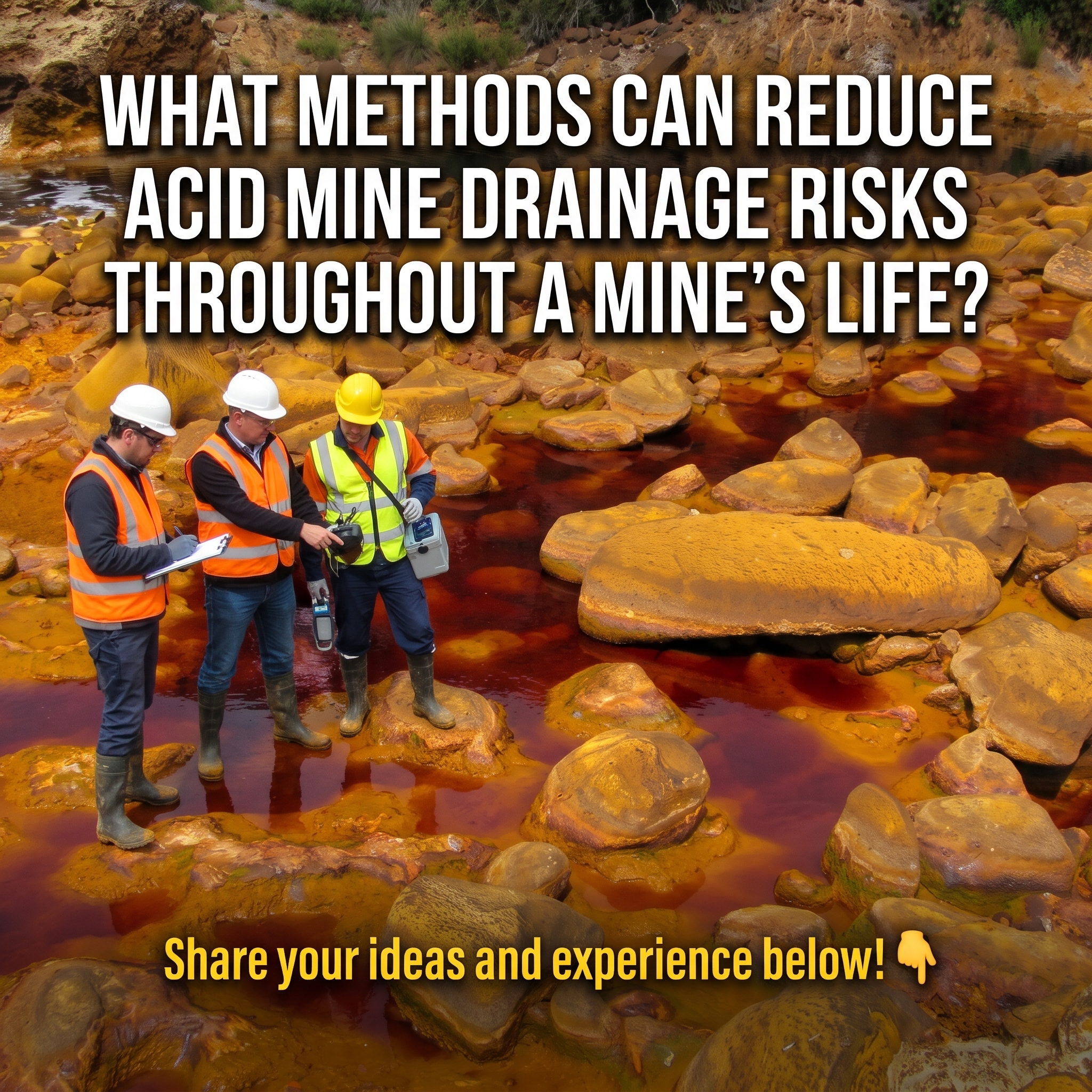


Acid mine drainage, often termed acid rock drainage, develops when sulphide minerals such as pyrite and pyrrhotite in waste rock, tailings, and pit walls react with atmospheric oxygen, water, and bacteria. This chemical and biological weathering generates acidic, metal- and sulphate-rich effluent capable of degrading surface water, groundwater, aquatic ecosystems, and human health. Once acid generation begins, containment and remediation become technically difficult and financially burdensome, frequently requiring active intervention for decades or centuries after operations cease. Consequently, mining operators must integrate preventative planning, source control, and water treatment across every stage of a mine’s lifecycle to minimize long-term environmental liabilities.
Effective risk reduction begins well before excavation through comprehensive geochemical characterization. Early static and kinetic testing quantifies sulphide and alkaline mineral abundances, allowing engineers to build mitigation directly into mine design. Strategic siting further limits contaminant transport by placing waste rock dumps on high, dry ground away from surface runoff and groundwater seepage, while diversion ditches, grout curtains, and slurry walls redirect clean water around reactive facilities. Structured decision-support frameworks, such as the Global Acid Rock Drainage Guide and the ICMM and INAP management tool, help non-specialist planners coordinate these measures across all six asset stages. Continuous monitoring then enables adaptive adjustments whenever field conditions diverge from predictions.
Physical and geochemical source controls aim to isolate reactive sulphides from oxygen and moisture during operations and closure. Operators can segregate high-sulphide waste rock, blend reactive materials with limestone to increase neutralization potential, or co-dispose fine tailings with coarse rock to restrict pore-space airflow. Engineered dry covers; including compacted clay, geomembranes, and multilayer capillary barrier systems, maintain high moisture saturation in fine-grained layers, sharply curbing oxygen diffusion and preserving near-neutral drainage. Where climatic and hydrological conditions permit, wet covers such as flooded impoundments, elevated water tables, and biologically supported water covers exploit the low solubility and diffusivity of oxygen in water to suppress oxidation.
When drainage still forms despite preventative barriers, water treatment provides essential environmental protection. Active treatment plants are well suited to operational sites with limited land area, variable flow rates, and available power, typically following a sequence of alkali dosing, oxidation, and sedimentation. High-density sludge lime neutralization reliably meets strict discharge standards while reducing waste sludge volumes. After closure, passive systems offer lower long-term operating costs for sites with stable, low-acidity flows and sufficient space. Constructed wetlands, anoxic limestone drains, and permeable reactive multibarriers harness sulphate-reducing and manganese-oxidizing microorganisms to precipitate metals as stable compounds without generating large quantities of chemical sludge.
Long-term stewardship of mine-impacted watersheds depends on prioritizing prevention over perpetual remediation. Because retroactive treatment of established acid drainage is costly and rarely offers a walk-away solution, early waste characterization, strategic siting, and engineered covers represent the most sustainable foundation for risk reduction. No single technology fits every geological or climatic setting; instead, engineers must tailor combinations of source controls and active or passive treatment to site-specific hydrology, topography, and mine stage. Through bench-scale testing, field trials, and sustained post-closure monitoring, operators can validate these designs, protect shared water resources, and achieve stable post-closure landscapes.