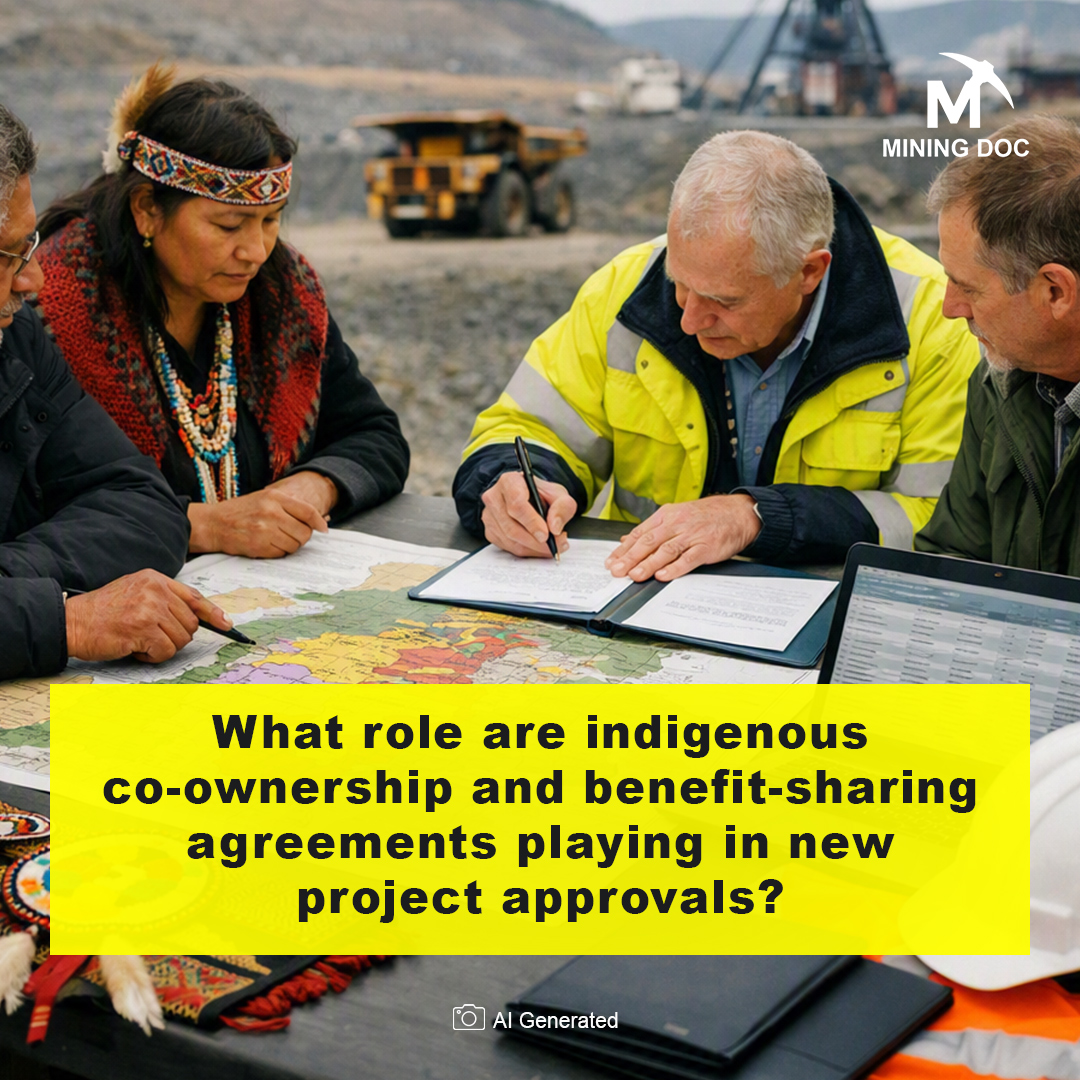
Indigenous co-ownership is the act of legally acquiring an equity interest in a business project by an indigenous group within their traditional lands (Kung et al., 2022). A benefit-sharing agreement, on the other hand, entails the negotiation of a framework that includes issues such as revenue allocation and employment, meant to distribute the benefits accruing from a project in a fair manner (Wilson, 2019).
Traditionally, resource extraction and infrastructure projects have been discriminatory towards Indigenous peoples and have often exploited their lands without adequate consultation of the local community. However, growing recognition of the rights of Indigenous peoples has led to a world-wide change and adoption of the concept of Free, Prior, and Informed Consent. Consequently, traditional top-down models of development are gradually being replaced with partnership models based on mutual respect and agreement (Wilson, 2019). These changes have made the acquisition of formal community consent a necessary requirement for corporate development today.
In today’s regulatory environment, these agreements are instrumental in gaining project approval. Contemporary social impact assessment includes the issue of community relations and socio-economic mitigation as a part of the regulatory process (Esteves et al., 2012). The governments and environmental regulatory agencies usually require a proof of benefit-sharing before giving any extraction license or construction permit. For corporations, signing such agreements is vital not only from the standpoint of reducing risks but also as a way of gaining social license to operate (Esteves et al., 2012).
Furthermore, beyond simple regulatory compliance, the co-ownership of Indigenous peoples changes the socioeconomic path of these communities substantially. By being equity holders rather than mere beneficiaries of any compensation, Indigenous people receive a stake in decision-making for both projects and environment. With equity sharing, communities become capable of generating income that is to be used for several decades ahead, thus merging the profitability of companies with sustainable community development (Kung et al., 2022). These funds can be consistently invested in healthcare, education, and cultural development of local communities.
Despite such positive outcomes, however, there are some problems connected with the actual implementation of agreements at the stage of their approval. Indeed, the imbalance of negotiating positions, financial knowledge, and legal expertise is quite common when multinational companies and communities interact. Also, the generation of any equity share often necessitates significant investment, which indigenous communities have difficulty in making due to the lack of financial resources (Kung et al., 2022).
In summary, Indigenous co-ownership and benefit-sharing arrangements have become an integral part of the processes used for obtaining approvals for new business initiatives. In combination with a consideration of Indigenous rights and proper economic assessments, such agreements help ensure that modern developments recognize traditional owners of the lands. In the future, considering the growing worldwide demand for natural resources, it will be vital to continue the development of such agreements to guarantee mutually beneficial results for all parties concerned.
References
Esteves, A. M., Franks, D., & Vanclay, F. (2012). Social impact assessment: the state of the art. Impact Assessment and Project Appraisal, 30(1), 34–42. https://doi.org/10.1080/14615517.2012.660356
Kung, A., Holcombe, S., Hamago, J., & Kemp, D. (2022). Indigenous co-ownership of mining projects: a preliminary framework for the critical examination of equity participation. Journal of Energy & Natural Resources Law, 40(4), 413–435. https://doi.org/10.1080/02646811.2022.2029184
Wilson, E. (2019). What is Benefit Sharing? Respecting Indigenous Rights and Addressing Inequities in Arctic Resource Projects. Resources, 8(2), 74. https://doi.org/10.3390/resources8020074