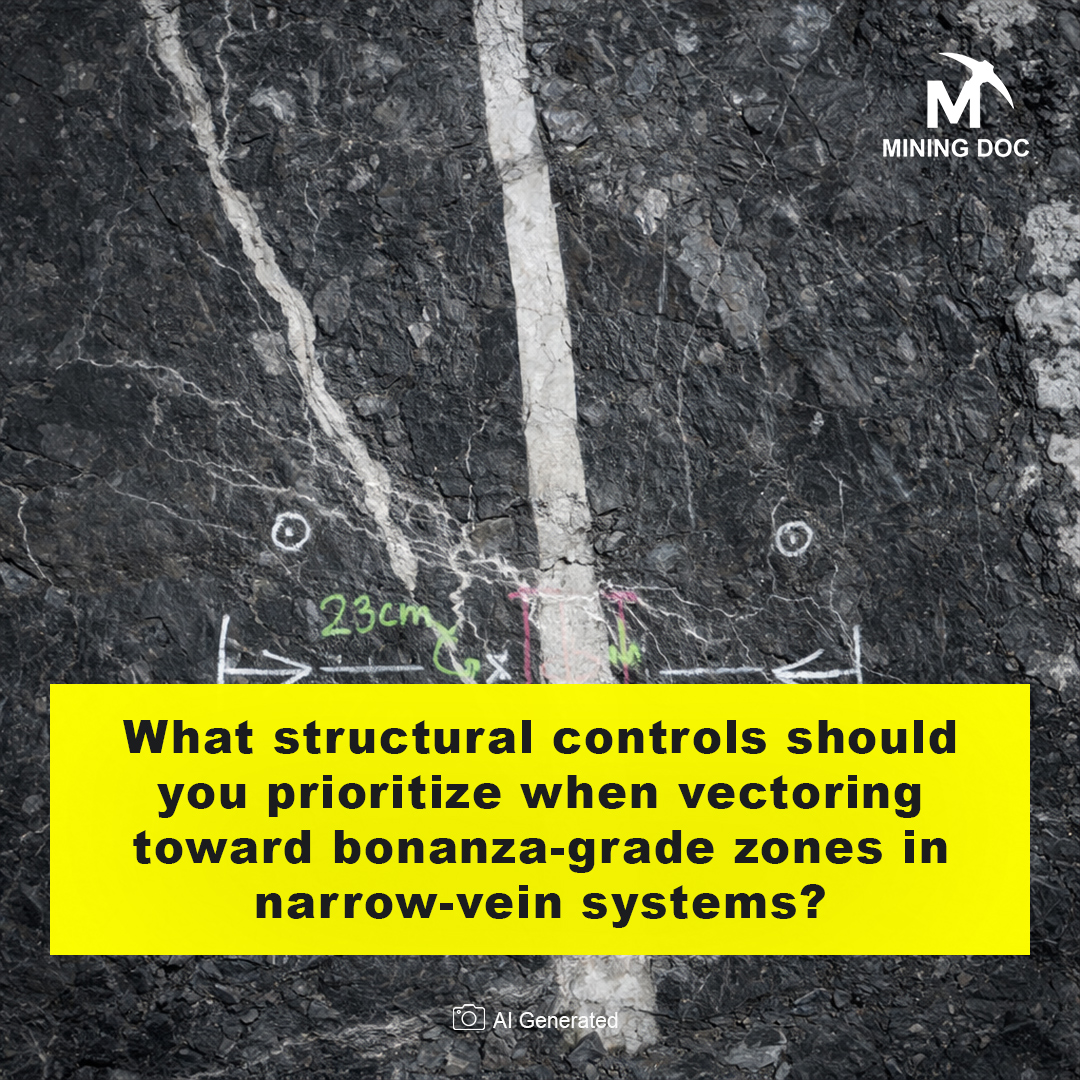
The study of economic geology would not be complete without appreciating deposit architecture. The narrow vein system is the name given to the mineral deposit characterized by ore deposits occurring in small faults which usually do not exceed two meters wide. In such veins, miners look for bonanza grades which are very enriched zones of precious metals. Vectoring towards these deposits involves the use of geologic data to determine their position. For hydrothermal fluids to precipitate metals, they need a good structural environment.
There are two basic types of structural control that should be considered first in any system. These include dilational bends and fault stepovers. In cases of transform faults, where the strike of the fault plane changes, an area of extension is formed. As tectonic pressure moves across the crust, this structure pulls open, creating local low-pressure environments. The hot fluids flowing into this environment quickly undergo rapid decompression and boiling. Such boiling is very effective in concentrating gold and silver in hydrothermal ore deposits.
Fault intersection is another crucial factor. If several faults or shear zones intersect, an intersection lineation results in a very permeable structure that plunges vertically. In effect, these structures create pipes where huge amounts of mineralized fluids can rise up. Due to the constant fracturing that occurs as a result of earthquakes, there is a large amount of space available to keep minerals depositing. It is therefore no wonder that intersection zones hold the largest and most productive veins within the whole vein structure.
Rheological differences in the host rock series also help to locate bonanza grades. When a propagating fault passes through a transition zone separating different rock types having differing physical characteristics, like ductile mudstone and brittle intrusion, there is generally a fault refraction. Refraction causes local dilation during fault movement. Moreover, brittle rocks fracture creating stockwork which becomes a great fluid trap. The key for explorers here is to study lithological contacts, since the point where a thin vein enters a brittle formation is a bonanza location.
Moreover, reactivation of already existing structures is another essential element that plays a key role in the development of mineral systems. Large-sized deposits do not typically develop in one pulse; they require more than one event and make use of already existing weaknesses within the crust. Early existing structures are important elements to localize future mineralization processes. In this regard, already existing fault structures play an important role in the localization of ore-bearing components (Mathieu et al., 2021).
In conclusion, when searching for high bonanza grade veins in a narrow-vein system, one requires high-level structural geology. Through focusing on the dilational bends, fault intersections, rheology boundaries, and the reactivated structures, the geologist has increased significantly the probabilities of finding a profitable shoot. The trick here is to understand the local kinematics and develop a proper structural plumbing model in three dimensions. Understanding where the host rock was stretched and fractured repeatedly will give the geologist his/her map.
References
Mathieu, L., Riller, U., Gibson, L., & Lightfoot, P. (2021). Structural controls on the localization of the mineralized Copper Cliff embayment and the Copper Cliff Offset dyke, Sudbury Igneous Complex, Canada. Ore Geology Reviews, 133, 104071. https://doi.org/10.1016/j.oregeorev.2021.104071