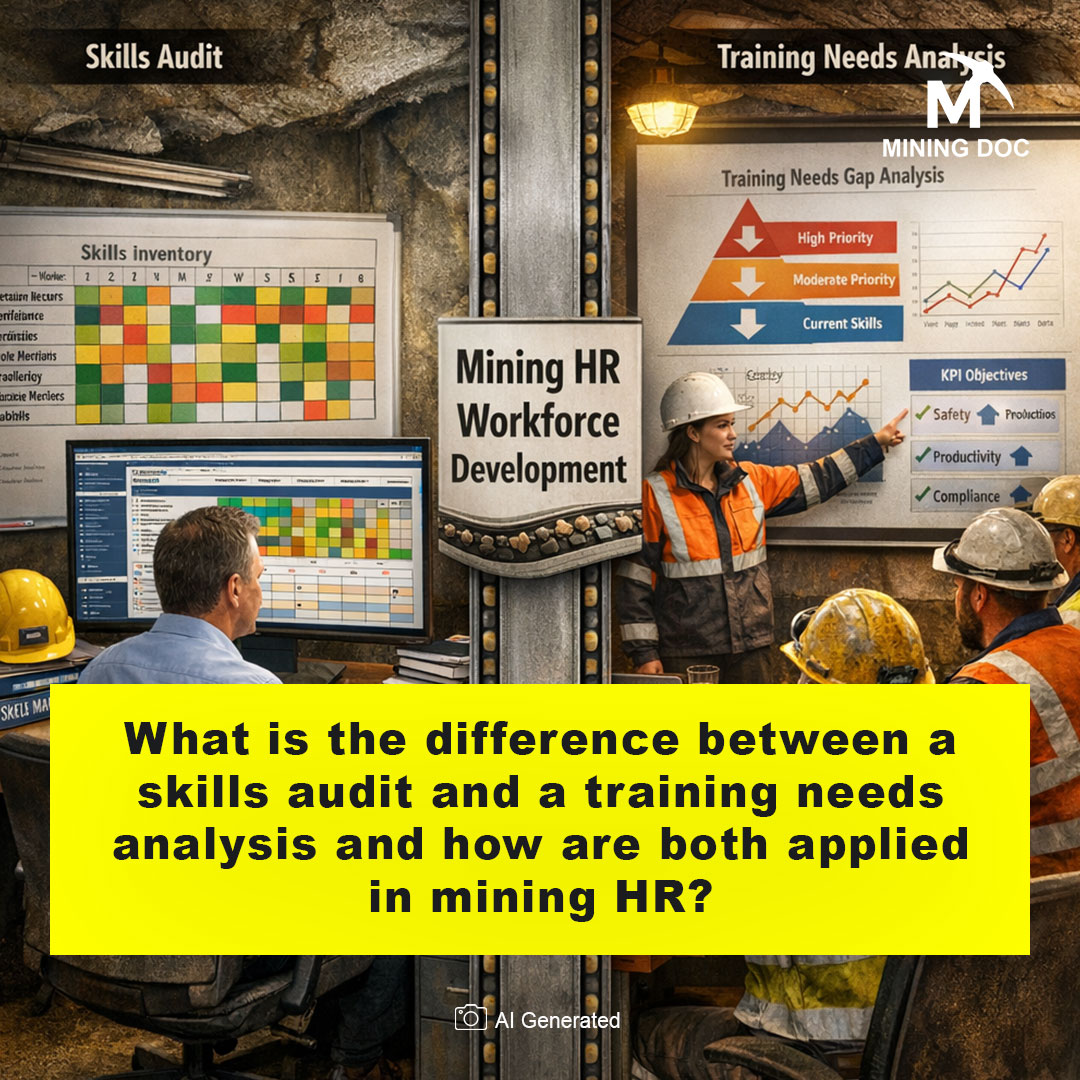
The skill audit can be said to be an assessment activity carried out in order to determine the skills currently possessed by employees, whereas the training need analysis is more of a decision process used to develop a training plan from the results of such an audit exercise by comparing the current capabilities with the required capabilities. Essentially, the skill audit acts as input for the training need analysis exercise.
The skills audit involves assessing the skills, credentials, and experience of the existing workforce against the requirements of the position or competency matrix. This normally produces a report that indicates whether individuals are competent, partially competent, or incompetent. The training needs analysis builds on the above to determine if the identified competencies should be addressed using training or other interventions.
Skills audit, on the other hand, is more comprehensive in that it involves the mapping of capabilities within the workforce at individual, group, or site level through a skills matrix. This is more applicable where an organization needs to determine the capabilities possessed by its staff in terms of certificates and technical skills among others. TNA is rather more operational, as it determines the difference between existing knowledge, skills, and abilities and that required, thus translating it into a training program.
A common process followed within some firms involves conducting a skill inventory, and the information is then fed into the TNA process. As an illustration, the skills of welders, drill operators, mechanics, or even supervisors can be audited in relation to their competencies, after which a TNA will be performed to ascertain which areas should be addressed through retraining, certification, mentoring, or succession planning.
In the HR of mining organizations, a skills audit would be used in order to match competency with high risk/role specific criteria including machine operation, blasting, maintenance, geotechnical observations, process plant operations, and other safety related aspects. This will also provide a means of compliance to the extent that it will indicate whether employees have the necessary licenses and inductions. The fact that mining organizations operate under stringent conditions makes a skills audit very relevant and useful.
The HR department of Mining relies on TNA to determine which developmental interventions are to be made based on these identified gaps, particularly when the gap is not only the lack of knowledge, but technological advancements, equipment updates, and legal requirements. An effective TNA in the mining industry should help align training programs with compliance, risk reduction, and increased productivity, such as equipping operators with skills for using new systems or preparing supervisors for managerial positions.
Practically, the use of both tools in HR management is seen in mining activities in relation to workforce planning, budgeting, succession planning, and audit preparation. A good guide in this regard would be, “Use Skills Audit to find out what we have and then use TNA to determine what we need, what is missing and how to bridge the gap.” This is particularly important in mining due to the associated safety implications.