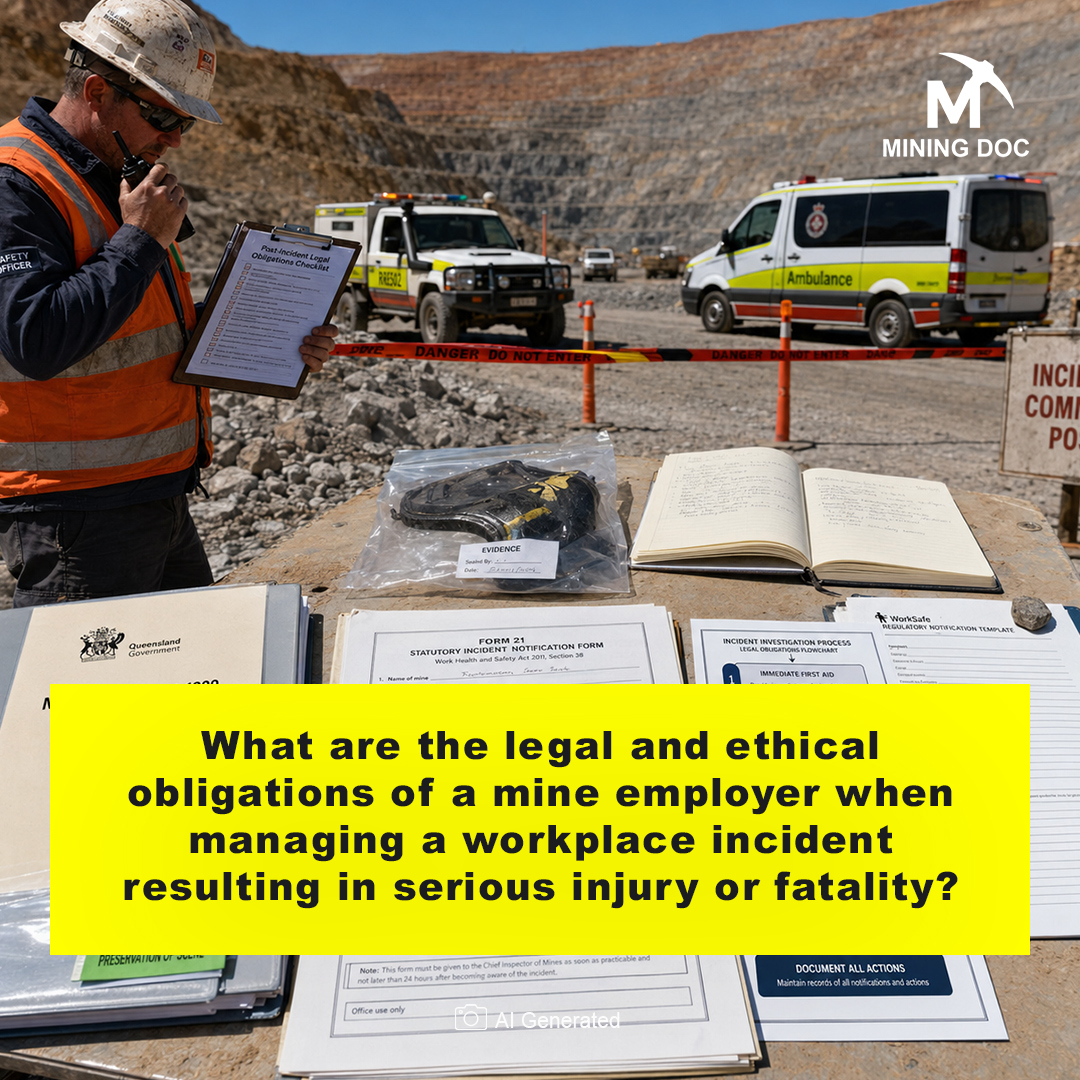
The management of a major mining accident means awareness some crucial facts. In legal terms, a “mine employer” runs the show for mine operations and site safety. When you hear “workplace incident,” think of something tragic – a severe injury or fatality – which is usually sudden and awful. Now, “legal obligations” are what you have to do by law, set by the government. On the flip side, “ethical obligations” come from your conscience and company morals.
If there’s a fatality or serious injury, the boss has some hard-and-fast rules to follow. They’ve got to stop work in that area pronto to keep everyone safe and protect the scene for investigation. Plus, they need to start emergency aid right away and report the incident to the authorities within set time limits. If they don’t, the company faces hefty fines and more legal trouble (Brandling et al., 2023).
After an immediate crisis, the focus moves to thorough investigations and following the rules for reporting. Companies need to let independent groups look into things and fully team up with the government on this. This means digging deep into what went wrong to find any ops or tech mistakes that caused issues.
Not following safety rules causes a lot of deaths in mining, so clear reporting is really important to stop future accidents and avoid getting slapped with fines (Muthelo et al., 2022). Besides just sticking to the laws, there’s a big moral obligation too. When bad stuff happens, companies must show compassion, be open about what happened, and value employees’ dignity.
It’s not enough to just keep your business protected; you’ve got to help those left behind. Families of the victims deserve good mental health support, access to counseling, and fair payouts. The right thing to do is making sure the company is there for the families during their hardest times, not just covering their butts.
Ethical responsibilities extend to both the surviving workforce and the wider community. When a fatal accident happens, trust in the organization and worker morale take a big hit. To regain confidence, leaders need to promote a genuine safety culture focused on stopping problems at their source, not just fixing surface issues (Tetzlaff et al., 2021). This involves addressing psychological trauma and improving safety practices well beyond basic regulation requirements.
In summary, dealing with a serious incident in a mine is a test of both law and ethics for employers. Following investigative and procedural rules meets legal duties, but treating workers with care goes beyond that – it’s a moral obligation. For sustainable mining, we must combine strict legal adherence with a firm dedication to worker safety.
References
Brandling, T., Pearson, H., & Mthombeni, M. (2023). Exploring accountability of individuals in the mining sector: A multi-level perspective. South African Journal of Business Management, 54. https://doi.org/10.4102/sajbm.v54i1.3085
Muthelo, L., Mothiba, T. M., Malema, N. R., Mbombi, M. O., & Mphekgwana, P. M. (2022). Exploring Occupational Health and Safety Standards Compliance in the South African Mining Industry, Limpopo Province, Using Principal Component Analysis. International Journal of Environmental Research and Public Health, 19(16), 10241. https://doi.org/10.3390/ijerph191610241
Tetzlaff, E. J., Goggins, K. A., Pegoraro, A. L., Dorman, S. C., Pakalnis, V., & Eger, T. R. (2021). Safety Culture: A Retrospective Analysis of Occupational Health and Safety Mining Reports. Safety and Health at Work, 12(2), 201–208. https://doi.org/10.1016/j.shaw.2020.12.001