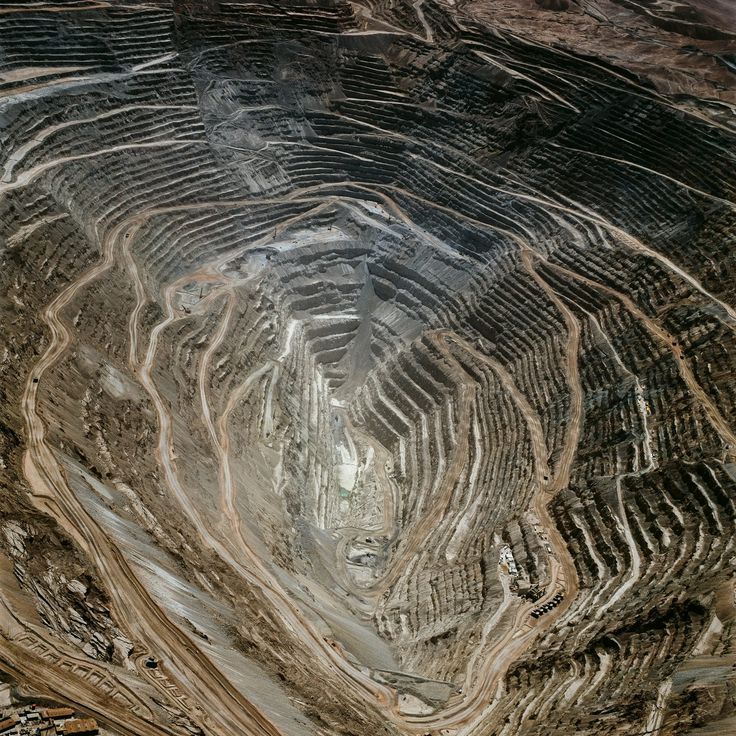
The Ultimate Pit Limit (UPL) represents an essential term in open-pit mine planning as it denotes the maximal size at which mining of a mineral resource becomes economical. As long-term factors like ore grade, commodity price, cost of mining, processing costs, and slope stability restrictions determine the size of the feasible UPL, its establishment is a must-do step for any open pit mining operations (Ares et al., 2023). Establishing the optimum UPL allows one to determine the future directions of development in other parts of mining operations, such as scheduling production or managing waste disposal.
Traditionally, optimization has been done through highly mathematical techniques that involve graph theory and network flow calculations. One of the oldest methods of determining the optimum boundary was the Lerchs-Grossmann (LG) algorithm, introduced in 1965, which solves the UPL problem as the determination of a pit boundary that maximizes undiscounted cash flow and does not violate geotechnical slope limitations. However, the more recent equivalent method called the Pseudoflow (PF) algorithm proves to be better. Proposed by Hochbaum in 2008, the PF algorithm allows one to calculate the exact same optimum boundary but much faster as it uses “pseudoflows” rather than networks.
Selection process of optimal UPL
In LG and PF algorithms, identifying the right UPL can not be done by running the algorithm once under existing economic conditions. Typically, an approach that generates a series of “nested pits” is used (Canessa et al., 2020).
Block model valuation: the ore body is divided into a three-dimensional block model, where each block has its net economic value based on expected extraction costs, processing costs, recoveries, and commodity prices (Canessa et al., 2020).
Revenue factor consideration: instead of using a single fixed price, mining engineers use “revenue factors” (between 0.5 to 1.5) on the commodity price.
Nested pit creation: the LG/PF algorithm is applied using a variety of revenue factors. As the revenue factor increases, the profitability of marginal waste and ore blocks becomes greater. The result is a number of increasing-sized, nested pits created through the process (Canessa et al., 2020).
Optimizing strategic scheduling & NPV: the final selection of UPL involves comparing these pits to time. By strategically scheduling their excavation from smaller shells to larger ones, mine planners calculate their NPV at a discount rate.
Justification
To explain the selection of a particular UPL requires going beyond mere numbers of optimization problems. The rationale behind the selected UPL must consider price fluctuations because algorithms like LG rely solely on static economic information for determining an optimal UPL (Ares et al., 2023).
The justification process includes multi-faceted sensitivity analysis to ensure profitability in case there is a decline in commodity prices or increased mining cost. Additionally, the selected UPL must be justified on the basis of practical considerations, including minimum working width at the pit bottom to accommodate mining equipment, which UPL algorithms cannot determine as they calculate only global slope angles (Loor & Morales, 2020).
References
Ares, G., Castañón Fernández, C., & Álvarez, I. D. (2023). Ultimate Pit-Limit Optimization Algorithm Enhancement Using Structured Query Language. Minerals, 13(7), 966. https://doi.org/10.3390/min13070966
Canessa, G., Moreno, E., & Pagnoncelli, B. K. (2021). The risk-averse ultimate pit problem. Optimization and Engineering, 22, 2655-2678. https://doi.org/10.1007/s11081-020-09545-4
Hochbaum, D. S. (2008). The Pseudoflow Algorithm: A New Algorithm for the Maximum-Flow Problem. Operations Research, 56(4), 992-1009. https://doi.org/10.1287/opre.1080.0524
Loor, V., & Morales, N. (2020). Applying artificial intelligence for optimal production scheduling and phase design in open pit mining. MassMin 2020: Proceedings of the Eighth International Conference & Exhibition on Mass Mining, 1451-1466. https://doi.org/10.36487/acg_repo/2063_111