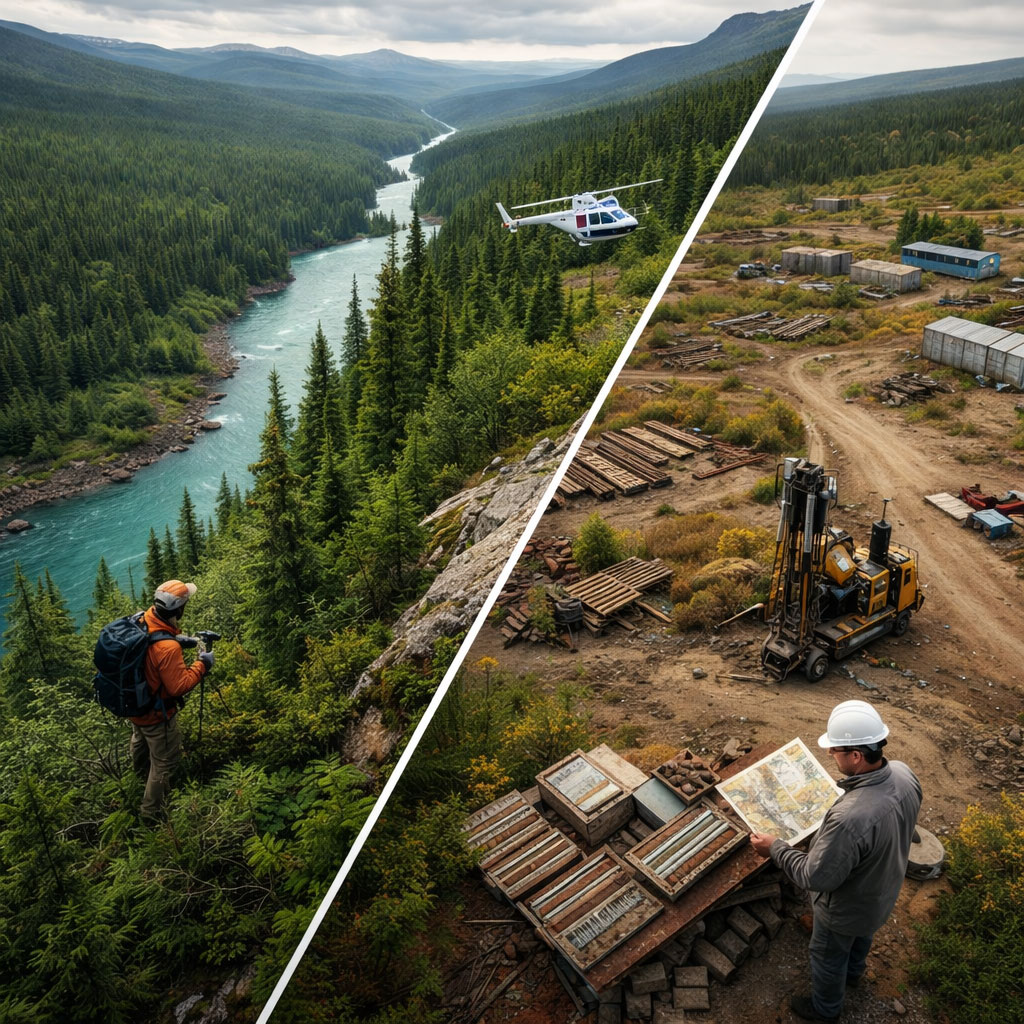
In the context of mineral and energy resource exploration, greenfield and brownfield represent two fundamentally different search environments that offer different opportunities and risks and require different methodologies. Greenfield exploration is focused on areas of the Earth’s surface where no known deposits of minerals or previous commercial development have occurred.
Greenfield exploration is a high-risk, high-reward approach focused on finding completely new resource systems in frontier areas of the Earth’s surface. Methodologies used in greenfield exploration include data integration at the regional scale, which often involves analyses of lithospheric architecture, geophysical surveys, and geochemical surveys to identify buried prospective areas beneath covering strata.
Brownfield exploration is focused in areas close to known mines or known areas of current development and is designed to extend the life of mature mines by finding new resources or optimizing existing ones.
Greenfield exploration is focused on making new discoveries, while brownfield exploration takes advantage of existing infrastructure and geological knowledge to target extensions of existing mines or known areas of resource potential that may have been overlooked in past exploration. The key difference between greenfield and brownfield exploration is geological certainty and purpose: pioneering discovery in unproven areas of the Earth’s surface compared with resource expansion in known areas.