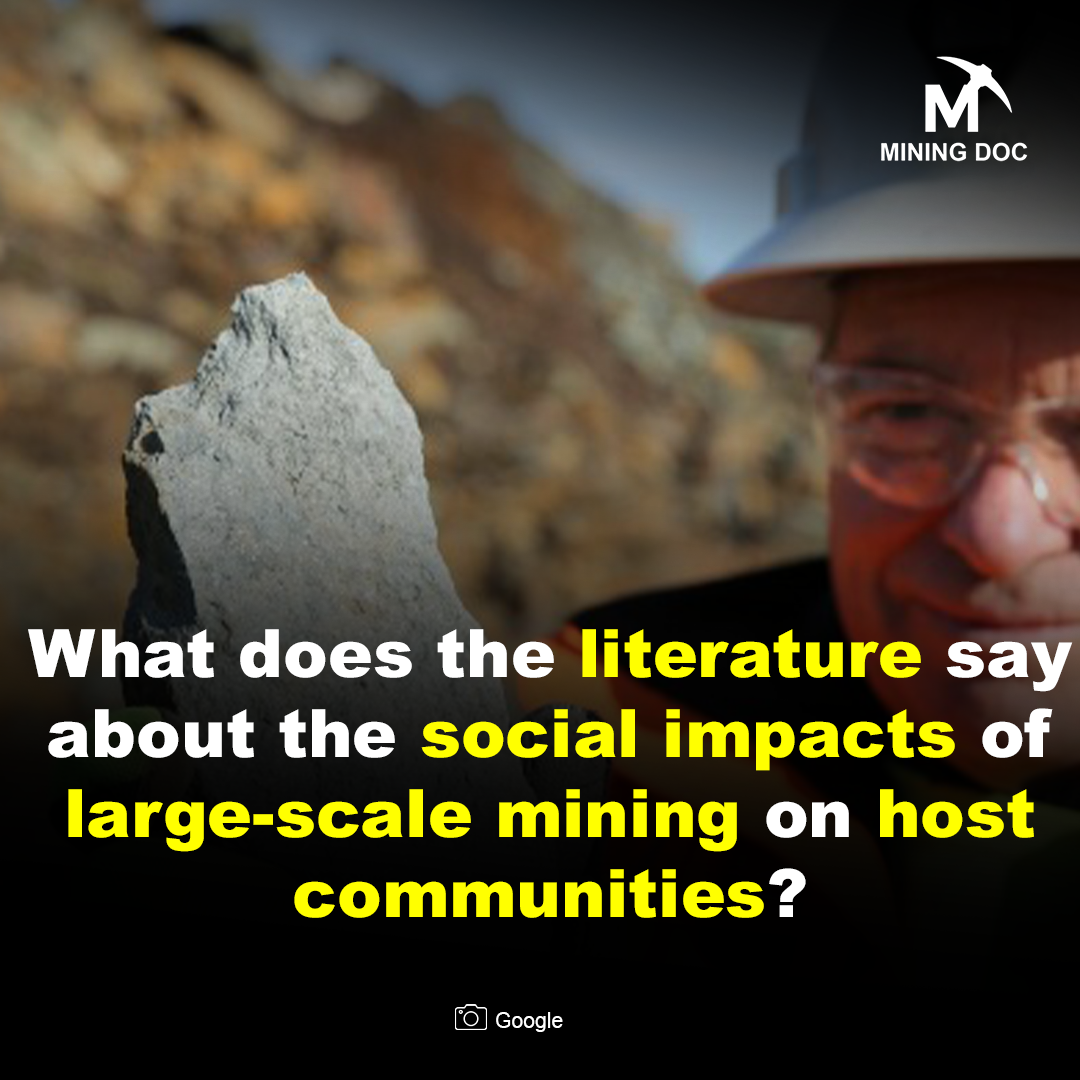
When discussions around mining arise, the focus is often placed on its environmental and social challenges. However, existing research presents a more balanced perspective, particularly regarding the positive social impacts that large-scale mining can generate for host communities. One of the most widely recognized benefits is job creation and income generation. Mining operations provide both direct and indirect employment opportunities, ranging from skilled engineering roles to local contracting and support services. In many remote and underserved regions, these jobs significantly improve household incomes and stimulate local livelihoods (Hilson, 2002; Aryee et al., 2003).
Another important contribution of mining is investment in education and healthcare infrastructure through Corporate Social Responsibility (CSR) initiatives. Many mining companies have funded the construction of schools, hospitals, and clinics in their host communities. Studies have shown that these interventions can improve literacy rates, enhance educational access, and expand healthcare services in several mining regions across Africa and Latin America (Frynas, 2005; Hamann, 2004). Beyond social services, mining projects also contribute to the development of critical infrastructure such as roads, electricity networks, and water supply systems. Although initially established to support mining activities, this infrastructure frequently benefits surrounding communities and supports long-term regional development (World Bank, 2002; Campbell, 2003).
Mining activities also create significant local economic multiplier effects. The presence of a large-scale mining operation increases demand for goods and services, creating opportunities for local suppliers, transport providers, retailers, and small businesses. As a result, economic benefits extend beyond the mine itself and generate positive ripple effects throughout the wider local economy (Stilwell et al., 2000; Ericsson & Söderholm, 2012). In addition, many mining companies invest heavily in workforce training and capacity-building initiatives. These programs help local workers acquire technical, managerial, and vocational skills that remain valuable beyond the lifespan of the mine. Such human capital development strengthens broader economic participation and employability in other sectors (Nwapi, 2015; Buxton, 2012).
Despite these positive contributions, the benefits of mining do not occur automatically. Their success depends largely on strong governance frameworks, transparent management of mining revenues, meaningful community engagement, and responsible corporate practices. When these conditions are present, large-scale mining has the potential to contribute significantly to social and economic development in host communities while creating lasting opportunities for future generations.
References:
-
Aryee, B. N. A., Ntibery, B. K., & Atorkui, E. (2003). Trends in the small-scale mining of precious minerals in Ghana: A perspective on its environmental impact. Journal of Cleaner Production, 11(2), 131–140. https://doi.org/10.1016/S0959-6526(02)00043-4
-
Buxton, A. (2012). Responding to the challenge of artisanal and small-scale mining: How can knowledge networks help? International Institute for Environment and Development.
-
Campbell, B. (Ed.). (2003). Factoring in governance: Is the World Bank’s approach to mining sector reform sustainable? Minerals & Energy — Raw Materials Report, 18(4), 2–13.
-
Ericsson, M., & Söderholm, P. (2012). Mining and sustainable development. Resources Policy, 37(2), 89–93.
-
Frynas, J. G. (2005). The false developmental promise of corporate social responsibility: Evidence from multinational oil companies. International Affairs, 81(3), 581–598. https://doi.org/10.1111/j.1468-2346.2005.00470.x
-
Hamann, R. (2004). Corporate social responsibility, partnerships, and institutional change: The case of mining companies in South Africa. Natural Resources Forum, 28(4), 278–290.
-
Hilson, G. (2002). An overview of land use conflicts in mining communities. Land Use Policy, 19(1), 65–73. https://doi.org/10.1016/S0264-8377(01)00043-6
-
Nwapi, C. (2015). Legal and institutional frameworks for community development agreements in the mining sector in Africa. The Extractive Industries and Society, 2(4), 722–733.
-
Stilwell, L. C., Minnitt, R. C. A., Monson, T. D., & Kuhn, G. (2000). An input-output analysis of the impact of mining on the South African economy. Resources Policy, 26(1), 17–30.
-
World Bank. (2002). It’s not over when it’s over: Mine closure around the world. World Bank Group.