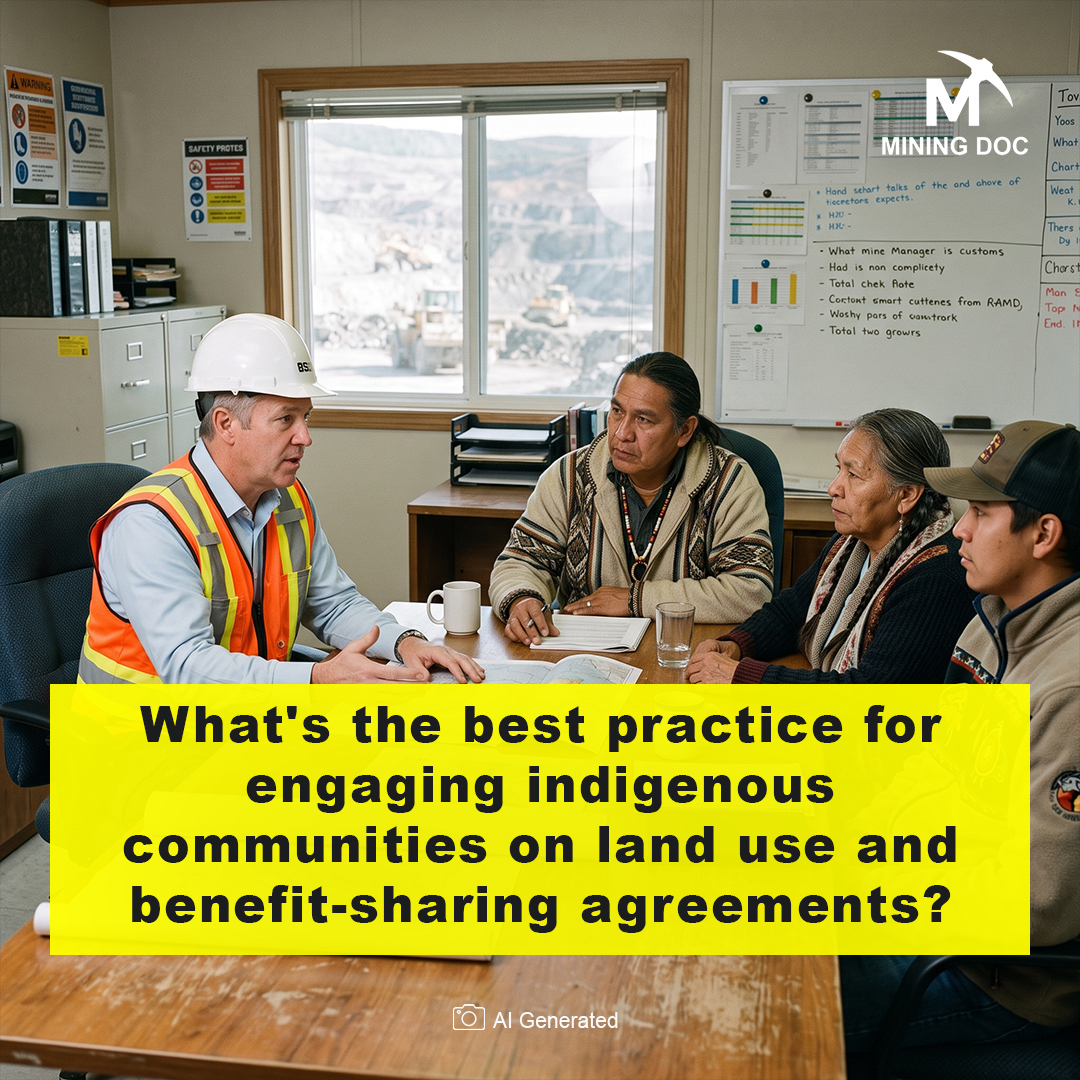
The international mining industry is faced with challenges arising from the connection between social acceptance and compliance to laws in respect of the rights of the indigenous people. Over the years, mineral exploitation has been carried out with minimal consultation with local communities, which has led to numerous legal problems, inefficiencies, and risks. There is need for a paradigm shift towards cooperation and win-win situations. International policies such as the United Nations Declaration on the Rights of Indigenous Peoples provide the concept of Free, Prior, and Informed Consent as a standard for resource development. Mineral companies have to understand that gaining social license entails cooperation and agreement making.
Industry standards have developed immensely to mirror the international human rights expectation. In August 2024, the International Council on Mining and Metals revised its Indigenous Peoples and Mining Position Statement. The revisions increased the standard and set an expectation that there would be formal agreement on the consent to the impacts of projects and not just the process of achieving consent. Free, Prior, and Informed Consent is an ongoing process and not a one-off administrative requirement. It enables the right holders to have input into the decision-making process through the lifecycle of the mine.
The contractual agreements popularly referred to as Impact and Benefit Agreement or Benefit Sharing Agreements are the main way that the relationships between the mining company and the Indigenous governing body can be codified. Commercial contracts create the framework of benefit-sharing arrangements in exchange for community support. The benefits include financial mechanisms such as up-front payments, milestone transfers, and net smelter return royalties as well as non-financial provisions such as local hiring requirements, procurement preference and environmental monitoring programs. Moreover, good agreements include provisions for environmental stewardship, closure and protection of culturally sensitive heritage sites.
The potential project developers should also take into consideration the changes that may occur on legislative and judicial levels within major mining regions. It becomes more evident that courts consider that statutory duty of consultation emerges before any exploration activities or claims. Disagreement or misalignment with the goals of the communities may cause instability of the agreement reached. It is always beneficial to work within the framework of the Indigenous governance, give funding to conduct independent community review, and come to the negotiations in good faith.
A shift from transactional consultation to sustainable partnership is necessary in order to ensure sustainable mineral development. The initiative on integration of Free, Prior, and Informed Consent into project development planning on the part of the corporation’s leadership reduces possible risks of financial and reputational nature and helps to ensure the sustainability. Benefit sharing agreements help to ensure the interests of the Indigenous communities regarding resources, but also give resource developers the needed assurance for sustainable projects.