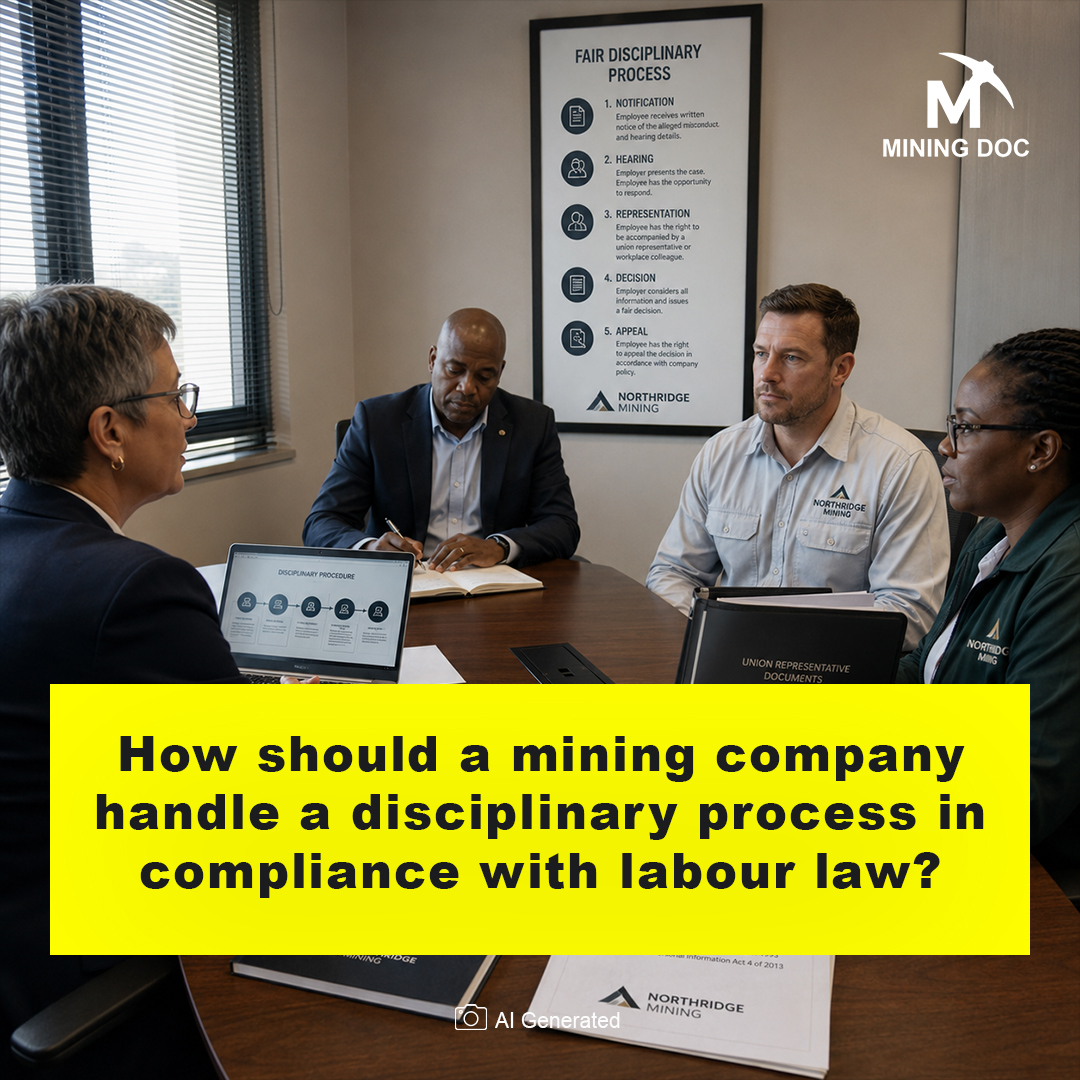
The mining firm needs to set up a proper disciplinary policy in compliance with the existing labour legislation to ensure objectivity, legality, and prevent any misunderstandings. First of all, this implies having adequate work regulation or an employee manual that thoroughly describes the types of misconduct (minor, serious, very serious) and their consequences, such as a verbal warning, written warning, fines, suspension, and even termination of employment. The employee should know the work regulations at the stage of recruitment.
Before starting the process of punishing the employee, the employer can try to resolve the problems informally via discussion. If informal measures fail to solve any misconduct-related problems (for example, the issue of coming to work late), then the employer starts an investigation into the misconduct and gathers objective facts. For misconduct related to mining operations, this is especially important since there may be misconduct related to safety. The worker will receive a charge letter.
A disciplinary hearing headed by a disinterested senior officer or an outsider follows the principle of natural justice: the employee has the right to reply, produce witnesses, and dispute evidence. In cases of risky mining operations, the hearing should emphasize safety violations and ensure that proper documentation is kept in such situations. Prompt notification of the judgment is essential and should be done without undue delay (often one day after identification of the breach in certain regions) to prevent its nullification, and ideally through writing (using registered mail).
The sanctions should be commensurate with the offense committed; thus, a verbal warning lasts for 3 months, a written one between 6-12 months, and a serious offense like theft, assault, and endangering safety might warrant immediate summary dismissal. Sanctions in mining companies should be recorded in a register where the employee’s names, dates of sanction, reasons, and penalties are clearly indicated.
Internal appeal procedure is mandatory, specified in the work regulations along with deadlines (such as 1-7 days for lodging an appeal and immediate settlement). An appeal, which will be considered by a higher authority, reassesses the facts and can either cancel or decrease the penalty imposed. In the mining industry, appeals tend to examine the safety or technical implications, ensuring transparency and social license with local communities.
Lastly, compliance reduces legal risks, such as wrongful termination lawsuits, frequent in labour-intensive mining operations. Firms need to educate their supervisors on compliance procedures, maintain documents for the required period, and conform to applicable industry regulations (such as health and safety standards).