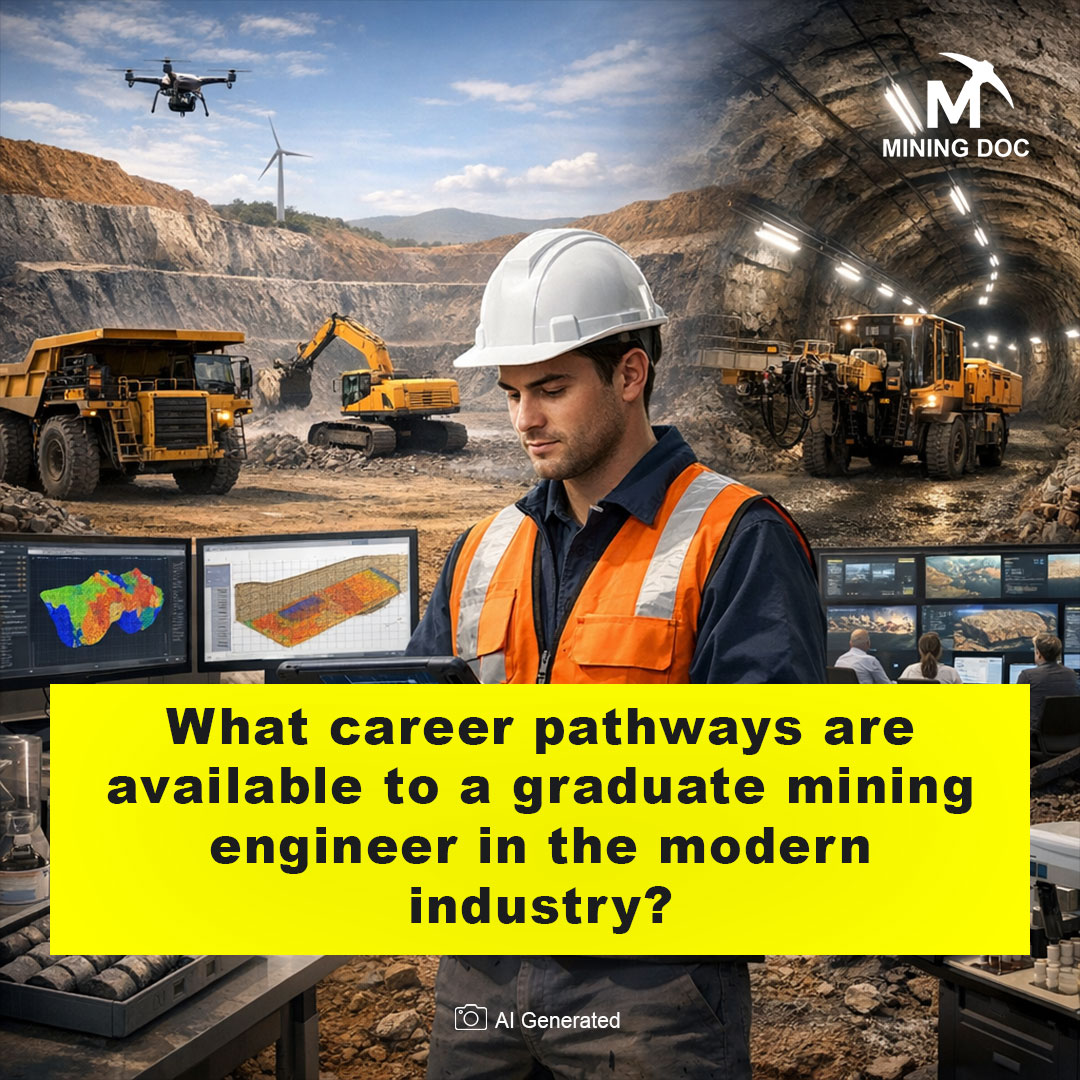
A graduate mining engineer can move into several strong pathways: operations, mine planning, drill-and-blast, geotechnical, processing, HSE/environment, consulting, project management, and eventually leadership roles such as superintendent or mine manager. Modern mining is also creating more openings in automation, digital mining, sustainability, and remote operations.
Main pathways
Operations and production: working at open-pit or underground sites to improve daily output, coordination, and efficiency. Mining companies commonly recruit graduates into production and engineering roles, including site-based and management-trainee positions.
- Mine planning: short-term and long-term scheduling, resource optimization, and production planning using mine-planning software and geological data.
- Drill and blast: designing blast patterns, optimizing fragmentation, and improving safety and cost control in open-pit or underground settings.
- Geotechnical engineering: slope stability, ground control, rock mechanics, and risk assessment for safe mine design.
- Processing and metallurgy support: helping bridge mining with mineral processing, plant performance, and recovery optimization.
- Health, safety, environment, and rehabilitation: compliance, risk management, tailings, remediation, and mine closure work.
Modern mines are hiring more engineers into automation, digital systems, data-driven planning, and remote operations. Roles in this area can involve drones, AI-supported analysis, sensor systems, and software used to improve safety and productivity.
Experienced mining engineers often move into consulting, contracting, project management, business development, finance, or regulatory work. These paths are common when engineers want broader exposure across multiple sites and clients rather than staying in one operation.
A common route is graduate engineer, then site engineer or planning engineer, then senior engineer or specialist, and later superintendent, project manager, or mine manager. Cross-skilling across production, maintenance, safety, and planning tends to open the fastest promotion path into leadership.
Best fit by interest
- If you like field work, consider operations, drill-and-blast, or geotechnics.
- If you like analysis and software, consider mine planning or digital/automation roles.
- If you like broader business responsibility, consider project management, consulting, or mine management.
For a new graduate, the strongest strategy is usually to start in a site-based technical role, build experience in production and planning, then specialize or move into management.