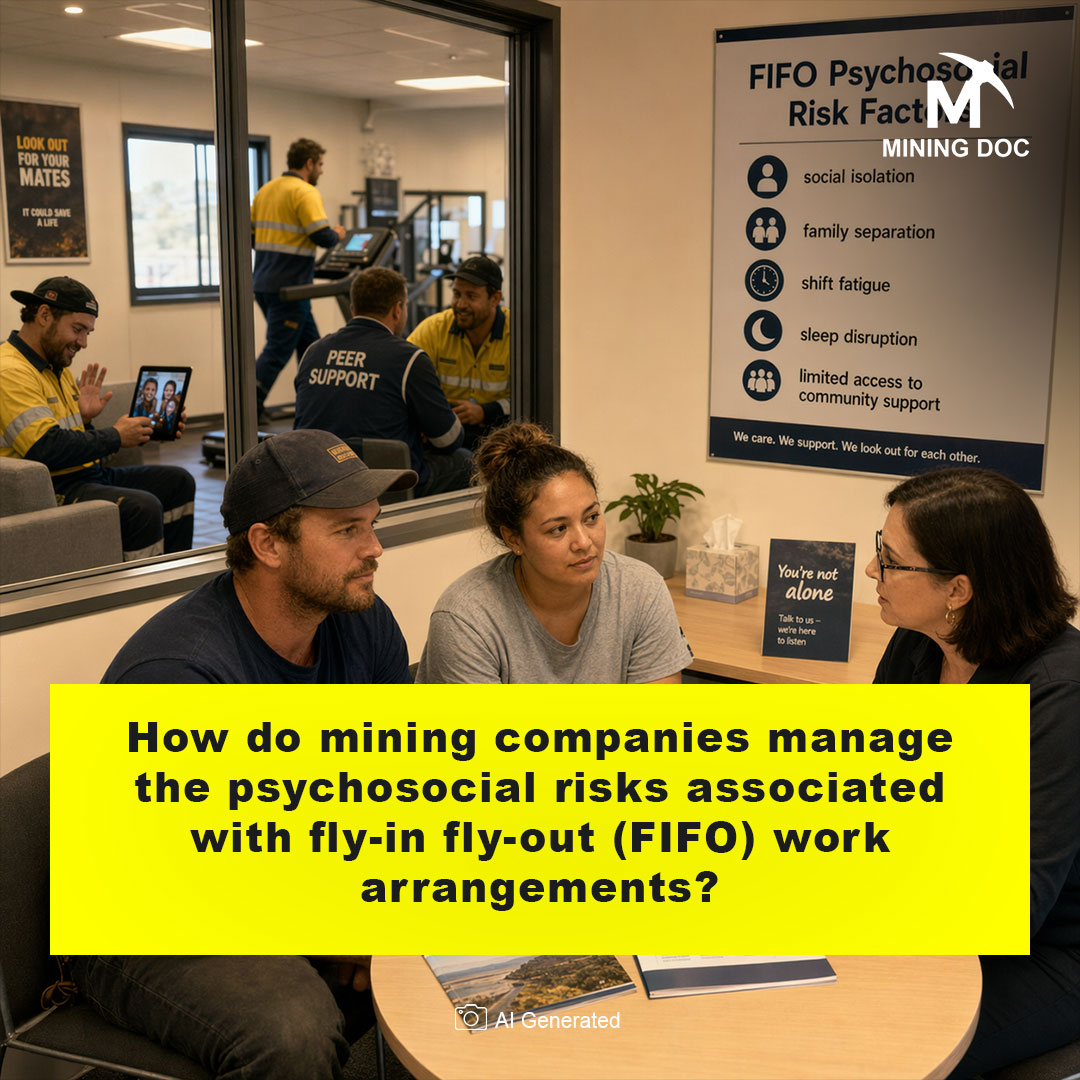
Mining companies manage FIFO psychosocial risks by using a structured risk-management approach rather than treating mental health as an individual issue. In practice, that means identifying hazards, assessing who is exposed, putting controls in place, and reviewing whether those controls are working.
A major focus is on the hazards that are most common in FIFO settings, including fatigue, stress, bullying, harassment, violence, burnout, and social isolation. These risks can arise from long shifts, long-distance commuting, camp living, and long periods away from family and social support.
One of the most effective controls is roster and workload design. Companies try to build rosters that allow enough rest and recreation, avoid excessive fatigue, and reduce unpredictability that can worsen stress.
Another key measure is creating a supportive workplace culture. Employers train supervisors and leaders to check in with workers, respond early to warning signs, and manage conflict, because a poor site culture can amplify isolation and distress.
Mining companies also provide mental health support services such as employee assistance programs, counselling, coaching, and confidential referral pathways. In some cases, they use sector-specific programs like mental health awareness training, suicide prevention training, and case management for workers who need more support.
Accommodation and living conditions matter too. Guidance for FIFO workplaces emphasizes suitable accommodation, decent amenities, and camp environments that support rest, privacy, and social connection rather than adding to fatigue or frustration.
Many employers now include family and relationship support in their approach, because FIFO strain often affects life off site as much as on site. This can include better communication options, home-leave planning, and support resources for partners and families.
Overall, the best practice is to combine prevention, early intervention, and ongoing monitoring. The strongest FIFO psychosocial risk programs are the ones that integrate mental health into normal safety management, treat psychosocial hazards like any other workplace hazard, and keep improving controls based on worker feedback and incident trends.