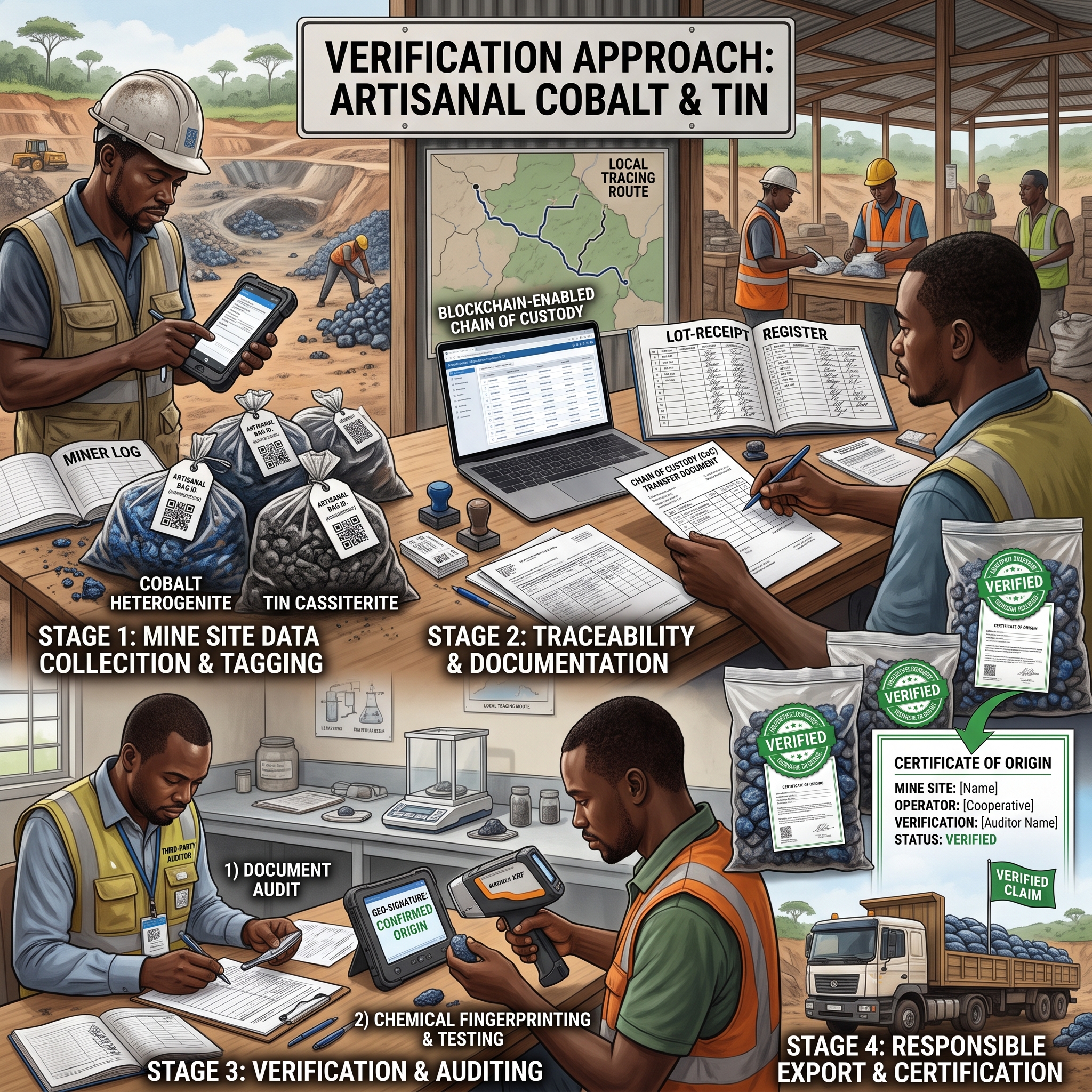
The world’s need for critical minerals, including cobalt and tin, has been increasing rapidly owing to the use of clean energy technologies and consumer electronic devices. It is essential to note that a considerable amount of these raw materials comes from Artisanal and Small-Scale Mining (ASM) from conflict areas or regions with high risks. There is a strong need for downstream organizations to take up serious measures to stop human rights violations, child labour, and other dangerous activities from taking place during mineral extraction. Conventional due diligence mainly includes the completion of desktop surveys and Tier 1 audits of suppliers. The downside to this method is that the actual extraction location remains untouched.
Continuous monitoring of sites is crucial in validating responsible sourcing claims. Initiatives such as Better Mining and the Mutoshi Cobalt Pilot Initiative show how helpful it can be to deploy people and digital app technology at mine sites for monitoring. The technology monitors physical safety, enforces age verification, and monitors health and safety at the workplace. Moreover, workers themselves and community members are continuous sensors on the ground. The workers will know about unpaid salaries, health and safety violations, and environmental leaks before the year-end audit. People can send in their reports using the direct reporting apps available on regular mobile phones.
The verification process is dependent on internationally accepted standards. Models like the OECD Five Step Due Diligence Guidance Framework, the LME Responsible Sourcing Policy, and the new RMI/RCI Cobalt Refiner Supply Chain Due Diligence Standard set internationally agreed upon standard requirements for risk assessments and transparency reports. Companies need to use the combination of physical chain of custody and stringent Know Your Customer (KYC) verification procedures. One of the weaknesses within the mineral supply chains is the mixing of verified minerals with feedstock at the point of trade or refinery. Responsible refineries must ensure that accurate data points are recorded from all the inputs to ensure that the metal output is entirely consistent with the verified artisanal inputs.
Verification processes must consider the economic concerns of the artisanal miners. International buyers tend to be extremely concerned about extreme risks such as child labor and armed conflicts, while miners are mostly concerned about the price at which their minerals are bought and their ore grade assessment as well as a consistent income flow. Failure by due diligence processes to incorporate the interests of the miners may result in local unrest and push the miners to use the informal sector. The buyers also need to encourage the formalization of the sector using the official ZEA title or formal arrangements between large scale mining concessions and artisanal cooperatives. Disassociation from informal mines may lead to extreme poverty and hence child labor.
An effective verification process for cobalt and tin from artisanal mines requires a multi-level framework. Corporate questionnaires carried out in Tier 1 mining locations do not consider the real conditions at mining sites. By incorporating traditional due diligence processes with community monitoring and proper chain of custody management, an authentic supply chain can be achieved. Instead of engaging in wholesale disengagement from mining locations, the practical approach should involve elevating the standard of life in artisanal mining communities. Companies involved in downstream processing that adopt constant monitoring, fair pricing systems and formalisation will ensure supply chain integrity and sustainable development.