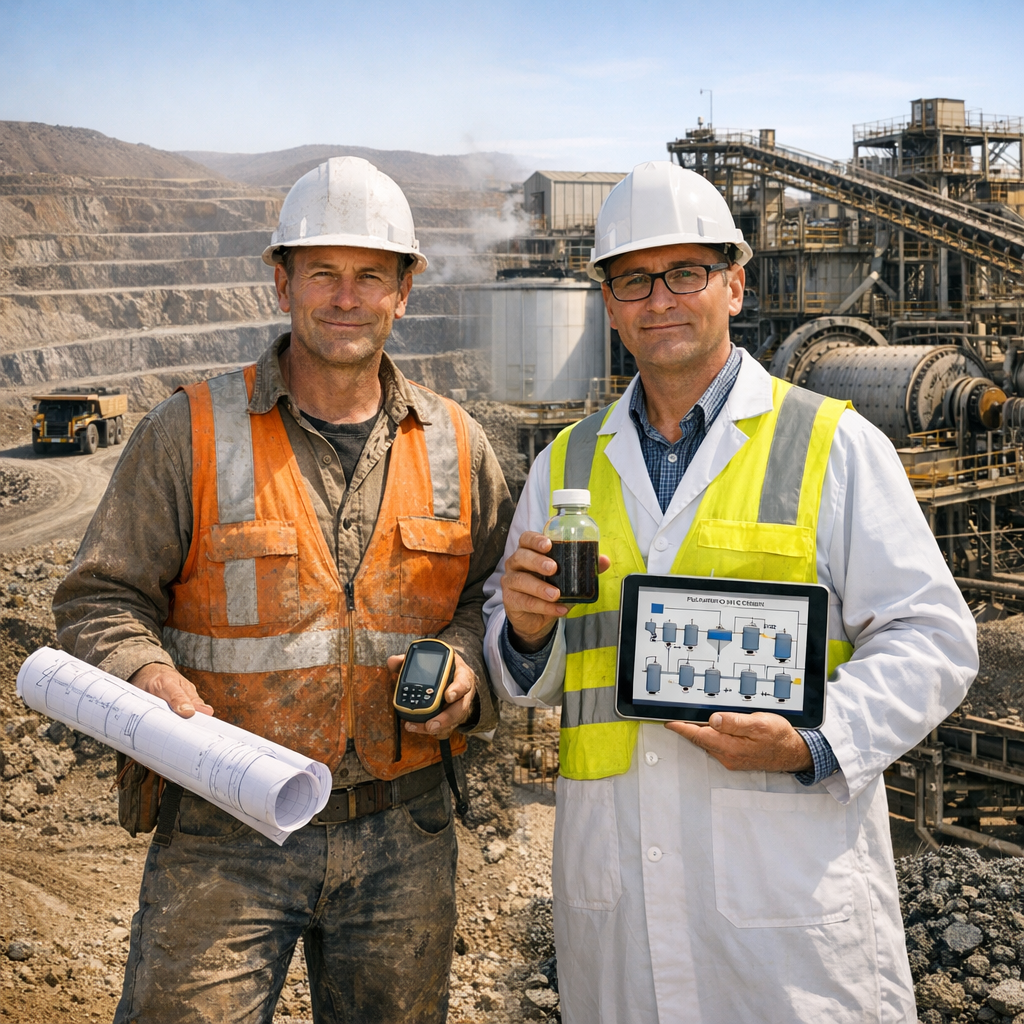
While they both work toward the same goal, turning a patch of earth into a profitable resource, mining engineers and metallurgical engineers handle two very different stages of the “rock-to-revenue” pipeline. Think of the mining engineer as the architect and excavator, while the metallurgical engineer is the chemist and refiner.
The mining engineer: getting it out of the ground
The mining engineer’s responsibility begins before the first hole is even drilled. Their primary focus is the physical extraction of ore from the earth’s crust. They are the masters of logistics, safety, and structural integrity.
- Mine design: they determine whether a site should be an open-pit or underground mine based on the ore body’s depth and shape.
- Drilling and blasting: they calculate the precise amount of explosives needed to break rock efficiently without compromising the stability of the surrounding area.
- Safety and ventilation: especially in underground settings, they design complex systems to provide fresh air and prevent collapses.
- Logistics: they manage the fleet of massive trucks and conveyors that transport raw material from the face of the mine to the processing plant.
The metallurgical engineer: getting the value out of the rock
Once the mining engineer delivers the raw rock to the “run-of-mine” pad, their job is largely done, and the metallurgical engineer takes over. Metallurgy is the science of separating valuable minerals from the waste rock (gangue).
- Comminution: they oversee the crushing and grinding circuits that reduce boulders into fine powder.
- Chemical processing: using techniques like flotation, leaching, or magnetic separation, they exploit the chemical and physical properties of the minerals to isolate the target metal.
- Quality control: they constantly monitor the “grade” of the output to ensure the final concentrate meets the purity standards required by smelters.
- Tailings management: they manage the disposal of waste slurry in an environmentally responsible manner.
The handshake: where they meet
The relationship between these two roles is highly symbiotic. The mining engineer must deliver ore that is sized correctly and free of excessive waste, while the metallurgical engineer must provide feedback on the ore’s “recoverability.” If the mining engineer digs up material that the metallurgist can’t process efficiently, the mine loses money.
In short, the mining engineer manages the geometry and mechanics of the earth, while the metallurgical engineer manages the chemistry and physics of the minerals. Together, they ensure that what starts as a mountain of dirt ends up as the copper in your phone or the steel in your car.